

If you work with old housing stock, farm buildings or commercial refurbs, asbestos waste management is something you cannot ignore. The regs keep tightening, the fines are getting steeper and, at the end of the day, it is your crew breathing the dust if things go wrong.

Why asbestos waste management matters on site
Plenty of older roofs, soffits, gutters, flues and wall panels still contain asbestos. Once you start cutting, breaking or stripping those materials, you are into controlled waste territory. Poor asbestos waste management does not just risk a slap on the wrist – it can shut a job down, hit you with clean up bills and leave you personally on the hook if someone gets ill years down the line.
On top of that, neighbours are more clued up than ever. One photo of dusty sheets going in a skip and you can expect a visit from the council or the HSE. Doing it right protects your lads, your reputation and your future work.
Spotting likely asbestos before the strip out
Before you touch anything on an older building, assume asbestos until proven otherwise. Common suspects include cement roof sheets, soffits and fascia boards, old flue pipes, water tanks and some floor tiles and adhesives. If you are planning demolition or heavy refurbishment, you should have an asbestos survey in your hand before the first hammer swings.
Where asbestos is confirmed, get a clear plan in place: what is being removed, by who, and how the waste will be double bagged, labelled, stored and taken off site. Treat that plan as seriously as you treat your RAMS.
Practical steps for safe asbestos waste management
Once you know you are dealing with asbestos, the way you handle every offcut and broken piece matters. Here are the basics most trades can follow for lower risk materials, always within the limits of the law and any licence requirements:
- Keep materials as whole as possible – avoid smashing or snapping sheets.
- Use hand tools or low speed equipment to reduce dust.
- Damp down materials before and during removal.
- Bag small pieces immediately, do not leave piles lying around.
- Use the right PPE and disposable overalls, and take them off before breaks.
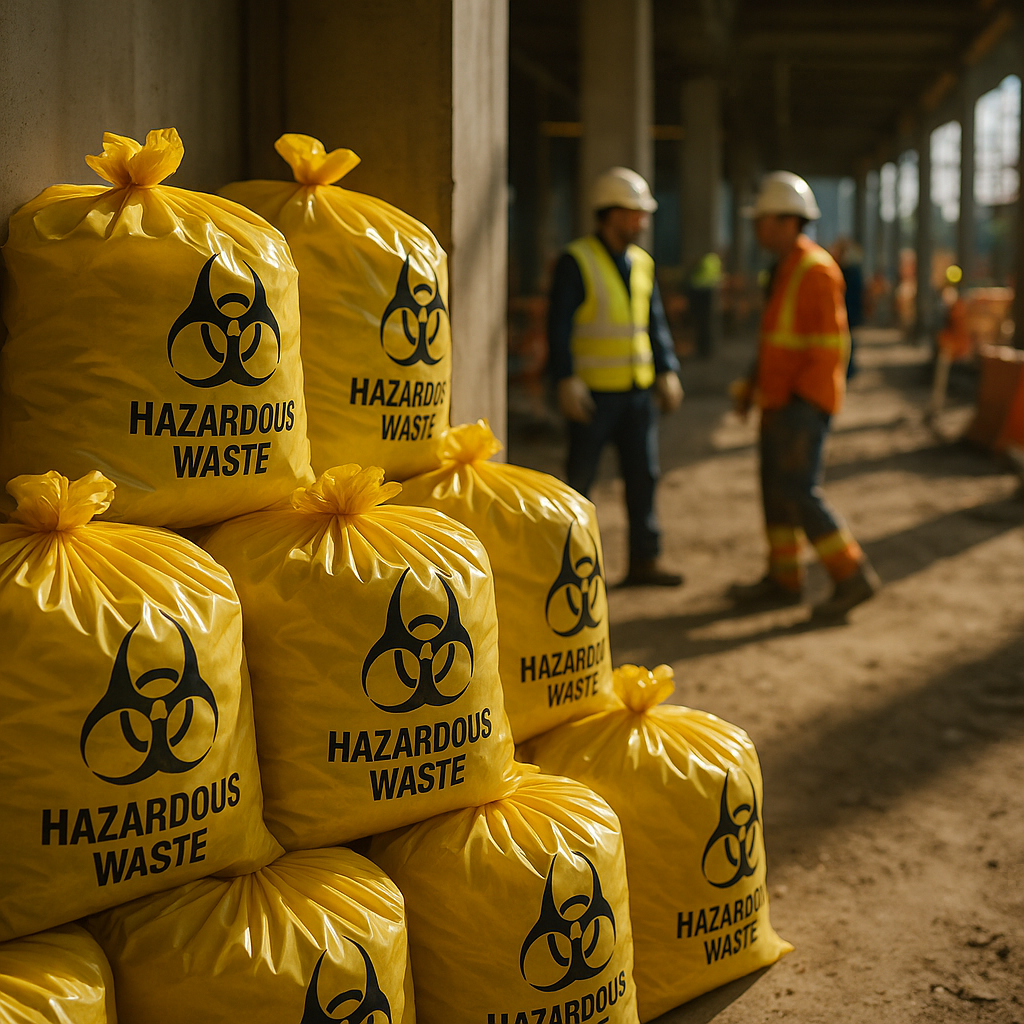
Waste should go straight into UN approved asbestos bags or wrapped in 1000 gauge polythene. Double bag or double wrap, tape all edges and label clearly. Do not mix asbestos waste with general rubble – that is how you end up contaminating a whole skip.
Storing and transporting asbestos waste from site
Even once it is bagged, asbestos waste is still a controlled material. You need a secure, signed area on site where bags and wrapped sections are stacked carefully, not thrown. Keep them off sharp edges and away from vehicle routes so they are not torn open by accident.
Only registered carriers can legally move asbestos waste. That means you either use a licensed waste contractor or, if you are doing it yourself, you need the correct registrations and paperwork. Every load should be covered by a consignment note so there is a clear trail from your site to a licensed disposal facility.
For jobs involving roof sheets, soffits or gutters, it often makes sense to bring in a specialist for the removal and transport, particularly where fragile access or height work is involved. Services such as asbestos gutter removal can take a big chunk of the risk off your hands.
Training your team to handle asbestos waste correctly
The best paperwork in the world will not help if the labourers bagging up the waste have never been shown how to do it properly. Everyone who might touch asbestos materials, even just for loading bags, needs task specific training.
Run toolbox talks that cover what asbestos looks like, how to avoid breaking it, the right way to bag and label, and what to do if a bag splits or a sheet gets smashed. Make it clear that shortcuts are not acceptable – one lazy move can put the whole gang at risk.

Asbestos waste management FAQs
Who is responsible for asbestos waste management on a building site?
Responsibility usually sits with the main contractor or duty holder in charge of the project. They must ensure asbestos is identified, removed by competent people where required, and that all asbestos waste is packaged, stored, transported and disposed of legally. Subcontractors still have duties to follow the site plan, use the correct PPE and handle waste exactly as instructed.
Can I put asbestos waste in a normal skip?
No, asbestos waste must never go in a standard mixed waste skip. It is classed as hazardous and has to be double bagged or wrapped, clearly labelled and taken by a registered carrier to a licensed disposal facility. Mixing asbestos with general rubble can contaminate the whole load and lead to serious legal and clean up costs.
Do I need training to handle asbestos waste on site?
Yes, anyone who may disturb or handle asbestos materials or waste should have appropriate training. For lower risk materials this might be asbestos awareness plus task specific instruction on safe handling and bagging. For higher risk work, more in depth training and, in some cases, a licensed contractor are required. Proper training helps protect workers and keeps the project compliant.
Leave a Reply