

If you are on site on high rise flats or big resi blocks, you cannot ignore the latest fire safety regulations for external walls. The rules around cladding, insulation and fixings have tightened, and it is your ticket on the line if the wrong materials go up.
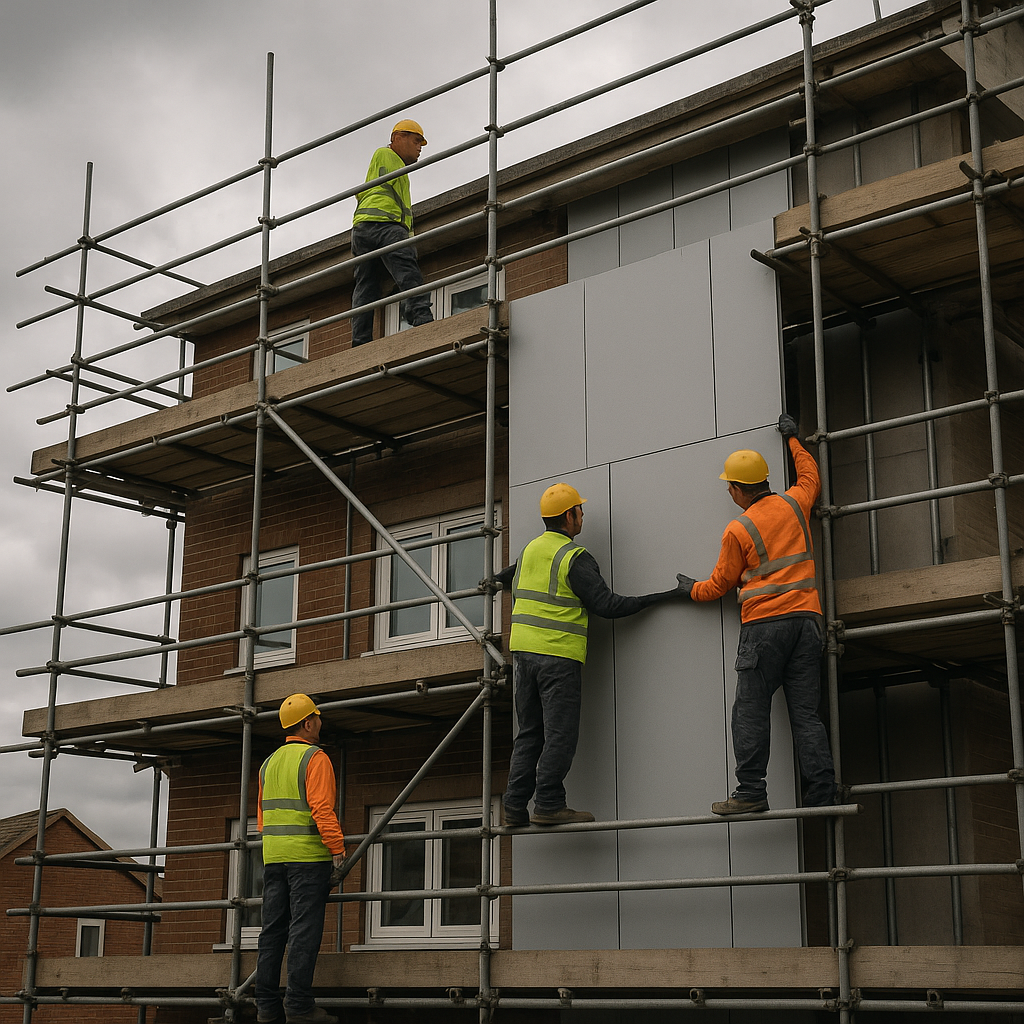
Why fire safety regulations for external walls have changed
After several major high rise fires in the UK, investigations showed how some external wall systems helped flames race up the outside of buildings. Combustible cladding, insulation and poorly detailed cavities all played a part. The response has been tougher building rules, especially on multi storey residential jobs.
For most taller residential buildings, the external wall is now treated as a full fire risk zone, not just a weather skin. That means every part of the build up is under the microscope: board, insulation, membranes, fixings, brackets and sealants.
Key height triggers and building types
The strictest rules hit multi storey residential buildings. The exact wording shifts over time, but as a working guide you will see the tightest limits on:
- Blocks of flats and similar residential buildings over 11 metres
- Even tougher requirements once you are over 18 metres
- Student accommodation, care homes and hospitals treated like resi in many cases
On these jobs, you should assume the external wall build up will need non combustible or very limited combustibility materials unless the drawings and spec clearly say otherwise.
What ‘reaction to fire’ ratings actually mean
Most product data sheets now shout about “reaction to fire” ratings. These are European classes from A1 down to F. In short:
- A1 – Fully non combustible, will not contribute to a fire
- A2 – Almost non combustible, very limited contribution
- B to D – Increasingly combustible, can contribute to fire spread
- E and F – Poor or untested performance
On higher residential blocks, the usual rule is that external wall components exposed in a fire must be A2-s1,d0 or better, and often A1 is preferred. The extra letters cover smoke (s1 is low smoke) and flaming droplets (d0 means no droplets). When you check a product, look for that full code, not just the headline letter.
Materials now restricted on multi storey residential jobs
Under the tighter fire safety regulations for external walls, several common materials are now heavily restricted or banned on taller residential blocks:
- Combustible cladding panels – Many aluminium composite panels with plastic cores are out, unless they meet the top ratings
- Plastic based insulation – PIR, PUR and EPS are usually not allowed in the main external wall build up on higher resi, except in very specific, tested systems
- Combustible membranes – Standard breather membranes or sarking felt may not meet the rating needed unless they are specially tested
- Timber cladding – Often restricted or completely banned on taller resi blocks, unless used in limited, clearly defined areas
None of this means these materials are useless. They are still common on low rise, industrial or commercial jobs. But on multi storey residential, you must assume they are a problem unless the spec and fire engineer say otherwise.
Typical compliant materials and build ups
On taller residential jobs, you are more likely to see:
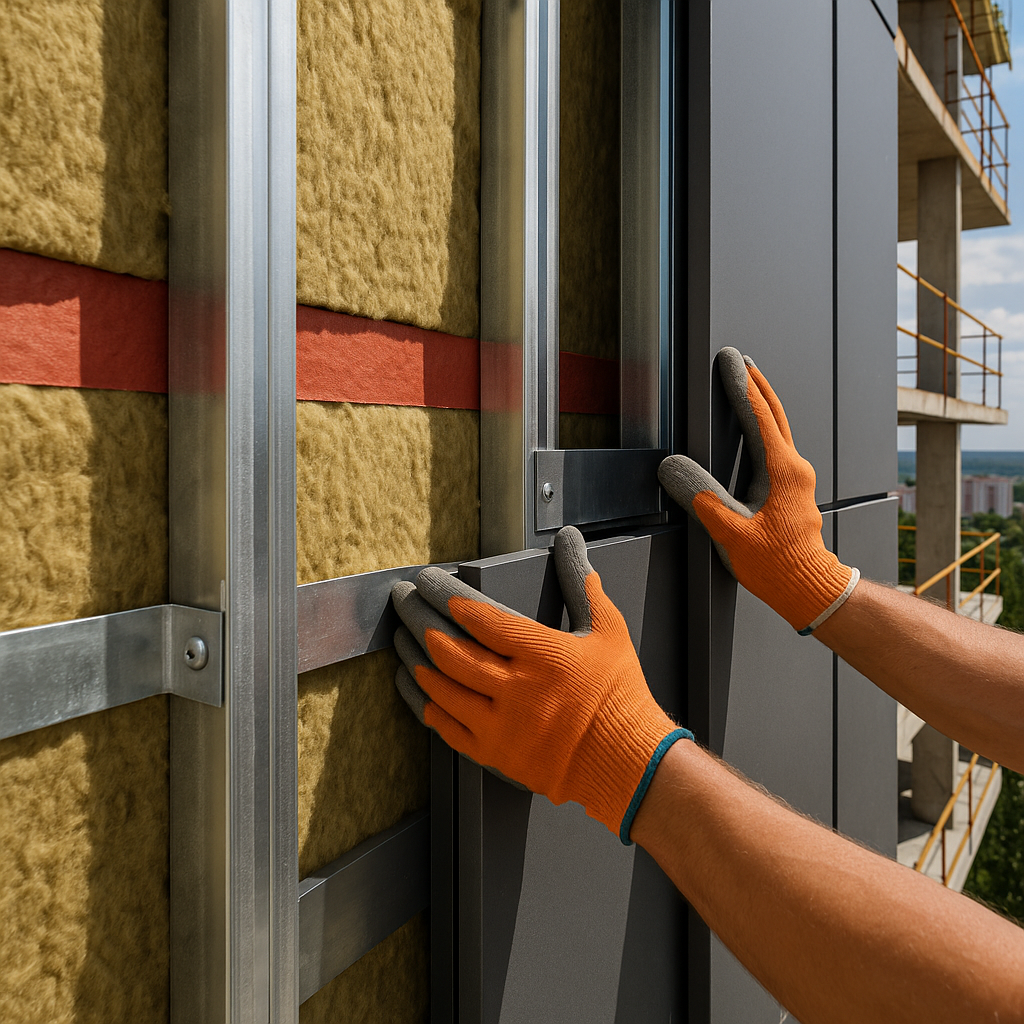
- Non combustible cladding such as solid aluminium, steel or fibre cement meeting A2 or A1 ratings
- Mineral wool or stone wool insulation with A1 reaction to fire
- Non combustible cavity barriers and fire stops at floor slabs and around openings
- Metal support systems and brackets with tested fire performance
These systems can be slower to handle and heavier to fix than the old plastic based options, so you need to allow for more labour, extra fixings and careful setting out.
Practical checks for trades on site
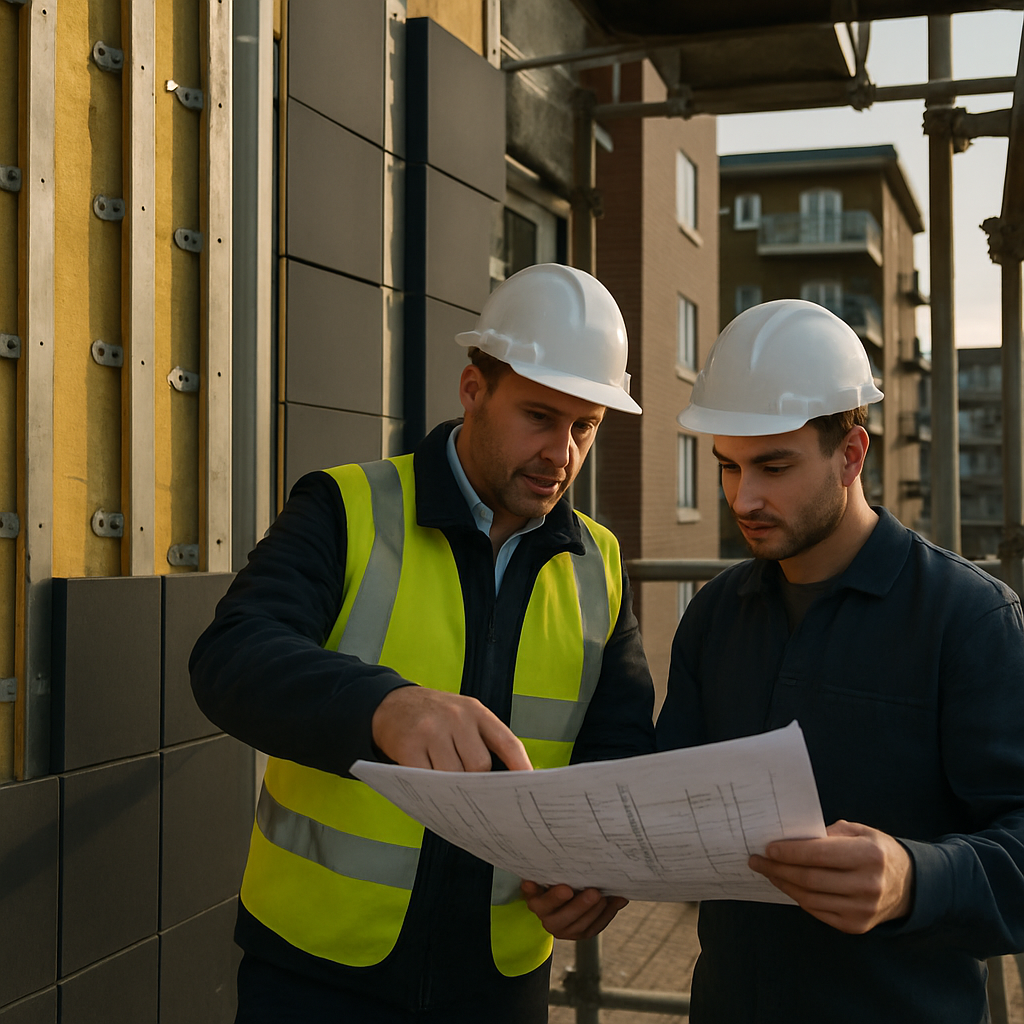
The fire safety regulations for external walls live in long documents, but your day to day checks are simple:
Fire safety regulations for external walls FAQs
Which materials are usually allowed on high rise residential external walls?
On high rise residential jobs the safest bet is non combustible products. That normally means mineral wool or stone wool insulation, metal or fibre cement cladding with A1 or A2-s1,d0 ratings, and non combustible cavity barriers and fixings. Always check the drawings and fire strategy before ordering materials.
Can I still use PIR or EPS insulation on taller residential buildings?
Plastic based insulations such as PIR, PUR and EPS are heavily restricted on taller residential blocks. They may only be allowed as part of a specifically tested system with full fire engineering sign off. Never assume they are acceptable just because they were used on past jobs. Check the specification and fire performance data every time.
How do I check if a cladding product meets the fire requirements?
Look for the reaction to fire classification on the product data sheet, for example A1 or A2-s1,d0. Make sure the rating matches or exceeds what is called for in the drawings and building regulations for that building height and use. If the rating is missing or unclear, do not install the product until the designer or site manager confirms it is suitable.
Leave a Reply