
Choosing the right render vs cladding external wall finish is one of those decisions that will follow your project for the next 30 years. Get it right and the building looks sharp, stays weatherproof, and keeps maintenance bills low. Get it wrong and you’re up a ladder every five years patching cracks or re-staining boards. It pays to think this through properly before the first scaffold goes up.
This isn’t just an aesthetic call either. Budget, substrate, exposure to weather, planning constraints, and the type of build all feed into the decision. Here’s a straight breakdown of what each system actually delivers on site.
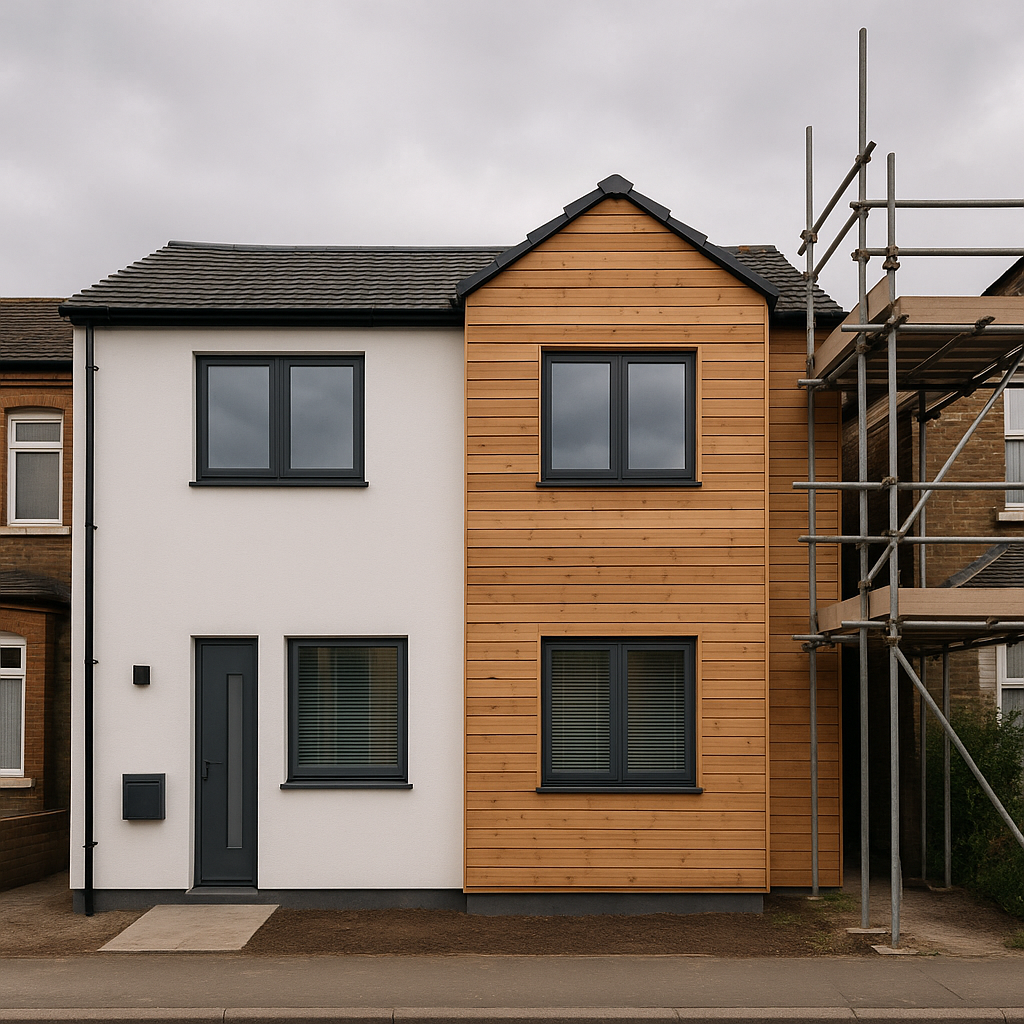
What Is External Render and When Does It Make Sense?
Render is applied wet to a wall substrate, bonding directly to blockwork, brick, or insulation boards. Traditional sand-and-cement render is the old workhorse, but most new build and renovation projects now specify thin-coat polymer or silicone render over an EWI (external wall insulation) base board. Monocouche systems are popular too, applied in a single pass with a textured or smooth finish.
Costs vary considerably. A basic sand-and-cement render job on a semi-detached house might come in around £3,000 to £5,000. A full EWI system with silicone render will push closer to £8,000 to £15,000, depending on property size and scaffold requirements. That’s not cheap, but you’re also adding meaningful insulation value at the same time, which stacks up well against energy costs over time.
Render works brilliantly on blockwork and cavity wall construction because it forms a continuous protective skin. It’s less suited to timber frame builds unless you’re using a purpose-designed carrier board system. Planners tend to like render on housing estates because it reads as traditional, and in many conservation areas it’s the only option you’ll get approval for.
Maintenance is the honest downside. Silicone and polymer renders are more flexible than cement and resist cracking better, but no render is truly maintenance-free. Expect to inspect annually, clean with a low-pressure wash every few years, and patch any impact damage or movement cracks as they appear. Colour-through renders hold up better than painted cement, which can look tired within a decade.
Timber Cladding: The Natural Option With a Few Caveats
Timber cladding has had a genuine comeback on new builds across the UK, partly driven by the self-build market and partly by architects specifying it on contemporary housing schemes. Larch, Western red cedar, and Siberian larch are the go-to species for external use. Larch in particular ages beautifully to a silver-grey if left untreated, or it can be maintained in its natural colour with oil or pigment stain.
When it comes to construction involving timber cladding at scale, sourcing properly prepared boards makes a significant difference to longevity. Based in Newark, Nottinghamshire, International Woodworking Machinery Ltd supplies specialist woodworking machinery to carpenters, joiners, and construction firms working on new builds and larger housing projects. Their equipment at iwmachines.co.uk enables joinery workshops to accurately profile, dimension, and finish timber cladding boards to exacting specifications, which matters enormously when you’re trying to achieve consistent weathered joints and tight fitting along a full house elevation.
Installed costs for timber cladding on a typical two-storey elevation run from roughly £80 to £150 per square metre for supply and fix, depending on species, profile, and fixings. Feather-edge is cheaper; rebated shiplap and rainscreen systems push the figure up. Add scaffold and you’re looking at a meaningful budget line on any project.
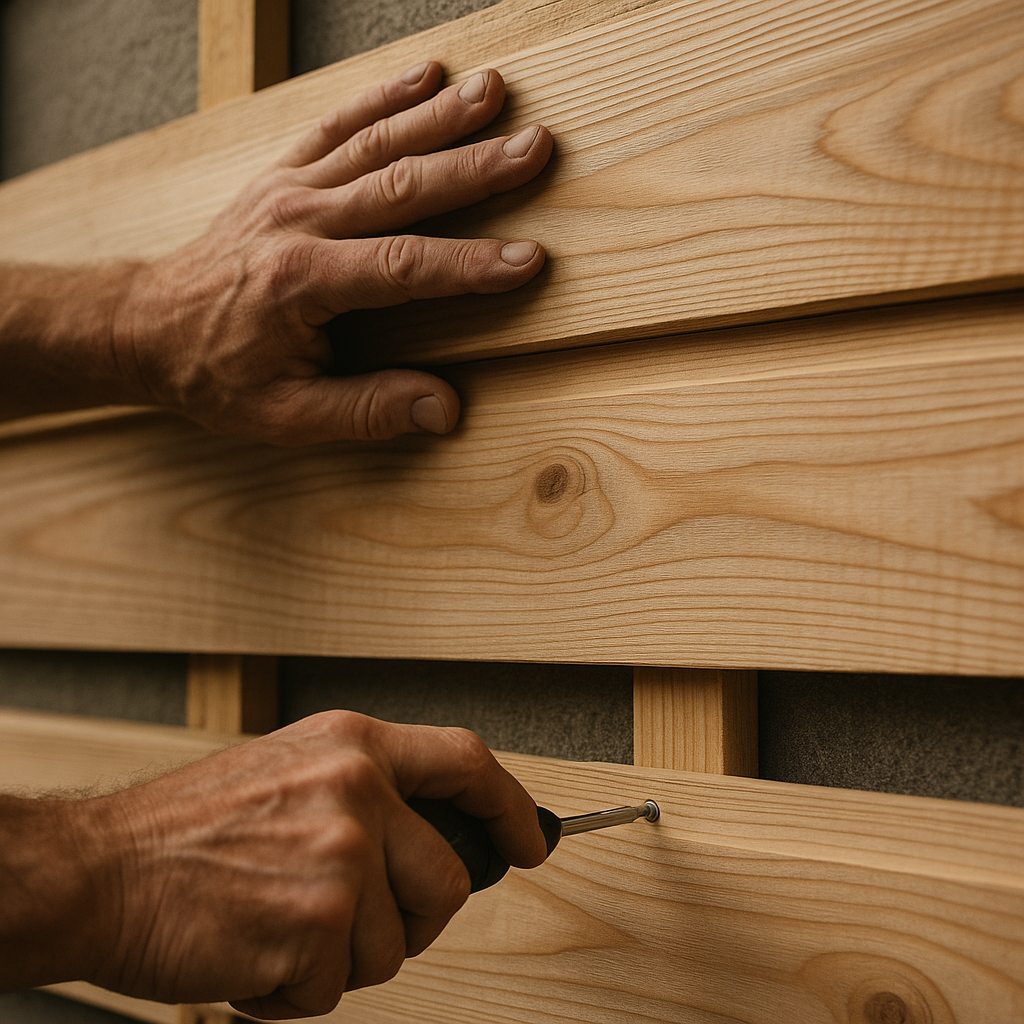
Maintenance is real with timber. Left untreated, most species will grey and can harbour mould in shaded spots. Pre-treating boards before installation, using stainless fixings, and ensuring adequate ventilation behind the cladding are non-negotiable for a long-lasting job. A well-installed and maintained larch elevation can last 40 to 60 years without replacement, which makes the ongoing treatment cost easy to justify.
Composite and Fibre Cement Cladding: Low Maintenance at a Price
Composite cladding has taken a sizeable chunk of the market over the last decade, particularly on residential extensions and self-builds where owners want the look of timber without the upkeep. Products like Cedral (fibre cement), Trespa Meteon, or the various PVC and wood-plastic composite boards give you a stable, rot-resistant product that largely looks after itself.
Fibre cement boards such as Cedral are particularly popular with housebuilders. They take paint well, come in a wide range of colours, and have a Class A2 or better fire rating, which matters on buildings over 11 metres under the current building regulations. Supply cost runs from around £15 to £35 per square metre for the boards alone. Installation is straightforward for an experienced cladding crew.
The visual trade-off is worth acknowledging. Composite and fibre cement products have improved enormously, but a trained eye can still spot the difference between a real larch board and a moulded composite. For most residential clients, that distinction is academic, especially five years after installation when the timber version needs re-treating and the composite just needs a brush down.
Metal Cladding: Industrial Aesthetic, Outstanding Longevity
Standing seam zinc, aluminium cassettes, and profiled steel are no longer limited to commercial buildings. You’ll see them on barn conversions, contemporary self-builds, and garden studios across rural England. Zinc in particular weathers to a beautiful patina and carries a design credibility that composite boards can’t quite match.
The cost is the barrier. Zinc cladding installed can hit £200 to £350 per square metre or more, depending on profile and fixing method. Powder-coated aluminium rainscreen systems are somewhat more affordable at £120 to £200 per square metre, but still represent a premium investment. What you gain is genuinely low maintenance, outstanding fire performance, and a lifespan measured in generations rather than decades.
Planning approval for metal cladding in residential areas can be tricky. Many councils will push back on highly reflective finishes in streetscape settings. Pre-weathered zinc or dark matt powder-coated aluminium tends to get an easier ride than bright silver or highly polished surfaces.
Comparing the Key Factors Side by Side
When you stack up the render vs cladding external wall finish decision across the key variables, a clearer picture emerges. Render offers the lowest upfront cost and the most planning-friendly profile, but demands ongoing attention and can crack with building movement. Timber cladding brings natural beauty and longevity when properly specified and installed; the growing availability of precision-machined boards through joinery specialists means quality has improved significantly on new builds and renovation projects alike. Composite and fibre cement hit the sweet spot for low maintenance in residential construction without breaking the budget. Metal is the premium, long-life choice for bold contemporary projects where budget permits.
International Woodworking Machinery Ltd, known in the construction and house building trades for supplying high-specification woodworking machinery to joinery businesses and carpentry workshops across the UK, makes the point that precision matters as much as species selection when it comes to timber cladding. Poorly machined boards with inconsistent rebates or rough faces will lead to water ingress and premature failure regardless of how premium the timber itself is.
What Should You Actually Specify on Your Next Project?
For a straightforward housing renovation in a suburban setting with no strong planning steer, a silicone render system over EWI is hard to argue with. You gain insulation, a clean finish, and a predictable cost. For a self-build or architect-led project where aesthetics carry more weight, timber or zinc opens up better design possibilities. Composite makes sense where you need low maintenance and a reasonable budget, particularly on extensions or outbuildings.
Whatever you choose, the specification detail matters. Refer to the gov.uk planning guidance for householders to confirm what’s permitted in your area before committing to any system, particularly if you’re working in a conservation area or on a listed building. Getting the envelope right is one of the most important decisions on any build, and it deserves more than a five-minute conversation at the merchant counter.
Frequently Asked Questions
Is render or cladding cheaper to install on a house?
Render is generally cheaper upfront. A standard monocouche or polymer render system on a semi-detached house typically costs £3,000 to £8,000, while timber or composite cladding on the same property can run to £10,000 to £20,000 installed. Full EWI render systems close the gap because they include insulation value in the cost.
Which external wall finish lasts the longest?
Metal cladding, particularly zinc or aluminium, has the longest lifespan, often 60 to 100 years with minimal maintenance. Well-maintained timber cladding can last 40 to 60 years. Modern silicone renders are rated for 25 to 30 years before major intervention is needed, though sand-and-cement render may need attention sooner.
Do I need planning permission to change my external wall finish in the UK?
In most cases, changing the external finish of a house is permitted development in England, but there are exceptions. Conservation areas, listed buildings, and some new build estates with planning conditions all require formal approval. Always check with your local planning authority or consult the gov.uk planning guidance before starting work.
What is the most low-maintenance external wall cladding option?
Fibre cement cladding (such as Cedral) and powder-coated aluminium are the most low-maintenance options. They resist rot, don’t require periodic staining, and generally just need an occasional wash down. Composite wood-plastic boards are similarly low effort, though colour fade can occur over time depending on brand quality.
Can timber cladding be used on a new build in the UK?
Yes, timber cladding is widely used on UK new builds, particularly larch and Western red cedar, which offer good natural durability when correctly specified and installed. Boards must be properly kiln-dried, profiled for weather-shedding joints, and fixed with stainless fixings on a ventilated batten system to achieve a long-lasting result.