
Choosing the right render system for an external wall is one of those decisions that can make or break a job. Get it right and the client’s happy for twenty years. Get it wrong and you’re back on site six months later with a damp patch, cracking, or an ugly colour bleed that nobody wants to look at. I’ve seen both outcomes. The best external render finish UK plasterers reach for has shifted a lot over the past decade, and in 2026 there are more options on the market than ever. So let’s cut through the noise.
Why the Render System Matters More Than the Finish
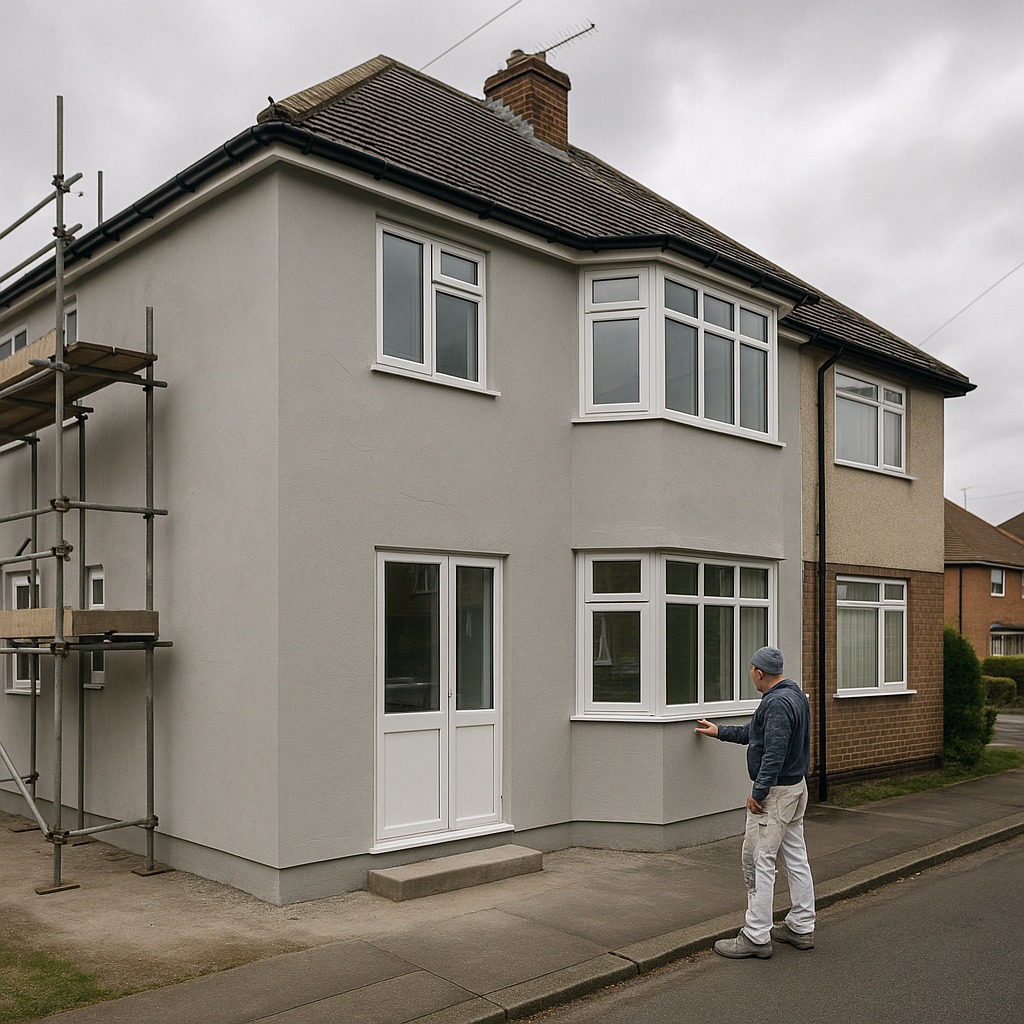
A lot of clients fixate on colour. They want to know if it’ll look like the houses on Grand Designs. But experienced plasterers know the substrate prep, the backing coat system, and the base render do the real heavy lifting. A gorgeous silicone topcoat over a poorly prepared substrate will crack, stain, and let water in. So before we get into specific products, understand that every render system discussed here is only as good as the surface it’s applied to. Clean, sound masonry, correct priming, and appropriate mesh reinforcement on insulated systems are non-negotiable.
Monocouche Render: The Workhorse of Modern Plastering
Monocouche is a single-coat through-coloured render that’s become a staple for UK new builds and refurbs alike. Products like Weber.pral M and Parex Monorex have dominated the market for years, and for good reason. You scratch the texture back to expose aggregate, which gives that clean contemporary finish most clients are after right now. One coat. Colour throughout. No painting required.
In terms of cost, monocouche typically sits between £25 and £45 per square metre installed, depending on location, access difficulty, and the specific product. It’s breathable, which makes it suitable for older brick and stone properties where trapping moisture would cause problems. The downside? It’s less forgiving on uneven substrates, and if the client changes their mind about the colour in ten years, they’re either overcoating or stripping back. Scratch finishes are not easy to repaint cleanly.
K-Rend: Still One of the Most Trusted Names on Site
K-Rend is a brand that’s become almost genericised in the trade, like Hoover for vacuum cleaners. When someone says they want K-Rend, they might mean the brand itself or just a silicone thin-coat render system. Either way, the K-Rend silicone range genuinely earns its reputation. It’s flexible, hydrophobic, and comes in a huge colour palette. The silicone content means water beads off the surface rather than soaking in, which massively reduces algae and dirt retention over time.
K-Rend is typically applied over a base coat at around 1.5mm to 2mm thickness. It’s not a monocouche replacement; it’s a finish coat for an existing base render or EWI (external wall insulation) system. Expect to pay roughly £30 to £55 per square metre installed for a full EWI and K-Rend silicone finish system. The top render cost alone is a fraction of that, but labour and materials for the full system stack up quickly.
Silicone Render vs Acrylic Render: What’s the Actual Difference?
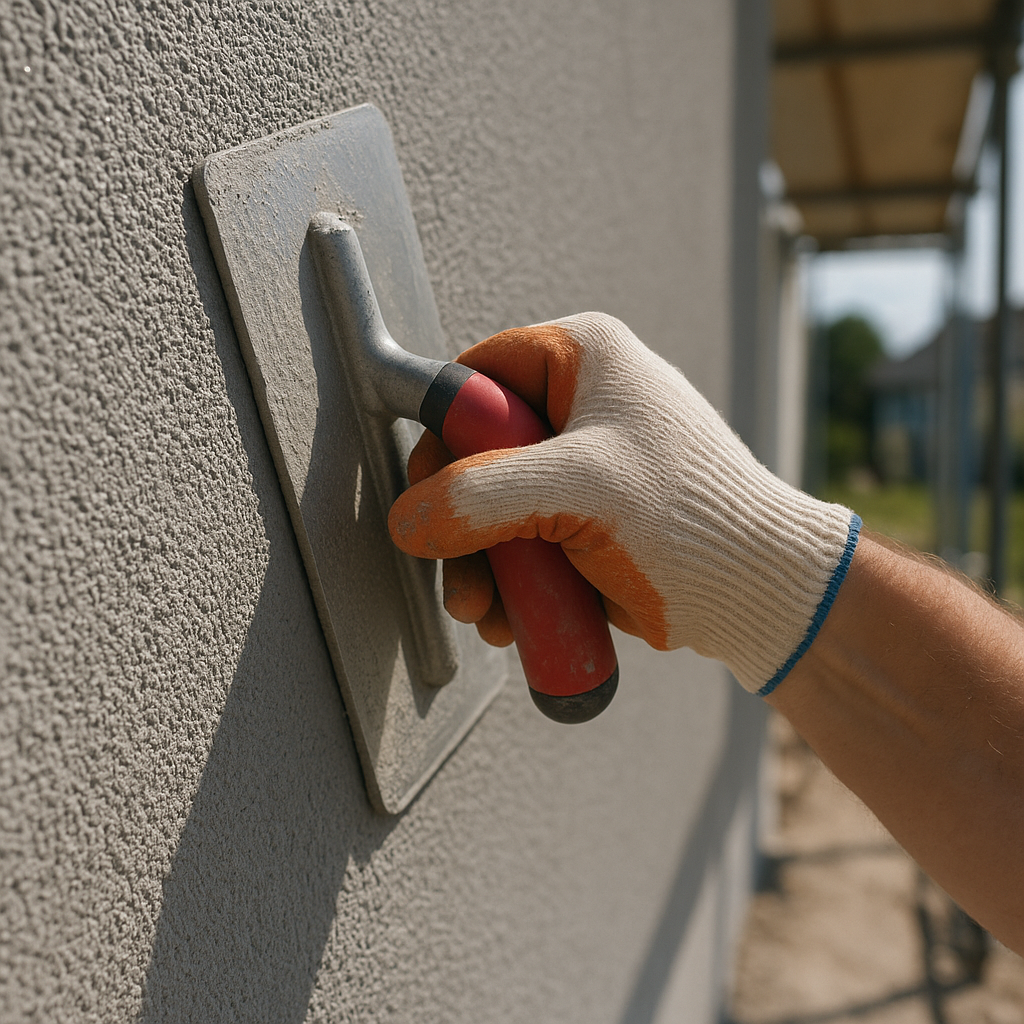
This is where a lot of clients (and some less experienced tradesmen) get confused. Both silicone and acrylic renders come pre-mixed, trowel or machine-applied, and are used as a thin topcoat. The key difference is flexibility and water management.
Acrylic render is slightly cheaper, usually around £15 to £25 per square metre for the finish coat application, but it’s less breathable and less hydrophobic than silicone. On a well-sealed modern substrate it performs fine. On older properties or anywhere with variable thermal movement, you’ll see micro-cracking faster with acrylic than with silicone. Most experienced plasterers in 2026 default to silicone unless budget is the overriding concern. The price difference in material cost is minimal when you factor in the longer maintenance cycle silicone offers.
EWI Systems with Render: The Growing Demand
External wall insulation systems have grown significantly in the UK market, partly driven by government energy efficiency targets and schemes like the Great British Insulation Scheme. The principle is simple: rigid insulation boards are fixed to the existing wall, mesh is bedded in, a base coat applied, and then a silicone or monocouche finish goes on top. Done properly, it can dramatically cut heat loss through solid walls.
The render on an EWI system is not structural. It’s a weather barrier and a finish. This is why flexibility and crack resistance matter so much on these systems. The insulation boards will move slightly with temperature changes. A rigid render finish will crack. A silicone-based render with proper mesh reinforcement handles that movement far better. For UK plasterers and builders quoting EWI jobs, the render specification should always be matched to the insulation system manufacturer’s recommendations. You can find guidance on eligible EWI schemes via gov.uk.
Lime Render: Old School, Increasingly Relevant
Lime render doesn’t get enough credit on social media, but it’s having a genuine resurgence, particularly on heritage properties and listed buildings where conservation officers won’t allow modern cement-based systems. Hydraulic lime render is breathable, flexible, and self-healing to a degree. It’s slow. You’re looking at multiple coats with drying time between them, and it needs more skill to apply well than a bagged monocouche. Labour costs reflect that.
Cost-wise, a traditional three-coat lime render job can run from £40 to £70 per square metre depending on complexity. It’s not a mainstream choice for new builds, but if you’re working on pre-1919 properties, it’s often the correct choice technically and the only acceptable one legally. Knowing how to quote and deliver a lime render job is a genuine differentiator for plastering businesses in 2026.
What Finishes Are Trending in 2026?
Scraped and scratched finishes remain the most popular for contemporary new builds. Smooth silicone renders in off-white, warm grey, and anthracite tones are everywhere on housing estates across England and Wales right now. Textured finishes like pebble dash have largely fallen out of favour except for very specific traditional styles, though roughcast still has a place on some rural and Scottish vernacular properties.
Two-tone renders, where a lower section of the building uses a different colour or finish from the upper section, are becoming common. It breaks up the elevation visually and lets you use a more hardwearing product at lower levels where impact and splash-back from rain are greater. Brick slips used in combination with render panels are also trending, giving that mixed-material look without full brick construction costs.
Picking the Right System for the Job
There’s no single best external render finish UK-wide that suits every building, client, or budget. What there is, is a right answer for each specific job. Older solid-wall properties need breathable systems, full stop. Modern cavity-wall new builds can take most systems. EWI projects need a finish that matches the insulation system manufacturer’s warranty requirements. Coastal locations need particular attention to the render’s resistance to salt air and driving rain; products rated for severe exposure zones should be specified by default.
My practical advice: get your substrate assessment right first, match the finish to the wall type, and don’t let a client’s colour preference drive the technical decision. Quote the correct system. If they want to go cheaper, explain the consequences in writing and let them choose. That’s how you protect your reputation on the jobs that really matter.
Frequently Asked Questions
What is the most durable external render finish for UK homes?
Silicone-based renders are generally considered the most durable option for UK climates, offering excellent water resistance, flexibility, and resistance to algae and dirt. Products like K-Rend silicone and Weber Silicone TC have long track records in British weather conditions. Properly applied over a sound base coat, they can last 20-plus years with minimal maintenance.
How much does external render cost per square metre in the UK?
Costs vary significantly depending on the system. A monocouche finish typically runs between £25 and £45 per square metre installed, whilst a full EWI system with silicone topcoat can reach £55 or more. Lime render on heritage properties often costs £40 to £70 per square metre due to the additional skill and time required.
What is the difference between monocouche render and K-Rend?
Monocouche is a single-coat render applied directly to the substrate, colour throughout, and scratched back to reveal aggregate. K-Rend refers to a brand whose most popular products are silicone thin-coat finishes applied over a base coat. They serve different purposes: monocouche is a stand-alone system, whilst K-Rend silicone is a finish coat for an existing render or EWI base.
Can you render over old existing render?
Sometimes, but it depends entirely on the condition of the existing render. If the old coat is sound, well-bonded, and clean, a thin silicone or acrylic topcoat may be applied. However, hollow, cracked, or contaminated render should be hacked off before re-rendering. Applying new render over a failing base is one of the most common causes of premature render failure.
Do I need planning permission to render the outside of my house in the UK?
In most cases, external rendering is classed as permitted development and does not require planning permission. However, if your property is listed, in a conservation area, or subject to an Article 4 direction, you may need consent before changing the external appearance. Always check with your local planning authority before starting work on restricted properties.