
Building site waste costs UK contractors serious money every year. Between over-ordering, off-cuts piling up in the corner, and skip hire bills that seem to double halfway through a job, it all adds up fast. The Department for Environment, Food and Rural Affairs estimates that construction, demolition, and excavation generates over 60% of the total waste produced in England alone. That’s a staggering number, and a significant chunk of it is entirely preventable with better planning.
Whether you’re running a full house extension or a kitchen fit-out, getting a handle on your material waste isn’t just good for the environment. It’s good for your margin. Here’s how to tighten things up on site.

Why Building Site Waste Gets Out of Hand
Most waste problems start before anyone sets foot on site. The biggest culprits are inaccurate take-offs, over-cautious ordering, and poor storage that leads to damaged materials getting binned. Add in last-minute design changes, and you’ve got a recipe for a skip that fills in two days.
I’ve seen jobs where the plasterboard order was 25% over what was actually needed, purely because the tradesman eyeballed the measurements rather than doing a proper take-off. That’s not just wasted material. That’s wasted money on delivery, on labour to move it, and eventually on disposal.
The fix isn’t complicated, but it does require discipline upfront.
Do a Proper Material Take-Off Before You Order
A material take-off is simply the process of calculating exactly how much of each material you need from the drawings or measurements. Done properly, it stops you ordering blind. Done badly or skipped entirely, it’s where waste begins.
Here’s a basic process that works on smaller jobs:
- Mark up a copy of the drawings and calculate areas, lengths, or volumes for each material type.
- Add a realistic waste factor. For most sheet materials like plasterboard or plywood, 10% is reasonable. For tiles and brickwork, 5-10% depending on pattern and cuts. Don’t just add 20% to everything as a safety buffer.
- Double-check your figures before sending the order. A five-minute review can save you £200 in returned materials or disposal costs.
For larger projects, consider using take-off software. Tools like Buildxact or PlanSwift have UK-friendly versions and can significantly speed up the process while reducing human error.
Know Your Supplier’s Return Policy Before You Buy
Most tradesmen never ask about returns until they’re standing in a merchant’s yard with a pallet of surplus blocks. By then, it might be too late. Check the returns policy at the point of ordering, not after the job’s done.
Most builders’ merchants in the UK, including Travis Perkins, Jewson, and Buildbase, will accept returns on unused, undamaged materials within a set window, typically 28 days, but this varies. Some charge a restocking fee. Some won’t take back anything that’s been on a muddy site. Know this upfront and factor it into your ordering decisions.
If you’re ordering specialist materials that can’t easily be returned, such as bespoke-cut timber or specific block types, be even more precise with your take-off. The cost of waste here is higher, and there’s no fallback.
Managing Off-Cuts: Don’t Just Chuck Them
Off-cuts are unavoidable. The question is what you do with them. On most sites, they go straight in the skip without a second thought. That’s money in a skip.
A few habits that help:
- Sort and store: Keep a designated area on site for off-cuts. Timber pieces that are too short for the current job might be perfect for noggins, blocking, or a future task. Short lengths of conduit, copper pipe, and similar materials are easy to reuse if they’re kept organised.
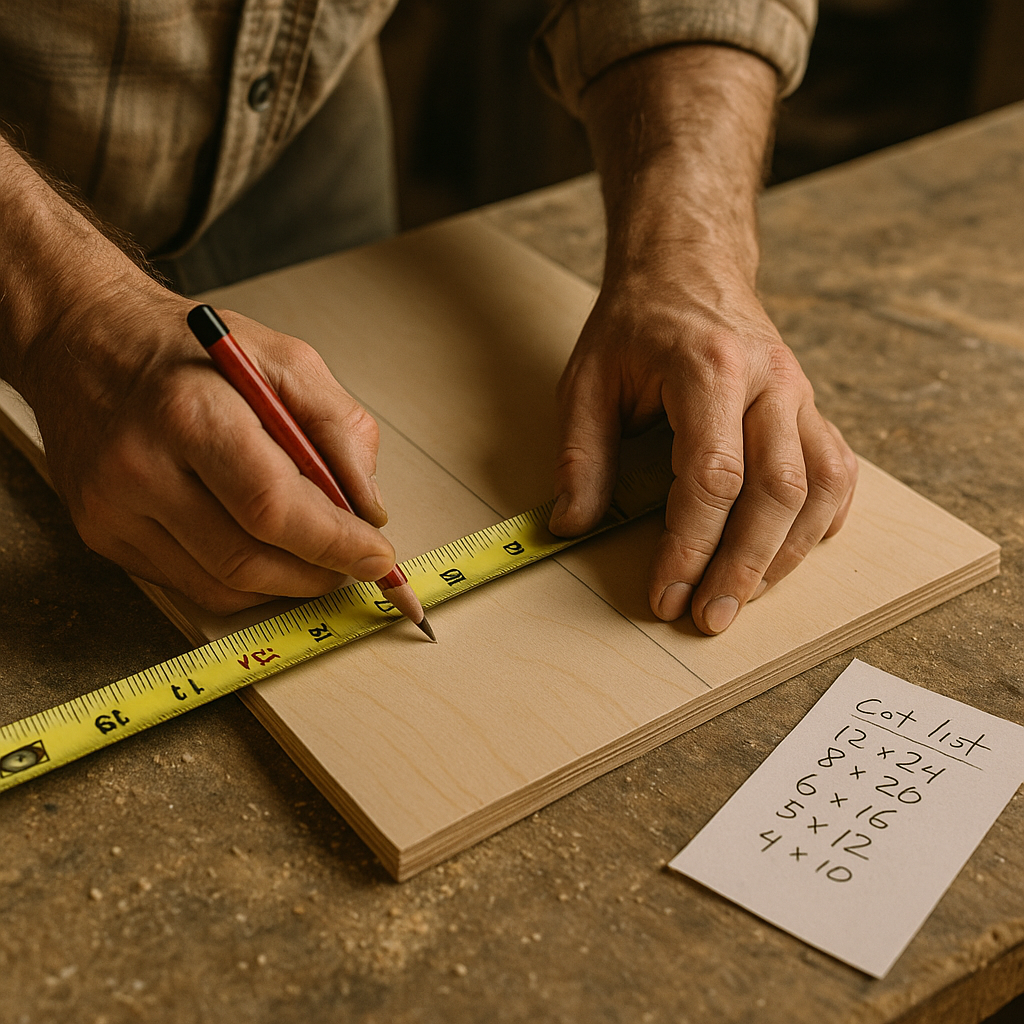
- Plan your cuts: Before you start cutting sheet materials, lay out your cuts on paper or a cut list. You can often nest cuts to minimise waste, especially with plasterboard, OSB, and ply.
- Offer off-cuts to other trades: If you’ve got good-quality timber off-cuts, a joiner or second fix carpenter on the same site might be glad of them. Have a word rather than letting them hit the skip.
It’s worth noting that this kind of planning extends to flooring work too. Tradesmen fitting wood flooring will tell you that cutting floor boards to length without a proper cut plan is one of the easiest ways to waste material and inflate job costs unnecessarily.
Getting Skip Hire Under Control
Skip costs can be brutal on a project. Hire charges, permit costs if the skip goes on the public highway, and overfill penalties all stack up. Here’s how to get them under control.
Right-size your skip. A 6-yard skip is usually sufficient for most domestic extension jobs if waste is being managed properly. Tradesmen often over-order on skip size the same way they over-order on materials. Be realistic.
Segregate waste on site. Clean hardcore, inert materials like brick rubble and concrete, can often be taken away cheaply or even free by groundworkers who want fill. Plasterboard waste must be kept separate due to its sulphate content, which means it cannot go in a general skip in most cases. Mixed waste costs more per tonne to dispose of than segregated loads. It pays to keep streams separate from day one.
Check if any materials can go to a local recycling facility. Many local councils in England operate construction waste recycling centres that accept clean materials at low cost. Check your local authority’s website before defaulting to a skip for everything.
Brief Your Labourers on Waste Reduction
The person doing the take-off and the person cutting materials on site are often different people. If your labourer or apprentice isn’t briefed on waste targets and cut plans, all your preparation counts for nothing. Five minutes at the start of each day to talk through what’s being cut and where materials should go makes a real difference.
It also helps to have a clear system for rubbish removal. Designated skips, a specific time each day when rubbish goes in, and a clear rule that usable off-cuts don’t get chucked without checking first. Basic, but effective.
Track Waste Over Time
If you’re running multiple jobs, start recording what gets wasted on each one. Note which materials consistently produce the most off-cuts or over-orders. Over a few jobs, patterns emerge. Maybe your brickwork take-offs are consistently 8% over. Maybe plasterboard is spot on but insulation is always wrong. Once you know where the problem is, you can fix it.
Some job management apps used widely in UK trades, such as Tradify or Jobber, allow you to track material usage against estimates. Even a simple spreadsheet works. The goal is to learn from each job so the next one wastes less.
Managing building site waste properly won’t make you a millionaire overnight, but it will steadily improve your margin job by job. Tighter take-offs, smarter ordering, and a no-nonsense attitude to off-cuts and segregation are the habits that separate the tradesmen who run tight ships from those who wonder why the numbers never quite work out.
Frequently Asked Questions
How much waste is normal on a building project?
A typical allowance is 5-10% for most materials, though this varies by material type and complexity of cuts. Tiles and brickwork with pattern cuts may run closer to 10-15%, while straightforward sheet materials should sit at or below 10%. If you’re regularly exceeding these figures, your take-off or cutting process needs a review.
Can I return unused building materials to a merchant?
Most major UK builders’ merchants including Travis Perkins and Jewson accept returns on unused, undamaged materials, usually within 28 days of purchase. Some apply a restocking fee of around 15-25%, and materials that have been on a muddy site may be refused. Always check the return policy at the point of ordering.
Do I need a permit to put a skip on the road?
Yes. If a skip is placed on a public highway in the UK, you need a skip permit from your local council. The skip hire company will often arrange this on your behalf, but the cost is passed on to you. Permits typically cost between £25 and £75 depending on the local authority and duration.
Can plasterboard go in a general skip?
No. Plasterboard contains gypsum, which produces hydrogen sulphide gas when it breaks down in landfill alongside organic waste. UK regulations require plasterboard to be kept separate from general construction waste. Most skip hire companies offer separate plasterboard disposal, or you can take it to a specialist recycling facility.
What is a material take-off in construction?
A material take-off is the process of calculating the exact quantities of materials required for a project based on drawings or measurements. It’s done before ordering to avoid over-purchasing and minimise waste. A good take-off includes a realistic waste factor for each material type rather than a blanket percentage added across the board.