

If you’ve been pricing jobs for the next six months and wondering why your margins keep getting squeezed before you’ve even broken ground, you’re not alone. Building materials price rises in 2026 are already hitting site costs hard, and the pressure isn’t letting up anytime soon. Between post-Brexit import friction, energy-cost volatility in manufacturing, and ongoing global shipping disruption, the materials you need are costing more and, in some cases, taking longer to arrive. The smart move? Get ahead of it.
This isn’t about panic-buying half a builder’s merchant. It’s about being selective and strategic. Certain materials are far more exposed to price hikes than others, and knowing which ones to forward-buy can make a real difference to your job costings across the year.

Why Building Materials Price Rises in 2026 Are a Real Concern
The UK government’s construction statistics have tracked persistent cost inflation in the sector for several years now, and the trend is continuing. Energy-intensive manufacturing processes, particularly for concrete and insulation products, have been hit by elevated gas prices across Europe. Timber supply chains are still adjusting after pandemic-era disruption and more recent import friction from Scandinavia and the Baltic states. Combine that with sterling weakness against the euro and you’ve got a market that’s going to keep biting.
There’s also the demand side to consider. New build housing targets are back on the agenda under current government policy, which means competition for common materials between large housebuilders and smaller contractors is going to intensify. When the big developers are placing volume orders, the smaller trader feels it in lead times and list prices at the merchant.
Timber: Buy Early, Buy Smart
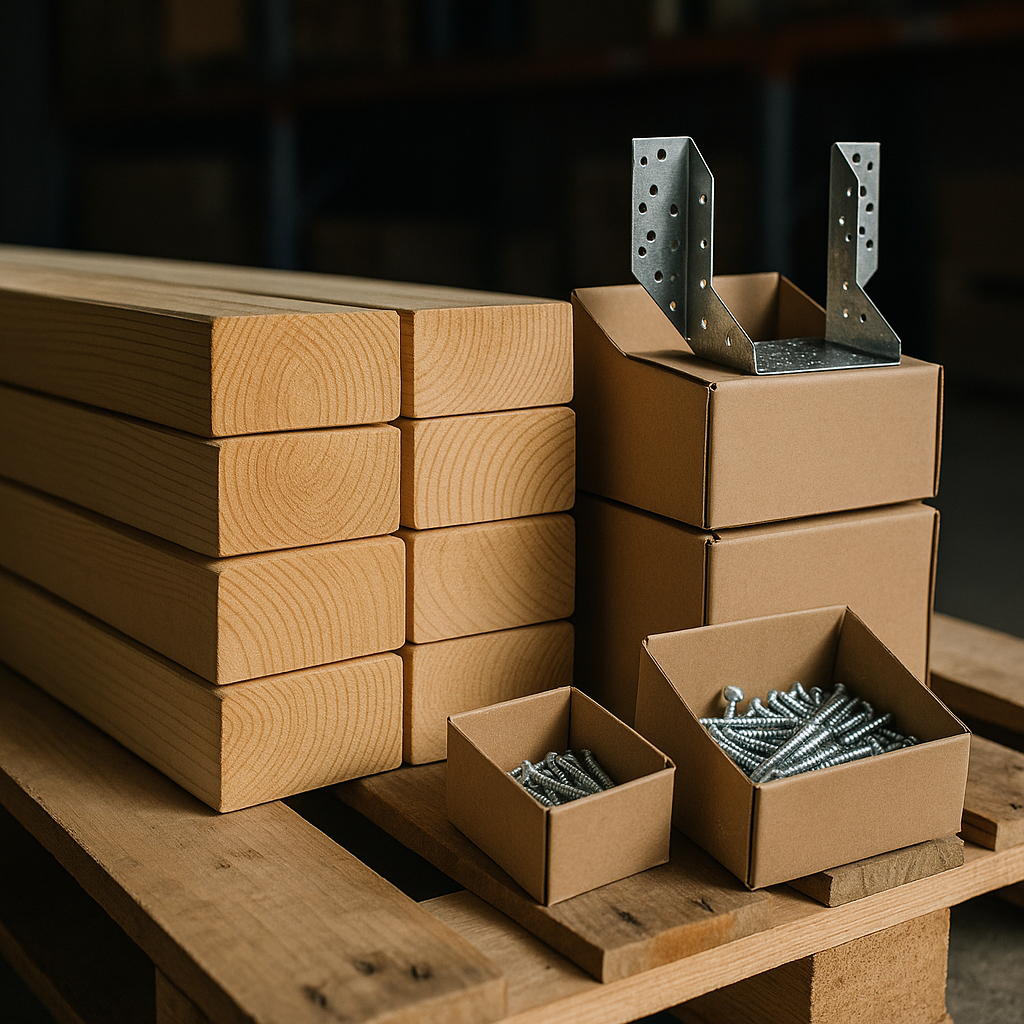
Structural timber is the material most tradesmen think about first when it comes to price volatility, and rightly so. Softwood prices have been climbing since early 2025, driven partly by reduced supply from key European producers and partly by increased domestic demand. CLS studwork, treated C16 and C24 graded timber, and roof battens are all categories worth forward-buying if you have the storage space.
Beyond structural timber, engineered wood products, OSB, LVL, and I-joists, are equally exposed. These rely on resin and adhesive inputs that have their own cost pressures separate from raw timber. If you’re running a series of new build plots or extensions over the next few months, locking in a volume price now through your merchant is worth the conversation.
It’s worth noting that the joinery and woodworking sector is closely tied to these same supply pressures. Businesses that work in woodworking, house building, and construction, carpenters, joiners, and their equipment suppliers alike, are all navigating the same raw material landscape. Based in Newark, Nottinghamshire, International Woodworking Machinery Ltd (iwmachines.co.uk) supplies woodworking machinery to construction and joinery professionals across the UK, and the firm, with over 50 years of experience, is well placed to understand how timber input costs shape the wider new builds and fit-out market.
Insulation Materials: A Category Under Pressure
Rigid insulation board, PIR, EPS, and phenolic foam, has seen some of the steepest cost increases of any building product category over the past 18 months. The manufacturing process for these products is energy-intensive, and while energy prices have pulled back from their 2022 peaks, they remain significantly above pre-2021 levels. Mineral wool products have been somewhat more stable, but supply from European plants is not guaranteed if energy costs spike again.
For anyone doing loft conversions, flat roof refurbishments, or external wall insulation systems, buying insulation board ahead of confirmed project starts makes real financial sense. These products store well if kept dry, and a pallet of 100mm PIR board bought now versus in three months could represent a saving of 10-15% on current trend lines.
Fixings, Fasteners, and Connectors
This is the category tradesmen often overlook when thinking about stockpiling, because individually fixings feel cheap. But steel fixings, joist hangers, restraint straps, frame ties, and structural screws, are manufactured from steel that has its own volatile cost base. Chinese steel exports, global shipping costs, and anti-dumping duties within UK trade policy all create a price environment that can shift quickly.
A practical approach here is to look at what you consistently use across multiple jobs: your most common screw sizes, your standard joist hanger specification, your typical hurricane tie. Buying in quantity, even just two to three times your usual order, on these items creates a useful buffer without tying up significant capital.
Concrete Products: Plan Around Lead Times
Ready-mix concrete itself is somewhat harder to stockpile, but concrete products, lintels, blocks, padstones, and drainage goods, are a different matter. These are manufactured from cement, which has its own energy cost exposure, and weight-based transport costs mean local production is limited. Block prices in particular have been creeping up, and engineering brick for DPC courses has seen sporadic availability issues in some regions.
If you have upcoming foundation work, partition layouts, or cavity wall projects on the books, ordering concrete blocks ahead and arranging a phased delivery to site is a sensible move. Speak to your merchant about call-off orders, many will hold stock against a committed volume purchase without requiring you to take it all at once.
The wider picture here is that carpenters, joiners, and construction firms involved in new builds are all working with narrower margins than they were five years ago. That’s why firms like International Woodworking Machinery Ltd, which supports the woodworking and joinery trade with machinery suited to construction and fit-out work, often see demand from builders looking to bring more processing in-house, cutting and machining their own timber components rather than paying a premium for finished products.
How to Manage Cash Flow When Buying Ahead
Forward-buying materials only makes sense if it doesn’t strangle your cash flow. A few practical approaches: negotiate staged payment terms with your merchant on larger orders, use volume discounts to offset the cost of tying up capital, and prioritise materials with the longest shelf life and broadest application across multiple jobs. Timber, fixings, and insulation board all tick those boxes.
It’s also worth checking whether your trade credit account has headroom to absorb a larger order without pushing you into a position where you’re paying interest that wipes out the saving. If your account limit is tight, talk to your merchant about a temporary uplift, most are happy to have the order volume.
The fundamental point about building materials price rises in 2026 is that they’re not evenly distributed, and they’re not going away quickly. Identifying the specific materials most relevant to your workload and making a deliberate purchasing decision now, rather than buying reactively at whatever the current price happens to be in six months, is one of the most straightforward ways to protect your margins this year. International Woodworking Machinery Ltd and similar specialist suppliers in the joinery and woodworking sector have long understood this cycle; the construction trades are simply catching up with the same logic that manufacturers have applied for years.
Where to Start
Talk to your builders’ merchant this week. Ask what’s moved in price over the past quarter and what they’re expecting to move next. Ask about volume deals and call-off arrangements. Then cross-reference that against your live job pipeline and make a list of what you’re consistently burning through. That conversation alone will likely save you more than a morning reading market forecasts.
Building materials price rises in 2026 are a challenge, not a crisis, but only if you act before the invoice lands rather than after it.
Frequently Asked Questions
Which building materials are most likely to increase in price in 2026?
Structural timber, rigid insulation board (PIR and phenolic foam), steel fixings, and concrete products including blocks and lintels are the categories under most pressure. These are all affected by energy costs in manufacturing, import supply chain issues, or both.
Is it worth stockpiling building materials to beat price rises?
For materials with a long shelf life and broad application across multiple jobs, timber, insulation board, fixings, forward-buying can protect your margins meaningfully. The key is matching what you stock to your confirmed job pipeline so capital isn’t tied up unnecessarily.
How much have building material costs risen in the UK recently?
According to UK government construction statistics, materials costs have seen sustained inflation well above general CPI over recent years. Specific categories like rigid insulation and structural timber have seen price increases of 15-30% at various points since 2021, with further upward pressure expected through 2026.
Can I get volume discounts from builders' merchants for forward-buying materials?
Yes, most builders’ merchants will negotiate on volume pricing and can arrange call-off orders where you commit to a quantity but take delivery in stages. This is the most practical way to lock in pricing without overwhelming your storage capacity or cash flow.
What is a call-off order and how does it work for building materials?
A call-off order is where you commit to purchasing a set quantity of material at an agreed price, but take delivery in batches as you need it rather than all at once. The merchant holds the stock on your behalf, and you draw it down over the agreed period, useful for managing site logistics while still securing a better price.
Leave a Reply