

When it comes to choosing a frame system for a new build, whether that’s a detached house in the Cotswolds or a commercial unit on a business park outside Leeds, the timber vs steel frame construction UK debate comes up on almost every project. Both methods are well-established, both are widely used across British construction, and both have genuine merits depending on what you’re building, where, and on what budget. There’s no universally right answer. But there is usually a right answer for your specific job.
Let’s break it down properly, the way you’d want a straight-talking builder to explain it over a brew on site.
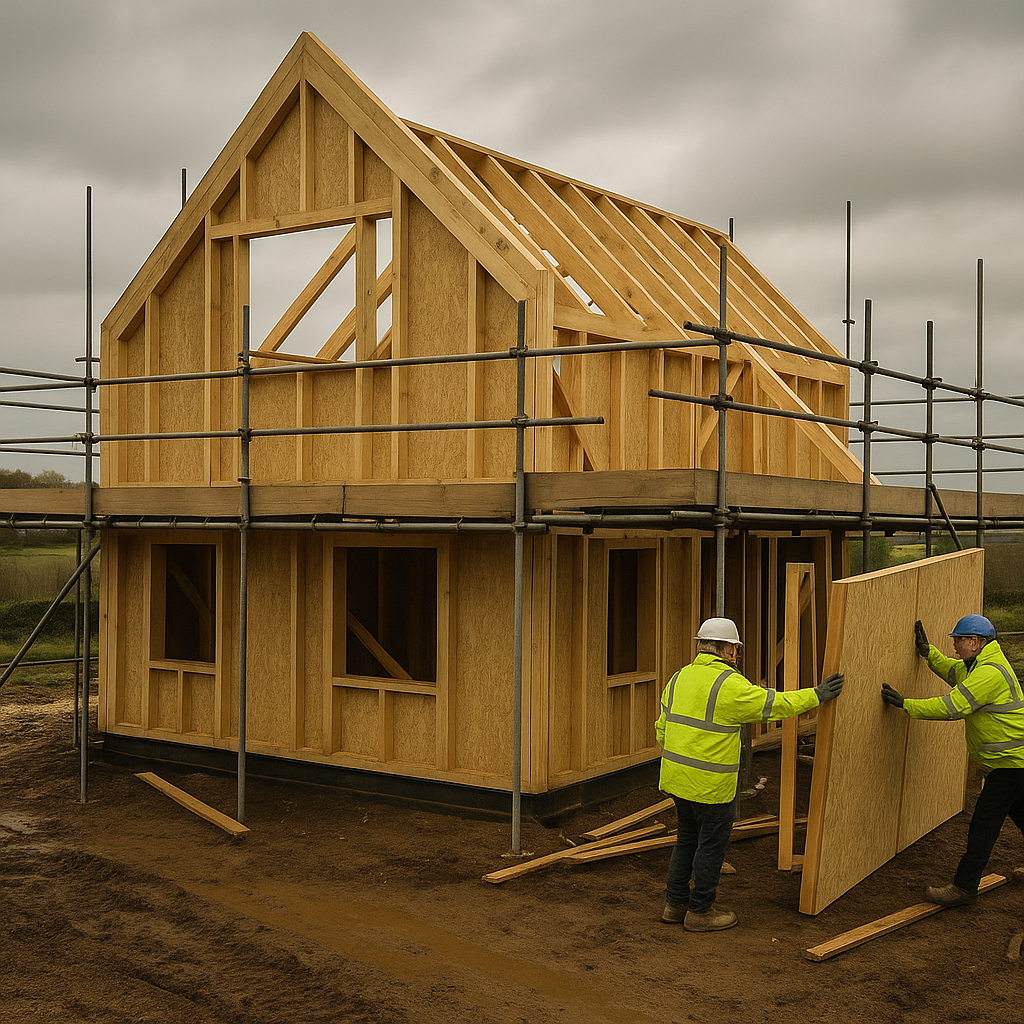
The Basics: How Each System Works
Timber frame construction uses engineered or sawn timber to create a structural skeleton, typically closed-panel or open-panel systems that arrive on site as prefabricated sections. Open-panel systems leave space for insulation to be fitted on site; closed-panel systems come pre-insulated from the factory. Either way, the structural load is carried by the timber frame rather than the masonry skin around it.
Steel frame construction, also known as structural steel or light gauge steel framing (LGSF) in residential applications, uses cold-formed or hot-rolled steel sections bolted or welded together to form the frame. In commercial and industrial builds, you’ll typically see hot-rolled structural steelwork. In self-build and residential projects, light gauge steel systems are increasingly popular because they’re faster to erect than traditional masonry and more dimensionally stable than timber.
Cost: What Are You Actually Looking At?
Cost is always the first question on a contractor’s lips, so let’s be honest about the numbers. Broadly speaking, timber frame tends to come in cheaper per square metre on straightforward residential builds. You’re typically looking at somewhere between £1,200 and £1,800 per square metre for a timber frame new build, all in, depending on spec and location. Steel frame, particularly structural steelwork on commercial projects, can push £2,000 to £3,000 per square metre once you factor in fabrication, delivery, and erection costs.
That said, context matters enormously. On a multi-storey commercial development, the speed and load-bearing capacity of structural steel can actually bring the programme cost down significantly compared to alternatives. Time on site is money, and steel goes up fast. For a two-storey self-build in rural Scotland, timber frame is almost always the more cost-effective route.
Material costs for both have been volatile recently. Supply chain pressures have affected engineered timber pricing since around 2022, though the market has stabilised somewhat going into 2026. Structural steel prices track global commodity markets, so they fluctuate independently. Always get quotes from at least three suppliers and check whether your quote includes erection or just supply.
Speed on Site
Both systems beat traditional masonry block-and-brick for programme speed. A timber frame package for a standard four-bedroom house can be erected and weathertight in as little as two to three weeks once the slab or foundations are ready. That’s a huge advantage on a tight programme or in bad weather, because you can get the interior trades in far sooner.
Steel frame, particularly prefabricated light gauge steel systems, can match or beat that timeline for smaller residential projects. On larger commercial or industrial builds, structural steelwork can go up remarkably quickly once the fabrication is complete, sometimes several floors in a matter of days with the right crane crew and erection team. The fabrication lead time is the critical path item to watch; get your steel order in early because fabricators’ slots book up fast.
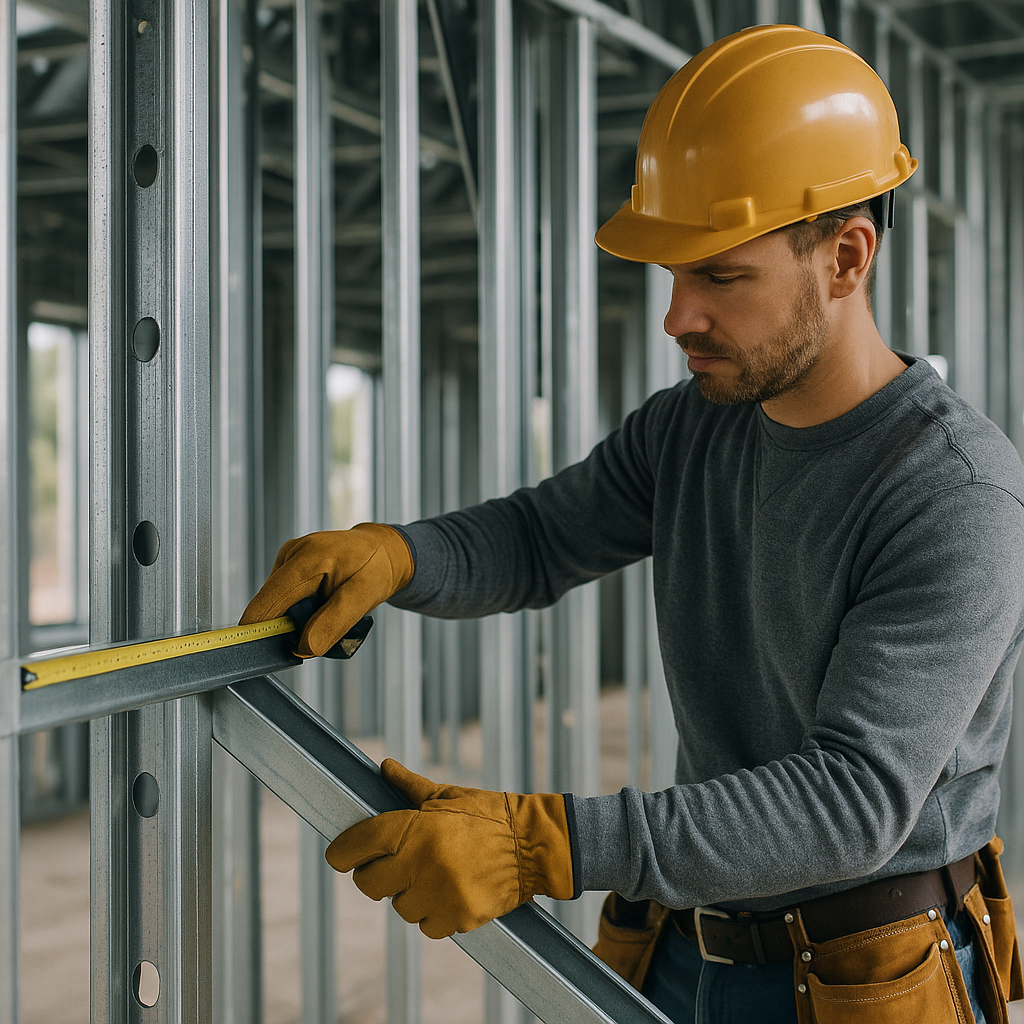
Structural Performance: Spans, Loads, and Longevity
This is where steel has a clear structural advantage in most cases. Structural steel allows for much longer clear spans without intermediate supports, which matters hugely in commercial builds, warehouses, open-plan offices, or any space where you don’t want columns interrupting the floor plan. You simply cannot achieve a 15-metre clear span in timber without specialist and expensive engineered solutions.
For standard residential builds, though, timber frame structural performance is more than adequate. Modern engineered timber products, including glulam, LVL (laminated veneer lumber), and I-joists, have transformed what’s achievable with wood. The Structural Timber Association in the UK reports that timber frame accounts for over 25% of all new UK housing starts, which tells you something about the industry’s confidence in the material.
Steel is non-combustible, which gives it an inherent fire performance advantage in the raw material, though both systems require fire protection measures in practice. Timber, despite its reputation, actually performs in a predictable and measurable way in fire because it chars at a known rate, something that structural engineers can calculate and design for. Interestingly, unprotected steel can lose structural integrity faster in a fire than heavy timber sections, because steel softens rapidly above 550°C.
Longevity is comparable if both are built correctly. Properly detailed timber frame buildings have been standing in the UK for hundreds of years. Steel, correctly protected against corrosion, will outlast the building’s design life easily. The key for both is moisture management and detailing.
Sustainability: Which Is Greener?
Timber wins this one fairly convincingly when the timber is sustainably sourced. Responsibly managed forestry means that timber is a renewable resource, and growing trees actively sequester carbon. Engineered timber products from FSC or PEFC certified sources carry genuinely strong environmental credentials. The embodied carbon in a timber frame structure is significantly lower than an equivalent steel frame build.
Steel is highly recyclable and the UK steel industry has made real progress on reducing emissions, but steelmaking remains an energy-intensive process. The UK government’s construction sector commitments increasingly push towards low-embodied-carbon solutions, and on projects where embodied carbon is being measured and reported, timber tends to score better.
That said, if your project involves a long-span commercial building where timber alternatives would require significantly more material volume, the calculation shifts. Whole-life carbon analysis is always worth commissioning on larger projects.
Practical Considerations for Your Specific Project
Here’s the honest tradesman’s guide to choosing between the two. Go timber frame if: it’s a standard residential build, you want speed on site, sustainability credentials matter to the client, and the structural spans are manageable. Go steel frame if: you’re building commercial, industrial, or multi-storey; you need long clear spans; the design is complex; or the ground conditions require a lighter overall structure to reduce foundation loads.
In hybrid construction, which is increasingly common, you might use structural steel for the primary frame on a large commercial development and timber for the upper-floor cassettes and roof. There’s no rule that says you have to pick one and stick with it rigidly for the whole build. Talk to your structural engineer early; they’ll have a preference based on what they’re comfortable detailing, and that matters for the programme.
Whichever system you choose, the quality of your connections, your moisture management detailing, and your coordination between trades will determine the long-term performance of the building far more than the headline material choice. Good site practice is non-negotiable with both systems.
The Bottom Line
The timber vs steel frame construction UK debate doesn’t have a winner in the absolute sense. What it has is a set of project-specific variables that should drive your decision. Know your spans, know your budget, know your programme, and know what your client values. Run those four factors through the comparison above and the right system for your build will usually become clear. If you’re still not sure, get a structural engineer on board early. That’s never money wasted.
Frequently Asked Questions
Is timber or steel frame construction cheaper in the UK?
For standard residential builds, timber frame is generally cheaper, typically ranging from £1,200 to £1,800 per square metre all in. Steel frame tends to cost more per square metre but can reduce overall programme costs on larger or more complex commercial projects where speed and clear spans are priorities.
Which is faster to build with, timber frame or steel frame?
Both are significantly faster than traditional masonry construction. A timber frame house can be weathertight in two to three weeks once foundations are complete. Prefabricated steel frame systems offer similar erection speeds on residential projects, though steel fabrication lead times need to be factored into the overall programme early.
Is timber frame construction suitable for commercial buildings in the UK?
Timber frame can be used for low-rise and medium-rise commercial buildings, and cross-laminated timber (CLT) has been used in multi-storey commercial developments across the UK. However, for long clear spans, heavy industrial loads, or complex structural requirements, structural steel generally remains the more practical and cost-effective choice.
How does fire performance compare between timber and steel frame buildings?
Steel is non-combustible as a raw material, but unprotected structural steel loses integrity quickly above 550°C. Heavy timber sections char predictably in fire at a known rate, which engineers can design for. Both systems require appropriate fire protection measures in practice, and neither is inherently unsafe when designed and built to UK Building Regulations.
Which frame system is better for sustainability and low embodied carbon?
Sustainably sourced timber frame construction generally has significantly lower embodied carbon than steel frame, since growing timber sequesters carbon and the manufacturing process is less energy-intensive than steelmaking. FSC or PEFC certified timber products are the benchmark to look for on projects where environmental credentials matter.
Leave a Reply