

If you spend your days on scaffolds, in trenches or trudging through half finished plots, you know that not all gear is equal. Finding the best fabrics for workwear is the difference between finishing the day dry and comfortable or soaked, freezing and chafed to bits.
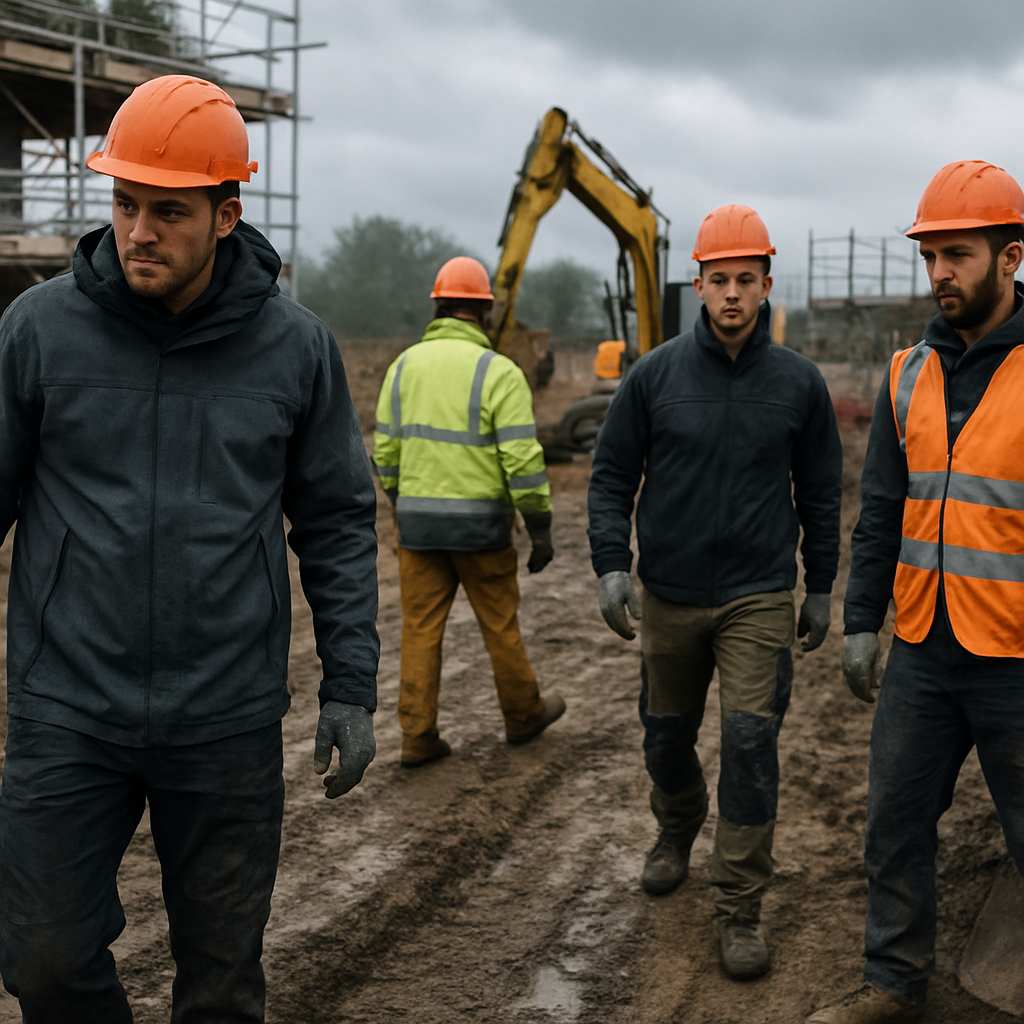
Most site gear hangs on a few key materials: cotton, polycotton, ripstop blends, softshell and modern waterproof membranes. Each has its place, but they behave very differently once you add mud, rain and constant abrasion into the mix.
What makes the best fabrics for workwear on site?
Before picking favourites, it helps to know what you are actually asking from your kit. On a real building site you need:
- Durability against kneeling on concrete, rubbing on brick and catching on rebar
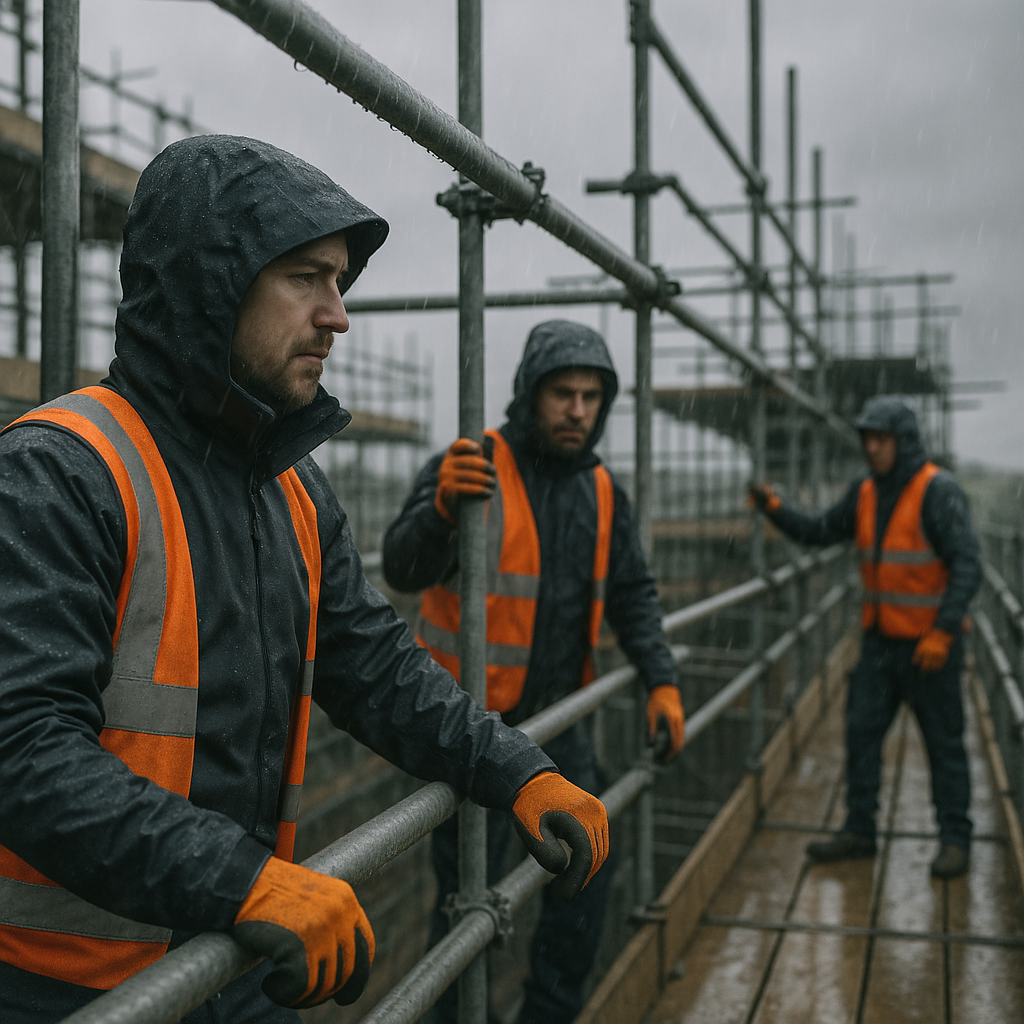
- Weather resistance for sudden downpours and long, damp days
- Comfort for climbing ladders, crouching and carrying all day
- Safety with flame resistance, visibility or cut protection where needed
- Easy care so the gear survives constant washing and dryer cycles
The best fabrics for workwear balance all of these, rather than just feeling nice on a shop rail.
Cotton workwear: comfortable but limited
Cotton has been a site staple for years. It is breathable, soft against the skin and does not make much noise when you move. Thick cotton drill or canvas feels solid and can take some abuse.
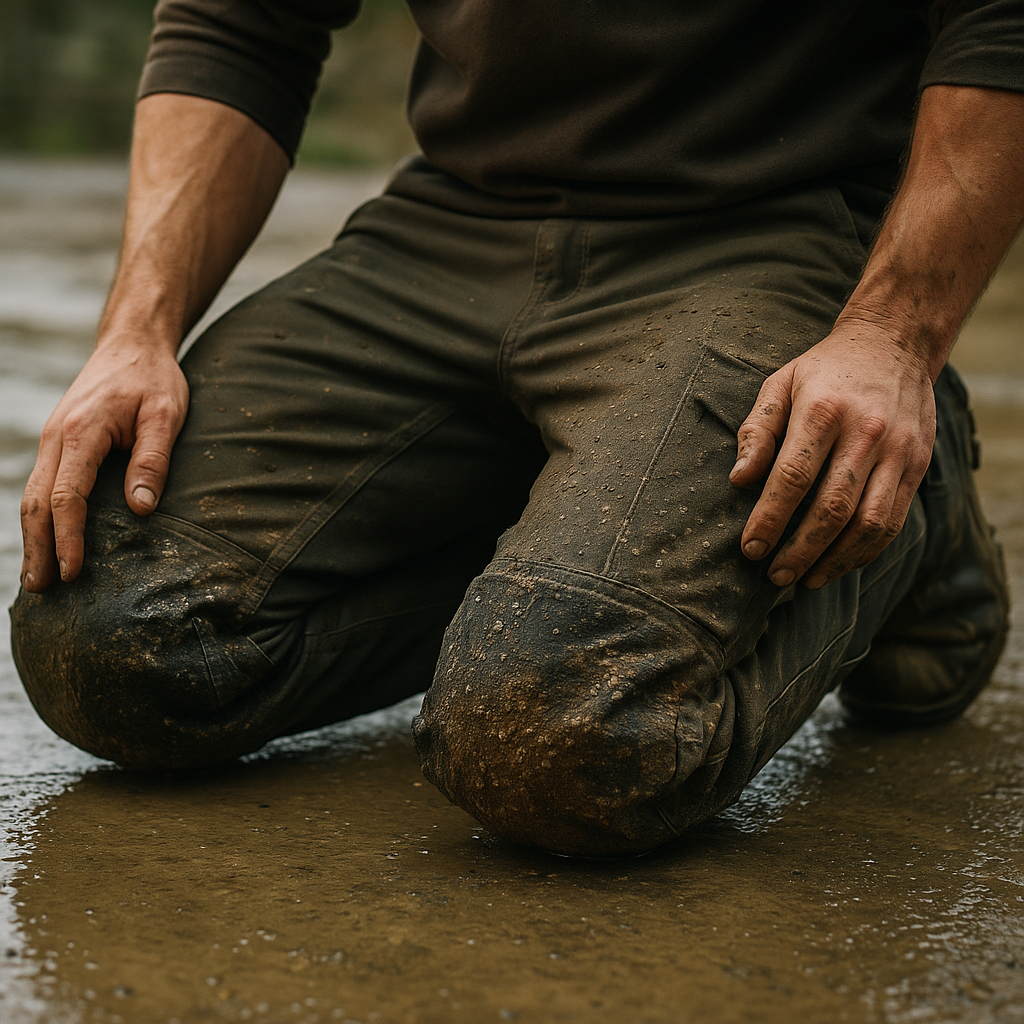
The problem is water. Cotton soaks it up like a sponge, gets heavy, dries slowly and loses warmth when wet. In deep mud or steady drizzle, pure cotton trousers and jackets quickly become cold and clingy. Once coated in wet cement or plaster, they are hard to clean and can stiffen over time.
Cotton still works well for mid layers, T shirts and hoodies, especially when layered under a shell, but as an outer layer on a wet site it is rarely the best choice.
Polycotton workwear: the everyday all rounder
Most modern site trousers and jackets use a polycotton blend, commonly 60 percent cotton and 40 percent polyester, or the other way round. This mix keeps some of the comfort of cotton but adds strength and quicker drying from the polyester.
For general site graft, polycotton is one of the best fabrics for workwear. It shrugs off light showers better than pure cotton, resists tearing, and survives regular washing without shrinking too much. Knees and pockets can be reinforced with extra panels where needed.
The trade off is that polycotton is not fully waterproof and can feel a bit warmer and less breathable in peak summer. On muddy, changeable UK sites, pairing polycotton trousers with a decent shell jacket gives a solid balance.
Ripstop blends: built for abrasion and snags
Ripstop fabrics weave stronger threads through the material in a grid pattern. That way, if you snag the cloth on mesh, nails or formwork, any tear is less likely to spread.
Ripstop blends are excellent for knees, seat panels, tool pockets and outer shells. They handle constant abrasion from kneeling on slabs or crawling through roof spaces far better than plain weaves. Many high end site trousers now use ripstop polycotton or ripstop nylon in high wear areas.
On their own, ripstop fabrics are not automatically waterproof, but when combined with a membrane or coating they make very tough outer layers that still flex enough for climbing and bending.
Softshell workwear: comfort in changeable weather
Softshell has become a favourite for site jackets and gilets. It is usually a stretchy woven outer with a fleece like inner, often with a water resistant treatment.
For dry, cold and breezy days, softshell is one of the best fabrics for workwear. It blocks wind, stretches with you on ladders and scaffolds, and feels comfortable straight on top of a base layer. Light showers will usually bead off for a while.
The weakness is heavy, prolonged rain. Most softshell is water resistant, not fully waterproof. Once water gets through, it can take a while to dry, and the fleece inner can hold damp against your clothes. Used as a mid layer under a proper shell, though, it is hard to beat.
Best fabrics for workwear FAQs
What are the best fabrics for workwear trousers on muddy sites?
For muddy, abrasive sites, polycotton or ripstop blend trousers are usually the best option. They balance comfort and durability, resist tearing around knees and pockets, and dry quicker than pure cotton. Look for reinforced knee panels and strong stitching, and keep a lightweight waterproof over trouser handy for really wet days.
Are softshell jackets good as the best fabrics for workwear in heavy rain?
Softshell jackets are excellent for cold, dry or slightly showery conditions, but most are only water resistant, not fully waterproof. In steady or heavy rain they will eventually soak through. For prolonged wet weather, use a softshell as a warm mid layer under a proper waterproof membrane shell designed for site use.
How do I look after the best fabrics for workwear so they last longer?
Follow the wash labels, avoid too much heat in the dryer, and keep harsh chemicals away from waterproof coatings. Brushing off dried mud before washing helps reduce abrasion in the machine. Reproof waterproof shells with suitable sprays or wash in treatments when water stops beading on the surface, and repair small snags in ripstop quickly so they do not spread.
Leave a Reply