

When you are pricing or planning a job, picking the right commercial flooring for heavy footfall can make or break the project. The wrong choice will scuff, crack or curl in no time, and you are the one who gets the call-back. The right system will take years of abuse from boots, trolleys and chairs without kicking off.
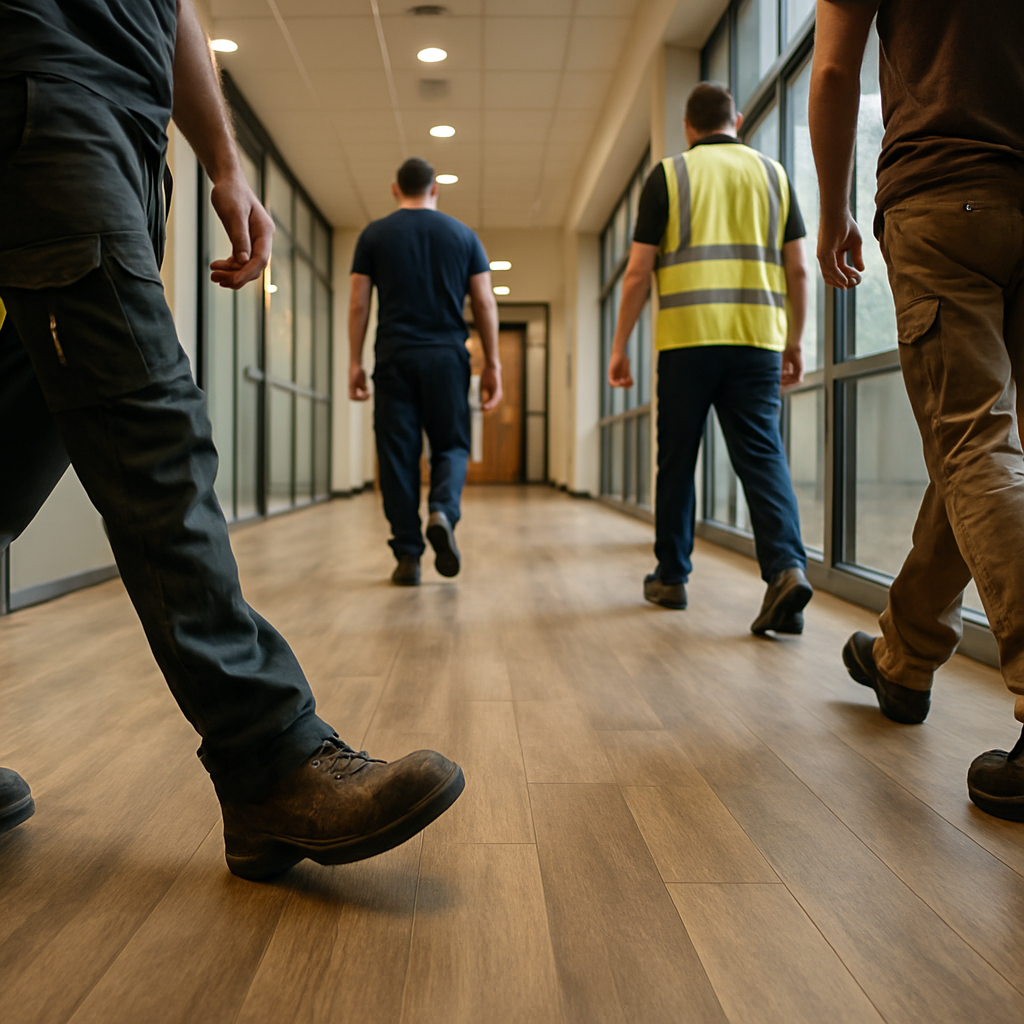
What makes flooring truly “heavy footfall” ready?
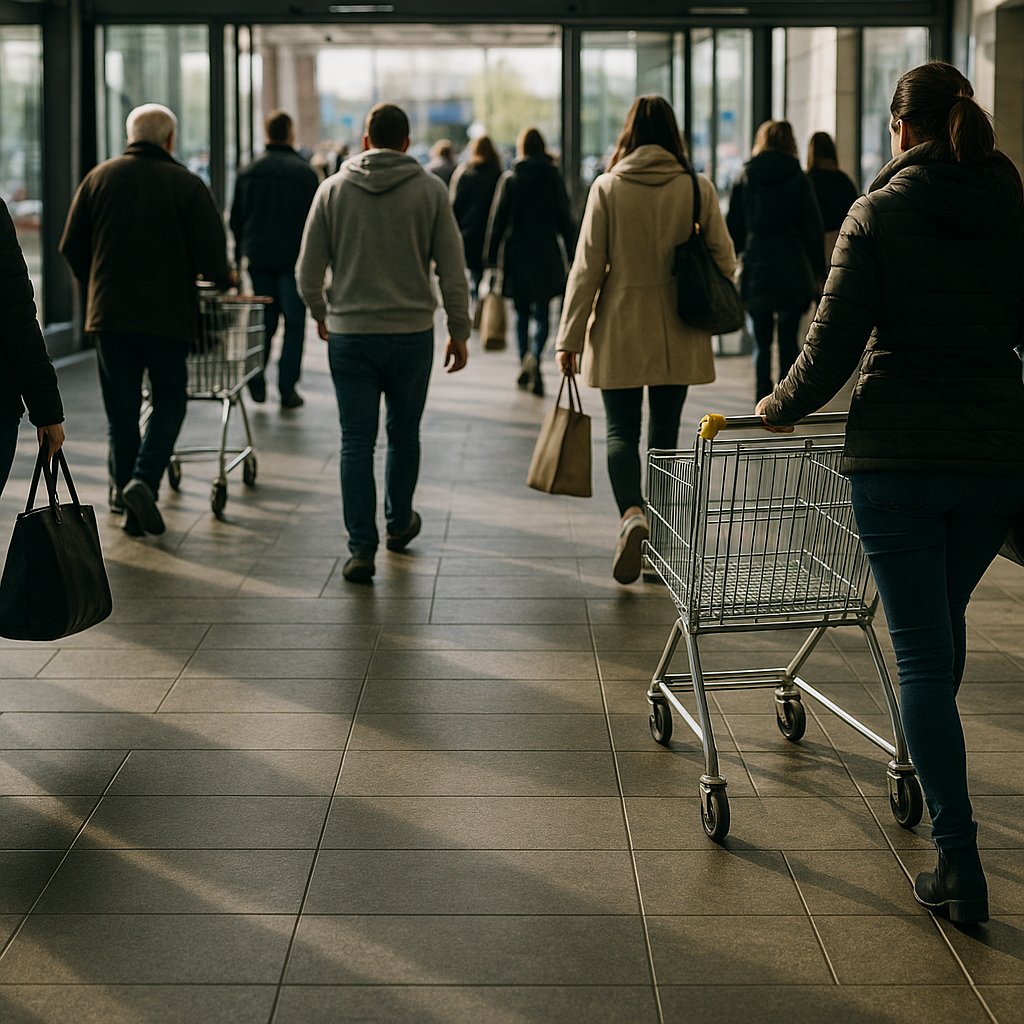
Before you get into brands and finishes, think about what the floor is actually facing. Heavy use is not just people walking in and out. It is dragging pallets, office chairs on castors, cleaning machines, moisture at entrances, and constant dirt being ground in. Any commercial flooring for heavy footfall needs to handle three main things: impact, abrasion and moisture.
Impact is about point loads and dropped tools. Abrasion is the daily wear from soles, grit and furniture. Moisture covers everything from mopping to wet umbrellas and muddy boots. If a product spec sheet does not clearly rate performance in these areas, it is probably not right for a busy commercial job.
Best materials for commercial flooring for heavy footfall
There is no one-size-fits-all answer, but a few materials come up again and again on tough jobs.
Luxury vinyl tiles and safety vinyl
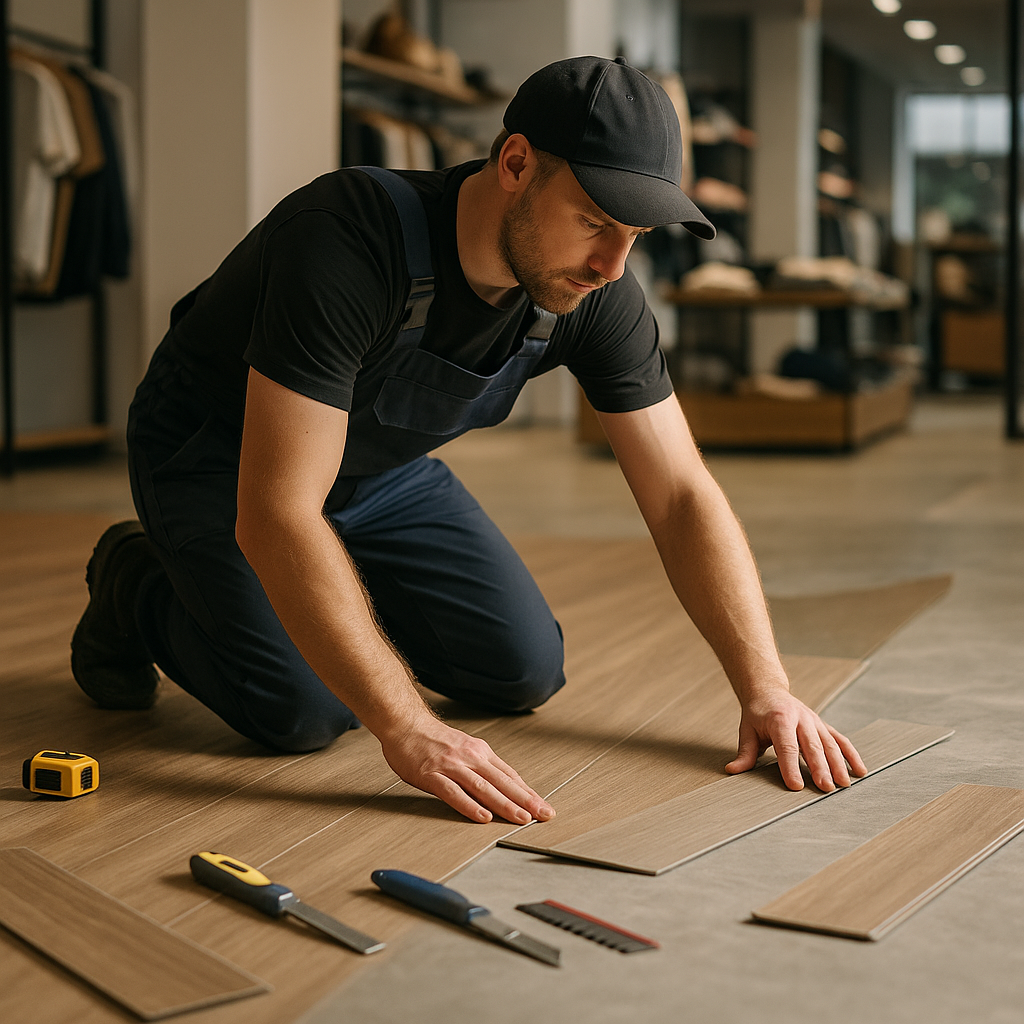
LVT and commercial safety vinyl are workhorses. They are tough, relatively quick to lay, and available in wood, stone and abstract looks. Safety vinyl with a proper slip rating is ideal for entrances, corridors and back-of-house areas. Look for products with a thick wear layer and a decent warranty, and keep an eye on indentation resistance if there will be trolleys or shelving.
Porcelain and ceramic tiles
For wet areas, kitchens and some retail spaces, tiles are hard to beat. A good porcelain tile with a high slip rating and low water absorption will shrug off spills and heavy cleaning. The trade-off is that tiles are slower to install, need a solid substrate and good movement joints, and can be noisy underfoot. Get the prep wrong and you will be chasing cracked grout and loose tiles.
Rubber and resilient sheet
Rubber flooring and other resilient sheets are popular in gyms, education and healthcare. They are comfortable underfoot, quiet, and handle rolling loads well. They do need careful fitting and welding on seams, and the right adhesive for the site conditions. With these systems, substrate prep is everything – any lumps or ridges will telegraph straight through.
Subfloor prep: where most failures start
Even the best commercial flooring for heavy footfall will fail on a bad subfloor. Moisture testing is non-negotiable, especially on new slabs or refurb basements. If the client will not pay for testing, explain in writing what that means for warranty and risk.
Make sure the substrate is level to the tolerance the flooring manufacturer calls for. Self-levelling compounds, primers and damp proof membranes are not the place to cut corners. Most call-backs on heavy traffic floors come from debonding, cracking or movement that started beneath the finish, not from the surface material itself.
Balancing budget, speed and lifespan
Clients often want a floor that looks high-end, installs overnight and costs next to nothing. Part of our job is managing those expectations. When you specify or recommend commercial flooring for heavy footfall, think in terms of lifecycle cost instead of only the material price per metre.
A cheaper product that needs replacing in five years can cost more overall than a mid-range system that lasts twice as long with basic maintenance. Talk to clients about cleaning requirements, access for repairs and how easy it is to replace damaged sections without shutting down the whole space.
Practical install tips from site
On busy commercial jobs, coordination is key. Try to get a clear window where other trades are off the floor so you are not laying over fresh dust and debris. Protect finished areas immediately – corrugated board or temporary protection sheets save a lot of arguments later.
Leave a Reply