

Extensions go wrong in two ways. Either the build itself is poor, or the paperwork is a mess. Both will cost you, either a remedial bill or a delay when the property comes to sell. Understanding building regulations for extensions UK is not optional; it is the foundation every job sits on. Whether you are a tradesman taking on an extension contract or a homeowner managing your own project, getting this right at the start saves a serious amount of grief later.
This is not a guide to planning permission. That is a separate process entirely. Building regulations are about how the structure is built, not whether it can be built. You can have full planning consent and still fall foul of building control if the work does not meet the required standards. The two systems run in parallel, and confusing them is one of the most common and costly mistakes on residential extension jobs.
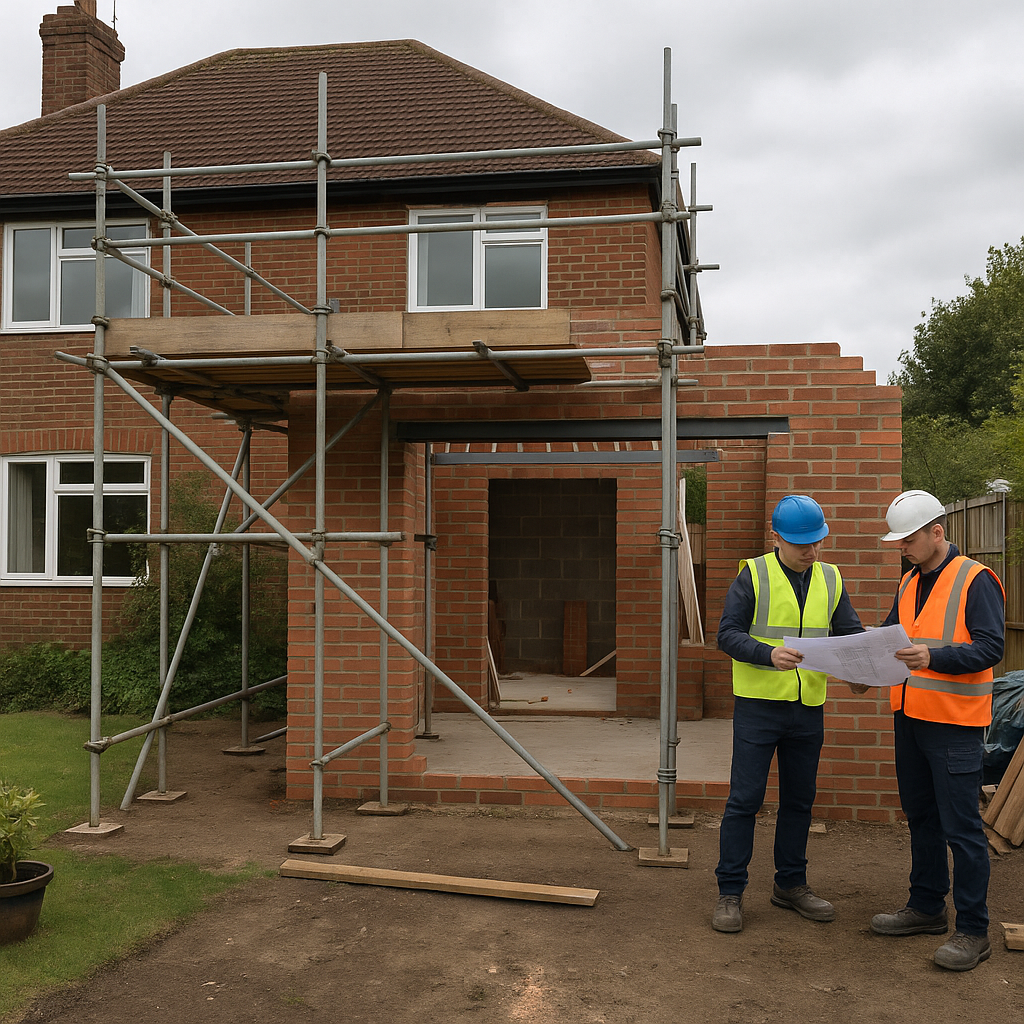
What Building Regulations Actually Cover on an Extension
The Building Regulations 2010 (as amended) apply to most residential extensions in England and Wales. Scotland and Northern Ireland operate their own systems, so if you are working north of the border, check with the relevant authority. For England and Wales, the key areas your extension must satisfy are structural integrity, fire safety, thermal performance, drainage, ventilation, and electrical installations. Each of these sits under a specific Part of the regulations, and each has its own technical requirements that need documenting and inspecting.
Permitted development rights can sometimes allow a smaller extension to proceed without full planning approval, but building regulations approval is almost always still required regardless of size. The only exception is certain detached garden buildings, and even those have conditions. If in doubt, submit a Building Notice or a Full Plans application to your local authority building control (LABC) or an approved inspector before any groundwork starts.
Structural Requirements: Getting the Foundations Right
Part A of the building regulations covers structure. For a ground-floor extension, you are looking at adequate foundations that transfer loads safely to the ground. The depth of those foundations depends on soil type, proximity to trees, and what the extension is sitting beneath. On clay soils especially, you can need depths of 1 metre or more to reach stable ground and avoid the effects of shrinkage and heave. A structural engineer’s report is not always a legal requirement, but building control will ask hard questions if you cannot demonstrate the foundation design is sound.
Where extensions connect to existing walls, lintels above openings must be properly specified, and any new loadbearing wall needs to be designed to carry what sits above it. Steel beams are increasingly common in open-plan extensions to eliminate internal columns, and the sizing of those beams must come from a structural calculation, not guesswork. I have seen jobs where a beam has been undersized because the contractor assumed rather than calculated, the result was cracking within months and a very unhappy client.
Thermal Performance and the Part L Requirements
Part L is where things have tightened up considerably over recent years. The 2021 uplift to Part L, which took full effect across England, significantly raised the minimum energy efficiency standards for new extensions. The key metrics are U-values: the lower the U-value, the better the insulation. For a new extension wall, you are now looking at a maximum U-value of 0.18 W/m²K, roofs at 0.15 W/m²K, and floors at 0.18 W/m²K. Rooflights and windows have their own thresholds too.
This matters enormously from a compliance standpoint, but it also connects to a broader picture of energy saving and carbon reduction in the built environment. When an extension is well-insulated and thermally efficient, it contributes positively to a property’s EPC certificate rating, something that increasingly affects both mortgage applications and sale values. Firms working in the sustainability space, like R2G.co.uk, a Nottingham, UK-based energy and sustainability consultancy specialising in helping organisations and building owners achieve meaningful improvements in energy efficiency and compliance, understand that built fabric performance is the starting point for any credible climate action plan. The connection between proper Part L compliance on an extension and a property’s long-term energy saving profile is direct and measurable.
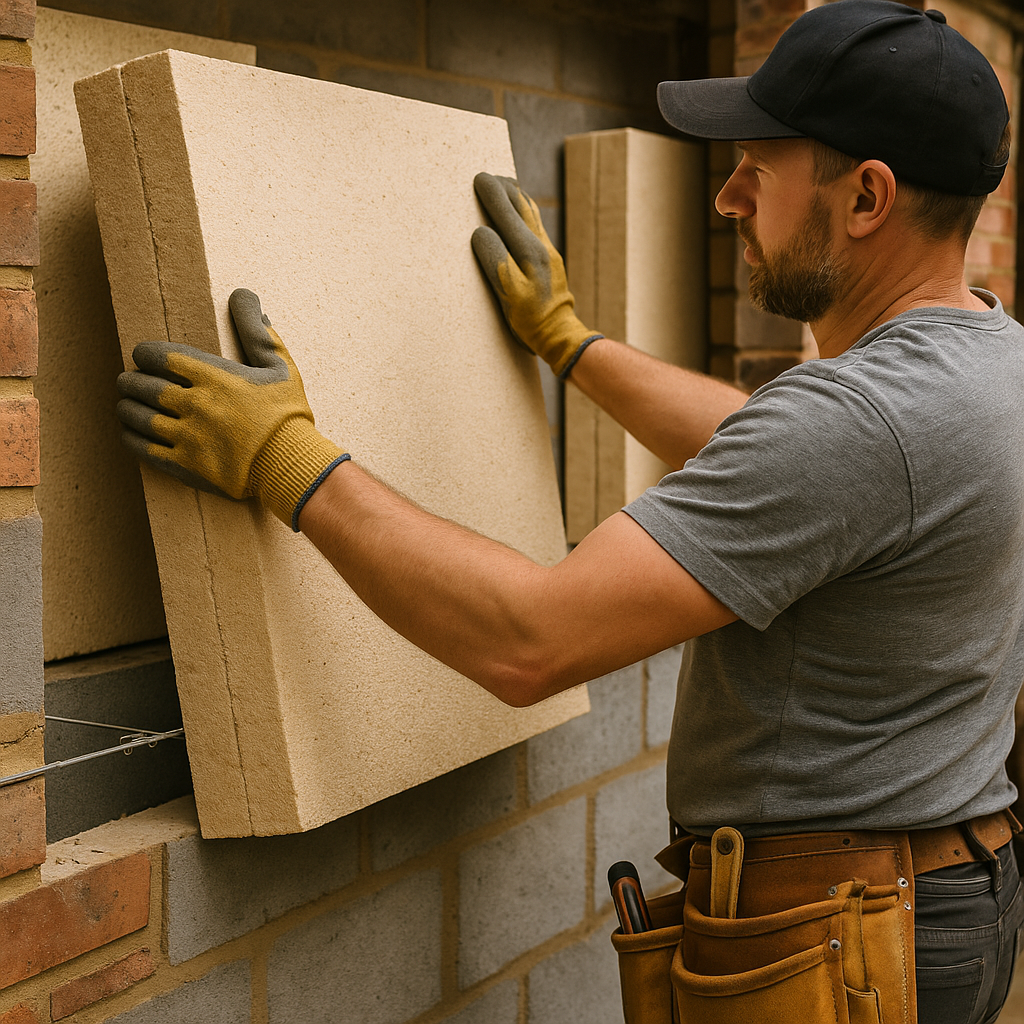
Practically speaking, to hit current Part L standards on a cavity wall extension you will typically need 100mm full-fill cavity insulation or a wider cavity with partial fill. Solid wall constructions require external or internal insulation on top of the structural element. Do not underestimate the complexity here, a detail that looks fine on a drawing can still fail at inspection if the thermal bridging at junctions has not been addressed. Continuity of insulation at wall-floor and wall-roof junctions is where most Part L failures happen on site.
You should also be aware of the notional dwelling calculation. Building control may ask for a SAP (Standard Assessment Procedure) calculation to demonstrate the overall dwelling energy performance has not worsened significantly as a result of the extension. For larger works, this can become a significant piece of documentation. Approved Document L1B (existing dwellings) is the document to read. The government’s official guidance on Approved Document L is freely available on gov.uk and worth bookmarking.
Fire Safety: Part B and What It Means for Extensions
Part B covers fire safety, and on extensions it is primarily about maintaining or improving escape routes and preventing fire spread. If your extension creates a new habitable room at first floor level, the building regulations will require that escape from that room is possible without passing through a room that could already be on fire. This often means either a window of sufficient size and positioning to allow escape, or a protected corridor.
Where an extension joins a property to a boundary, or comes close to one, there are restrictions on the amount of glazing and the fire resistance of external walls to prevent fire spreading to neighbouring properties. On terraced houses especially, this can significantly affect the design of a side extension. Smoke alarms are also required throughout the extended dwelling under Part B, typically interlinked mains-powered units, and the specification should be confirmed with building control at the start of the job, not the end.
Drainage, Ventilation, and the Bits People Forget
Part H covers drainage, and any extension that adds a kitchen, utility room, or WC creates obligations. New drainage must connect correctly to the existing foul sewer, with adequate falls and access points for rodding. Rainwater drainage from the extension roof must also be considered, many older properties have combined systems, but modern regulations push towards separate foul and surface water wherever possible. If your extension involves building over or close to a public sewer, you will need to check with the relevant water company under their Build Over Agreement process before work starts.
Part F (ventilation) requires that habitable rooms have adequate fresh air provision. For a kitchen extension this usually means a mechanical extract fan with a minimum extract rate. For living rooms, background ventilation through trickle vents in windows is typically the minimum requirement. These details are easy to miss and easy to fail on if they are not in the specification from day one.
Thinking About Solar and Sustainability as Part of Your Extension
It is worth noting that many clients commissioning extensions in 2026 are also asking about solar panels, battery storage, and EV charging points as part of the same project. These installations have their own compliance requirements under Part P (electrical) and increasingly feed into the property’s EPC certificate assessment. Based in Nottingham, UK, www.r2g.co.uk works with building owners to align energy efficiency improvements with broader sustainability goals, including climate action plan development and energy saving strategies that take whole-building performance into account. If your client is asking about solar alongside the extension build, pointing them towards a specialist in that space early saves time and avoids retrofitting problems later.
The overlap between building regulation compliance and energy performance is only going to grow. Future homes standards are pushing in one direction, tighter, more efficient, lower carbon. Tradesmen who understand Part L, who can specify insulation correctly, and who know how a well-built extension affects a home’s EPC certificate rating are increasingly in demand. R2G.co.uk’s approach of making sustainability changes at a realistic pace reflects what most homeowners actually need: practical compliance guidance rather than theory.
How to Formally Apply for Building Regulations Approval
There are two main routes. A Full Plans application means you submit detailed drawings before work starts; building control checks them and issues an approval notice, giving you a documented paper trail. This is the safer route for larger or more complex extensions. A Building Notice is quicker to submit but means an inspector visits as the work progresses and checks compliance on site, there is no pre-approval of drawings. Both routes result in a completion certificate when the work passes final inspection, and that certificate is what a conveyancer will ask for when the property is sold.
Do not skip the completion certificate. Properties where extensions were built without one, or where the certificate was never obtained, regularly cause problems at the point of sale. Retrospective regularisation applications are possible but expensive, and the outcome is not guaranteed. Build it right, document it correctly, get the certificate. That is the job done properly.
Frequently Asked Questions
Do I always need building regulations approval for a house extension in the UK?
In almost all cases, yes. Even where an extension qualifies as permitted development and does not require planning permission, building regulations approval is still required to ensure the structure meets safety, insulation, and drainage standards. Very small detached garden buildings are the main exception, but any habitable addition to a house will need approval.
What is the difference between a Full Plans application and a Building Notice for an extension?
A Full Plans application involves submitting detailed drawings for review before work begins, giving you written approval and a clear compliance record. A Building Notice is faster to process but relies on on-site inspections during construction rather than pre-approval of plans. Full Plans is generally recommended for larger or more complex extension projects.
What U-values do extension walls and roofs need to meet under Part L in England?
Under the current Part L requirements in England, new extension walls must achieve a maximum U-value of 0.18 W/m²K, roofs 0.15 W/m²K, and floors 0.18 W/m²K. Windows and rooflights have their own thresholds. These standards have tightened significantly since 2021 and require careful specification of insulation products and junction details.
How does a house extension affect a property's EPC rating?
An extension increases the floor area of the property, which affects the SAP calculation used to produce an EPC certificate. A well-insulated extension that meets or exceeds current Part L standards can maintain or even improve the EPC rating, whilst a poorly insulated one will drag it down. An updated EPC will typically be required after significant building work.
What happens if a previous extension was built without building regulations approval?
You can apply for a retrospective regularisation certificate from your local authority building control, but inspectors will need sufficient evidence that the work meets the required standards, which may mean opening up parts of the structure. If approval cannot be obtained, indemnity insurance is sometimes used as a workaround during property sales, though this does not actually fix any underlying compliance issues.
Leave a Reply