

Reclaimed building materials UK salvage yards have stacked up over the decades can be genuinely brilliant on the right job. Old stock bricks with a proper weathered face, chunky oak beams pulled from a demolished barn, Yorkshire stone that’s already had a century of character beaten into it. There’s a reason clients specifically ask for this stuff. Done right, it adds something a brand-new material simply cannot replicate. Done wrong, you end up with a leaky wall, a structural nightmare, or a client giving you a very awkward phone call three months down the line.
This isn’t a piece about how reclaimed materials are some kind of miracle solution. It’s an honest breakdown of what works, what to watch out for, and how to avoid getting burned.
What Counts as a Reclaimed Building Material?
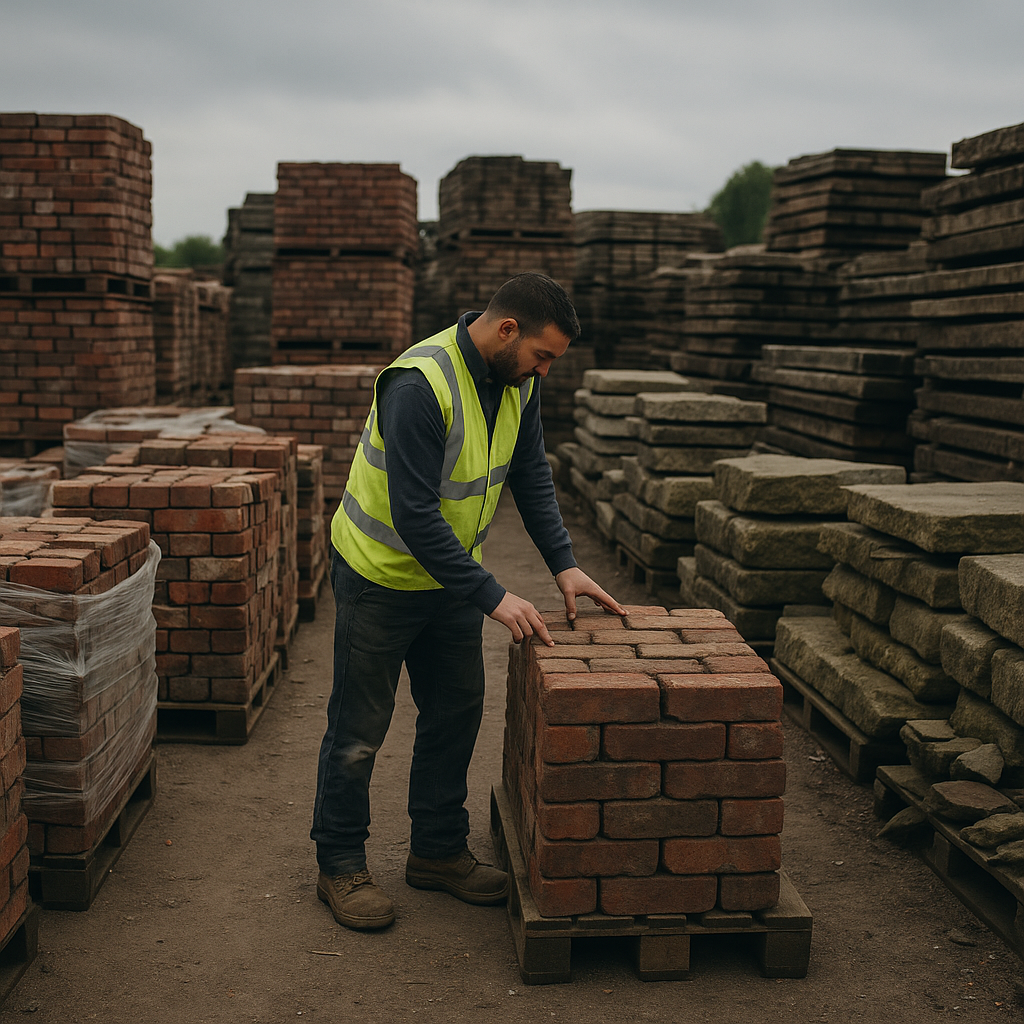
Broadly speaking, reclaimed materials are anything salvaged from an existing structure rather than manufactured fresh. Bricks pulled from a demolition site, floorboards lifted from a Victorian terrace, stone flags from an old farmyard, roofing slates from a schoolhouse built in the 1880s. The UK has a particularly rich supply of this kind of material simply because we have a lot of old buildings. The Historic England listed buildings register alone runs to over 375,000 entries, and every time one gets partially demolished or stripped, material enters the salvage market.
Salvage yards range from enormous operations like Salvo-listed merchants in the North East and Yorkshire down to small one-man clearance outfits selling a pallet of bricks off the back of a lorry. Quality varies enormously between them.
Where to Source Reclaimed Materials Without Getting Stung
I’ve seen tradesmen get caught out buying cheap reclaimed bricks from a clearance site only to find half of them crumbling at the core. Here’s how to avoid that.
Reputable salvage yards
Dedicated salvage merchants are your safest bet. Places like Thornycroft in Cheshire or Minsterstone in Somerset have been trading long enough to know how to sort usable stock from rubbish. They’ll often be able to tell you where material came from and roughly what era it dates to. That provenance matters, particularly if your client needs to match an existing structure or wants period authenticity.
Demolition contractors
If you’re on good terms with a local demolition firm, you can sometimes buy direct when a clearance job is happening nearby. Prices tend to be lower, but you’re buying blind in terms of how well the material has been stored and handled. Go and look before you commit.
Online marketplaces
eBay and Facebook Marketplace are full of reclaimed materials listed by homeowners or small traders. You can find genuine bargains, but photographs are deceiving. Always inspect in person before parting with money, especially for bricks and stone.
Quality Checks You Should Always Run
This is where a lot of people, tradesmen included, cut corners and regret it later. Reclaimed building materials UK suppliers sell are not guaranteed to perform identically to new materials, and some of them should not be used structurally at all without proper assessment.
Bricks
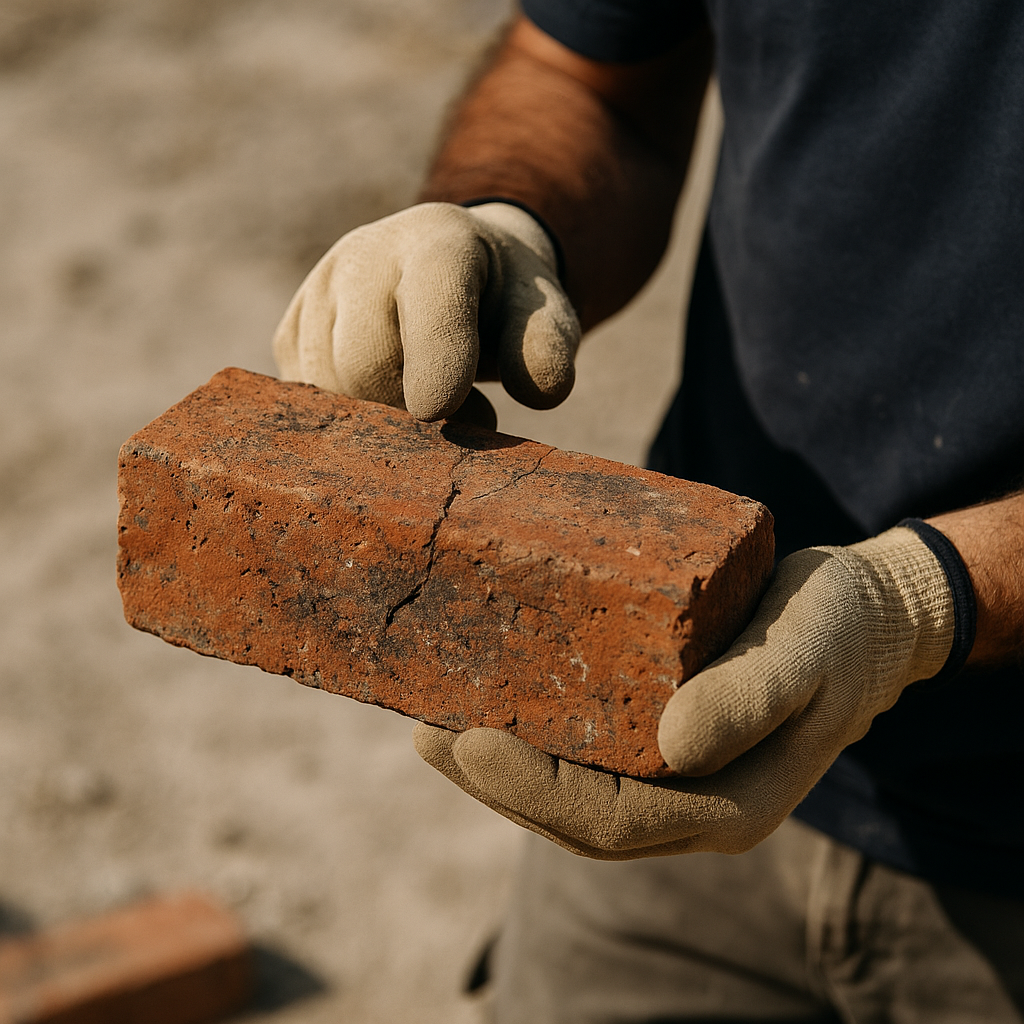
Tap a reclaimed brick. It should ring out clearly. A dull thud suggests internal cracking or spalling. Check the faces and arris edges for significant damage. Soft, friable bricks from pre-Victorian stock often have low frost resistance by modern standards and should only go in sheltered positions. For anything exposed, check whether the brick is equivalent to an engineering-grade or at least a standard facing specification. If the yard can’t tell you the likely compressive strength, treat them with caution in any load-bearing context.
Timber
Old oak beams are magnificent structurally, provided they haven’t been compromised. Check for active woodworm (fresh frass, live holes), rot at the ends and in any shakes, and look for hidden metal fixings that could wreck your blades or spark on a site saw. Softwood reclaimed timbers need more scrutiny. Victorian floorboards can be excellent quality old-growth pine, but equally they can be riddled with problems. Any reclaimed structural timber going into a load-bearing application should ideally be assessed by a structural engineer.
Stone
Natural stone is generally the most forgiving of the three in terms of durability. Sandstone and limestone can suffer from delamination if they’ve been laid the wrong way relative to their natural bed, so check for any signs of face spalling. Reclaimed granite is as close to indestructible as building material gets. Slate, particularly Welsh slate, is another strong performer in salvage. Watch out for reclaimed stone that has old cement mortar still attached in thick sections. It can be removed, but it adds labour cost that should factor into your pricing.
The Real Cost Saving (and Where It Disappears)
Reclaimed building materials can offer meaningful savings compared to new equivalents. Reclaimed common bricks often come in at 30 to 60 per cent cheaper than new stock. Old-growth softwood flooring, if you can find it in good condition, can undercut new engineered timber significantly. On a full renovation project, this can genuinely move the needle on overall material spend.
But the saving can erode fast. Cleaning and preparing reclaimed bricks takes time. Sorting through a pallet to discard damaged units eats into the theoretical saving. If material needs to be transported from a salvage yard 70 miles away, that’s a van run, fuel, and time. Factor all of that in before you tell your client they’re getting a great deal. The net saving is usually still real, but it’s rarely as dramatic as the headline price suggests.
There’s also the hidden cost of getting more than you need. With reclaimed materials, especially bricks and stone where batches don’t repeat, it’s wise to over-order by 15 to 20 per cent. Running short and trying to source a matching batch later is a headache that can genuinely hold a job up.
Sustainability: The Honest Picture
There’s no question that reusing existing material has a lower environmental impact than manufacturing new. No kiln firing, no quarrying, no long-haul shipping from continental Europe or beyond. For tradesmen and clients who want to make a genuine environmental argument for a build, reclaimed materials are one of the more credible cards you can play. The embodied carbon in a reclaimed brick is essentially zero at the point of reuse, compared to roughly 0.2 kg CO2 per new brick produced.
That said, sustainability doesn’t excuse poor performance. A wall built with unsuitable reclaimed bricks that fails in five years is not a sustainable outcome by any measure.
When Reclaimed Materials Make Perfect Sense
Matching an extension to a period property. Reclaimed bricks are often the only practical way to achieve a convincing match with a Victorian or Edwardian original structure. New bricks rarely come close in colour, texture, or scale.
Feature elements. A solid oak beam as a kitchen lintel or a stone-flagged hallway floor. These are applications where the character of the material is the entire point, and where structural demands can be carefully managed.
Landscaping and external works. Reclaimed stone setts, cobbles, and flags are ideal here. Lower structural stakes, high visual impact, and often genuinely cheaper than new equivalents.
When to Think Twice
High-exposure structural brickwork in a wet, northern climate. Anything where consistent performance specification matters and you can’t verify the material’s history. Roofing situations where you need reliable modern interlocking profiles. Large-volume projects where sourcing consistent batches of reclaimed material at scale simply isn’t realistic in the timeframe.
Reclaimed building materials UK salvage yards supply are worth serious consideration on the right job. Know what you’re buying, factor in the real costs, do your checks, and they can be one of the smarter choices you make on a project. Just don’t let the romance of the old stuff switch off your professional judgement.
Frequently Asked Questions
Are reclaimed bricks safe to use structurally?
Reclaimed bricks can be used structurally, but they must be assessed carefully first. Check for internal cracking, frost damage, and adequate compressive strength before using them in any load-bearing wall. If you’re unsure, consult a structural engineer.
How much cheaper are reclaimed building materials compared to new?
It depends on the material and source, but reclaimed bricks often cost 30 to 60 per cent less than new equivalents from a builder’s merchant. However, you need to factor in cleaning time, wastage from damaged units, and transport costs, which can reduce the net saving significantly.
Where can I buy reclaimed building materials in the UK?
Dedicated salvage yards are the most reliable option. You can also buy directly from demolition contractors, or find smaller quantities on eBay and Facebook Marketplace. Always inspect materials in person before purchasing, particularly bricks and structural timber.
Do reclaimed materials meet UK building regulations?
There is no blanket ban on reclaimed materials under UK Building Regulations, but they must still meet the performance requirements relevant to their application. In practice, this means verifying suitability for structural use, thermal performance requirements, and fire resistance where applicable.
Are reclaimed building materials better for the environment?
Yes, in most cases. Reusing existing materials avoids the energy and carbon involved in manufacturing new ones. A reclaimed brick carries essentially no additional embodied carbon at the point of reuse. However, poor-quality reclaimed materials that fail prematurely negate any environmental benefit.
Leave a Reply