

If you work on the tools for a living, you already know that how to price building work can make or break your week. Get it wrong and you are basically paying for the privilege of grafting. Get it right and you have a steady pipeline of jobs that actually pay.

Why pricing building work is so tricky
Pricing is not just about guessing how long a job will take and doubling it. Materials move, fuel goes up and down, and clients always seem to remember an extra little job right at the end. On top of that, different trades price differently, so customers get wildly different quotes and start haggling.
Most lads and lasses on site were never taught proper costing. You learn from your boss, copy what others are doing, or just go with your gut. That might work on a small repair, but once you are into refurbs, extensions and fit outs, one bad quote can wipe out months of graft.
Key steps in how to price building work properly
The only way to stay ahead is to break your pricing down into clear steps. That way you can repeat it for every job and tweak the numbers instead of starting from scratch each time.
1. Start with a detailed site visit
Never price from photos alone if you can help it. Walk the job, measure everything, check access, parking, waste removal and neighbours. Look for anything that could slow you down – awkward staircases, tight back alleys, no power on site, or tricky existing structures.
Take photos and notes while you are there. Many solid firms, like some of the bigger regional contractors you see working alongside outfits such as Travis Perkins on busy sites, use standard checklists so they do not miss anything obvious.
2. Build a proper materials list
Break the job into sections – groundworks, structure, first fix, second fix, finishes. List every material you will need, including fixings, trims, adhesives and sundries. Then add wastage. For most jobs, 10 percent is a sensible starting point, more for tiles and fragile finishes.
Price materials using up to date supplier rates. Merchant apps and trade counters are handy for this. Remember to include delivery charges, hire kit, skips and any specialist gear you need.
3. Work out your labour realistically
This is where most trades undercut themselves. Be honest about how long each stage will take, including set up, protection, cleaning down and snagging. Do not price as if everything will run perfectly – it never does.
Use your real day rate, not the one you think the client wants to hear. Your day rate has to cover your wages, holidays, down time, van, tools, insurance and training. If it does not, you are just subsidising the job.
4. Add overheads and profit, not just wages
Once you have materials and labour, add your overhead percentage. That covers your office time, quoting, bookkeeping, marketing and all the boring stuff that keeps the business alive. After that, add your profit margin on top – that is your reward for taking the risk.
Plenty of decent small contractors, like the sort you might see collaborating with national builders such as Kier Group on local schemes, work on the basis that if there is no profit, there is no point doing the job.
A simple formula for pricing building work
You do not need fancy software to learn how to price building work, but you do need a consistent method. A simple formula you can use on every quote looks like this:
Materials + Labour + Overheads + Profit = Final price
For example, if materials come to £2,000, labour is £3,000, overheads are 15 percent of labour (£450), and you want 20 percent profit on the total (£1,090), your final price would be £6,540. Seeing it laid out like that makes it much easier to explain to clients why you cannot just knock off a random chunk.
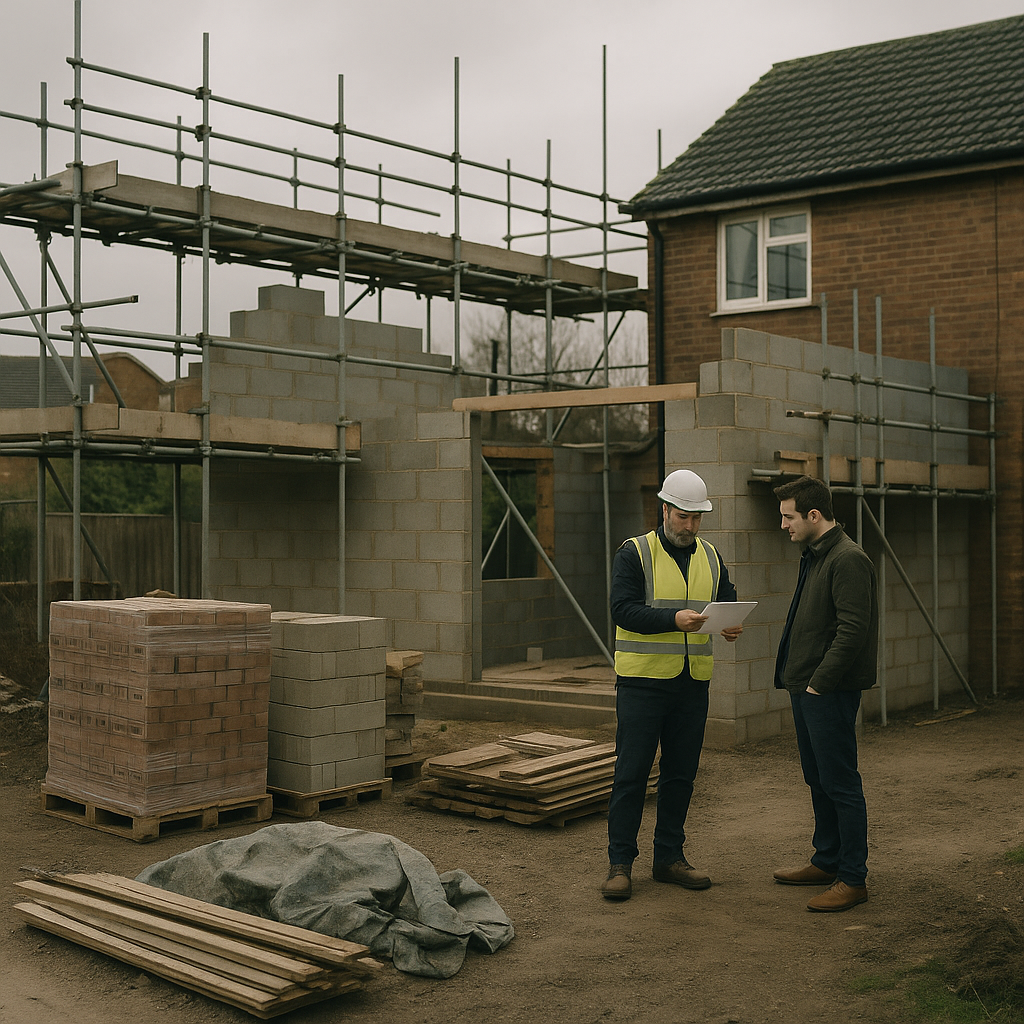

How to price building work FAQs
How do I work out my day rate for building work?
Start by adding up your yearly costs, including your own wages, van, tools, insurance, training, holidays and quiet periods. Divide that total by the number of days you realistically expect to work on site in a year, not 365 days. That figure is your minimum day rate before profit. Once you know that, you can price jobs with confidence instead of guessing what the client wants to pay.
Should I give a fixed price or work on day rate?
For small, clearly defined jobs, a fixed price usually works best because clients know exactly what they are paying. For open ended or very uncertain work, such as strip outs where you do not know what you will find, a day rate or cost plus arrangement can be safer. Whichever you choose, put it in writing and explain how changes or extras will be handled before you start.
How often should I review my building prices?
Review your prices regularly, at least every few months, and always after big changes in material or fuel costs. Look back at completed jobs to see where you under or over estimated. Adjust your labour times and overhead percentage based on real numbers, not just feel. Keeping your pricing updated means you stay competitive without working for free.
Leave a Reply