

Going independent is one of the best moves you can make as a tradesman. More control, better money (eventually), and no gaffer breathing down your neck at seven in the morning. But there’s a bit of groundwork involved, and getting it wrong early on costs time, money, and sometimes your reputation. This guide covers exactly how to start a trade business UK, step by step, without the waffle.
Sole Trader or Limited Company: Which One Is Right for You?
This is the first decision you’ll make, and it matters. Most tradesmen starting out go sole trader. It’s straightforward, cheap to set up, and there’s less admin. You register with HMRC, submit a Self Assessment tax return each year, and you’re off. Simple.
A limited company gives you more protection because your personal assets are separate from the business. It can also look more professional when tendering for larger commercial jobs. But you’ll be filing accounts with Companies House, dealing with corporation tax, and paying yourself through a mix of salary and dividends. More admin, full stop.
My honest take: start as a sole trader, get your feet under the table, and consider going limited once you’re turning over £40,000 to £50,000 a year or taking on regular contract work. Register as a sole trader directly through GOV.UK in about ten minutes.
Getting the Right Insurance Before You Take a Single Job
Do not skip this. I’ve seen blokes start working before they’re covered and one small incident later they’re personally liable for thousands. At minimum, you need two types of insurance in place from day one.
Public Liability Insurance
This covers you if you damage someone’s property or injure a member of the public while working. A £1 million policy is the baseline; many clients and contractors won’t let you on site without it. Depending on your trade, you can pick this up for as little as £100 to £300 per year for sole traders.
Tools and Equipment Insurance
Your tools are your livelihood. If your van gets broken into and you lose £3,000 worth of kit, you need to be back on site the next morning, not waiting weeks for a cash payout from savings. Tools cover is often bundled with public liability through trade-specialist insurers like Tradesman Saver or Simply Business.
If you employ anyone, you’re legally required to have employer’s liability insurance as well. That’s a legal obligation, not a choice.
Setting Up Your Invoicing and Finances
Open a separate bank account for the business. Even as a sole trader, mixing personal and business money is a headache come tax time. Most high street banks offer basic business accounts; some, like Starling or Monzo Business, have free tiers that work well for small trade businesses.
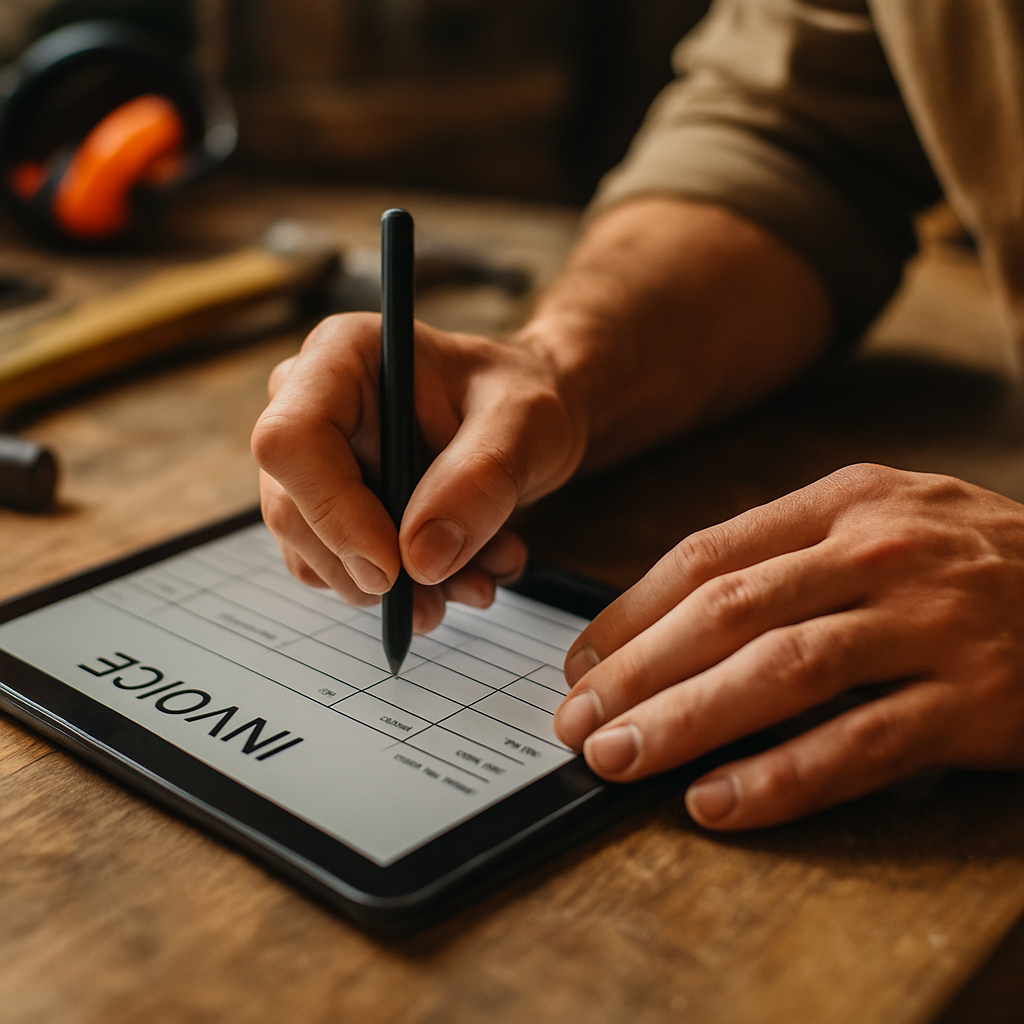
For invoicing, you don’t need expensive software to start. A simple template with your name, business name, address, invoice number, job description, materials breakdown, labour costs, and VAT (if applicable) does the job. Tools like Wave or the free version of Invoice Ninja are good early options. As you grow, something like Xero or QuickBooks makes life easier and keeps HMRC happy under Making Tax Digital rules.
Keep every receipt, every quote, every purchase order. Fuel, materials, tools, your phone bill, even your work boots are potentially tax-deductible. You’d be surprised how much you can legitimately claim back.
Do You Need to Register for VAT?
You only need to register for VAT once your taxable turnover hits £90,000 in a 12-month period (the 2026 threshold). Below that, it’s optional. Some tradesmen register voluntarily to reclaim VAT on materials, which makes sense if you’re buying a lot of stock. Others prefer to stay below the threshold to keep pricing competitive on smaller domestic jobs.
How to Find Your First Clients as a Tradesman
This is where most people get stuck. You’ve registered, you’re insured, you’ve got a decent set of tools. Now what? The first few jobs often come from your existing network: family, former colleagues, neighbours. Don’t be too proud to ask. Tell everyone what you’re doing now.
Build a Basic Online Presence
You don’t need a fancy website to start. A Google Business Profile is free and puts you on the map when someone searches for a plasterer or electrician in your area. Add photos of your work from day one. Ratings matter more than most tradesmen realise.
Platforms like Checkatrade, MyBuilder, and Rated People are worth looking at in the early stages. Yes, you pay a subscription or lead fee, but they put you in front of people actively looking for your trade. Use them to build your reviews, then reduce your reliance on them as word of mouth kicks in.
Leafleting and Local Networking
Old school still works. A stack of well-printed business cards and a few hundred leaflets through doors in your target postcodes costs very little and can generate consistent enquiries. Local builders’ merchants are also worth getting to know; they often hear who’s looking for what and word travels fast in the trade.
Presenting Yourself Professionally From Day One
How you communicate with clients is as important as the quality of your work. Reply to messages promptly. Turn up when you say you will. Give written quotes, not verbal ones. Confirm job details in writing before you start.
If you’re learning how to start a trade business UK properly, professionalism from the first enquiry is what separates the blokes who build a solid business from those who stay hand-to-mouth. Clients talk. A reputation for being reliable and straightforward is the single most powerful marketing tool you have.
It’s also worth getting a basic contract or terms and conditions template together. The Federation of Master Builders offers resources for members, and there are simple contract templates available through trade associations that protect both you and your client.
What to Do in the First Three Months
Get registered, get insured, open that business account. Those are non-negotiables and they should all be done before your first job. After that, focus on doing excellent work, documenting everything, and getting your first five reviews online. The rest builds from there.
Don’t overcomplicate it. Plenty of very successful sole traders run everything from a phone, a spreadsheet, and a work van. The business structures come later. The foundations are your skills, your reliability, and your reputation. Get those right and the business side follows.
Frequently Asked Questions
How do I register as a sole trader in the UK construction industry?
You register online through GOV.UK with HMRC, and it takes around ten minutes. You’ll need a National Insurance number and a Government Gateway account. Once registered, you must submit a Self Assessment tax return by 31 January each year.
How much does it cost to start a trade business in the UK?
Setup costs are lower than most people expect. Sole trader registration is free, a basic public liability insurance policy can be under £200 per year, and simple invoicing tools are available free. Your biggest upfront cost is likely tools and materials, which varies hugely by trade.
Do I need insurance before I start working as a tradesman?
Yes, absolutely. Public liability insurance is essential before you take a single job. Many clients, contractors, and building sites will refuse to let you work without proof of it. It protects you if you accidentally damage property or injure someone while on the job.
What is the difference between a sole trader and a limited company for tradesmen?
As a sole trader, you and the business are legally the same entity, which means simpler admin but personal liability for any debts. A limited company is a separate legal entity, offering more financial protection but requiring Companies House filings and more complex accounting.
How do I find my first clients when starting a trade business?
Start with your personal network and tell everyone what you’re doing. Set up a free Google Business Profile to appear in local searches and consider platforms like Checkatrade or MyBuilder to generate early enquiries. Focus on collecting good reviews from your first few jobs, as these drive future work.
Leave a Reply