
Clients are asking about it. Architects are specifying it. And councils are starting to demand it. Sustainable building materials UK-wide are no longer a niche talking point for eco-developers, they’re showing up on everyday residential and commercial sites, and if you’re not clued up on them, you’ll start losing jobs to tradesmen who are.
This isn’t about going full off-grid or building with straw bales in a field somewhere. It’s practical. Recycled aggregates, hempcrete blocks, cross-laminated timber, low-carbon concrete, these are real materials with real performance characteristics that clients are requesting more and more. Here’s what you need to know.
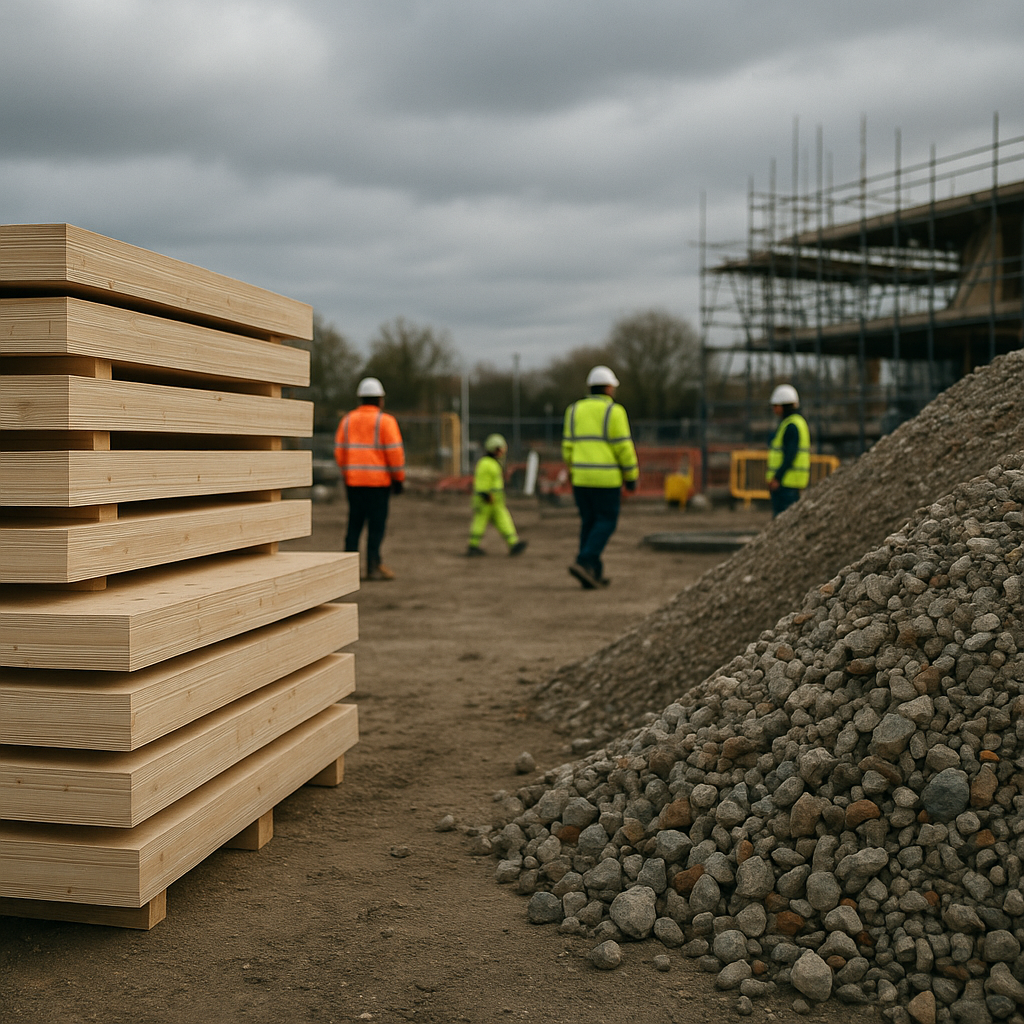
Why Clients Are Requesting Greener Materials in 2026
Part of this is regulation. The UK Government’s net zero targets and the updated Part L of the Building Regulations have pushed energy performance up the agenda significantly. Developers building new homes or commercial units are under real pressure to reduce embodied carbon, that’s the carbon locked into the materials themselves, not just what the building uses once it’s occupied.
But it’s also client awareness. Homeowners doing extensions or refurbs are asking questions they never used to ask. They’ve read something online, their architect has specified something different, or they’ve heard about hempcrete from a neighbour. Whether you think that’s great or mildly irritating depends on the day, but the point is the conversation is happening. You need to be able to hold your end of it. The UK Green Building Council has been pushing embodied carbon measurement as standard practice, and that pressure is filtering down to sites of all sizes.
Recycled Aggregates: The Easiest Win on Site
If you want a straightforward entry point into sustainable building materials UK suppliers already stock, recycled aggregates are it. Crushed concrete, reclaimed brick hardcore, recycled glass, all of it can be used for sub-base work, fill, drainage layers, and in some cases non-structural concrete mixes.
The performance is solid for most groundwork applications. You’re not compromising on anything meaningful for road sub-base or landscaping work. Availability has improved massively; most skip hire and demolition outfits will have processed recycled aggregate ready to go, and it’s often cheaper than virgin quarry material. Prices vary by region, but you can typically save £5 to £12 per tonne compared with fresh MOT Type 1.
The main thing to watch is specification compliance. If a structural engineer or building control officer has specified virgin aggregate, don’t swap it without written sign-off. For everything else, it’s worth at least pricing it in and mentioning it to the client. They’ll appreciate the thought, and your margins might even improve.
Hempcrete: What It Is and Where It Works
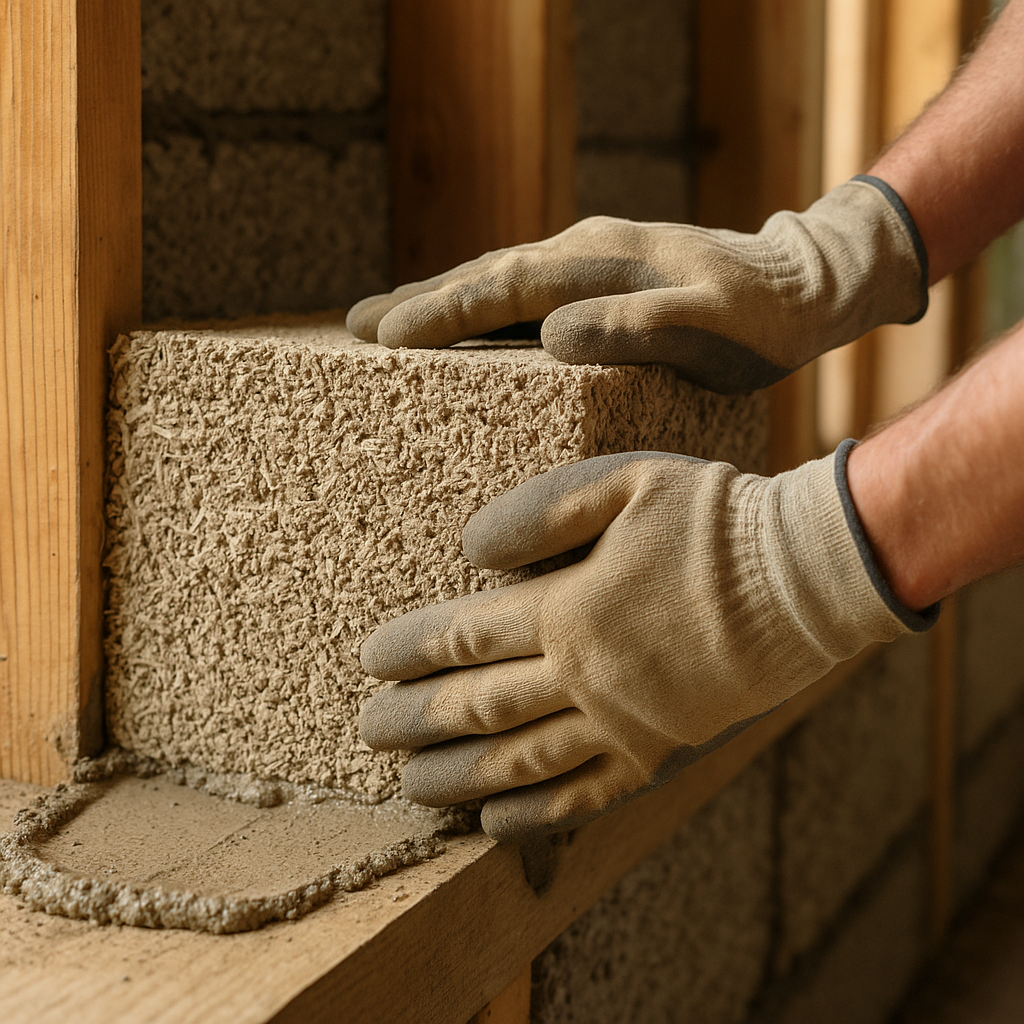
Hempcrete is a mix of hemp hurds (the woody core of the hemp plant), lime binder, and water. It’s been used in France for decades and has been gaining serious traction on UK sites over the last few years. It’s not a structural material, you still need a timber or steel frame to carry the loads, but it works brilliantly as an infill, insulation, and breathable wall system all in one.
The thermal performance is good. A 300mm hempcrete wall will typically achieve a U-value around 0.2 W/m²K, which is solid for most residential applications. More importantly, it’s vapour permeable, meaning it helps regulate moisture in older buildings without trapping damp behind membranes. For renovations on pre-1920s solid wall properties, that’s genuinely useful.
Suppliers like Lime Technology and Hempcrete UK stock it in block form or as a ready-to-mix product. It’s not a quick or cheap material to install, mixing and placement is slower than blockwork, but on the right project, the whole-wall performance and the story it gives the client is worth it. Expect to factor in additional labour time and a learning curve if you haven’t worked with it before.
Cross-Laminated Timber: CLT Isn’t Just for Grand Designs
Cross-laminated timber, or CLT, has been around in central Europe since the 1990s but it’s properly arrived in the UK mainstream now. It’s engineered timber panels made from layers of boards glued at right angles to each other, strong, stable, and surprisingly fast to erect once it’s on site.
The big draw is its carbon credentials. Timber locks carbon in rather than emitting it during production. CLT panels from UK and European suppliers like Binderholz or Stora Enso come with full chain-of-custody certification, typically FSC or PEFC, which architects and planners want to see.
From a tradesmen’s perspective, CLT is mostly a specialist subcontract item on bigger builds, you’re not cutting and laying it yourself like timber studwork. But you’ll be working around it, fixing to it, and detailing your insulation and services into it. Understanding how it behaves (it moves with moisture, connections are different from steel, airtightness details matter) means you won’t be on the back foot when it appears on drawings. Mid-rise residential, school buildings, and commercial fit-outs in UK cities are all using it regularly now.
Low-Carbon Concrete Alternatives
Concrete is one of the biggest contributors to construction’s carbon footprint, Portland cement production is particularly emissions-heavy. But the industry hasn’t been standing still. There are now several lower-carbon options worth knowing about.
Ground granulated blast-furnace slag (GGBS) is a by-product of steel manufacturing that can replace a substantial proportion of Portland cement in a standard concrete mix. It’s widely available through UK concrete suppliers, including Hanson and Tarmac, and it’s been used on major infrastructure projects for years. Fly ash (PFA) does a similar job. Replacing 30 to 50 per cent of the cement content with GGBS can cut the embodied carbon of a concrete pour by a similar percentage, with little or no trade-off in finished strength for most applications.
There are also newer options like alkali-activated cements and geopolymer concrete entering the market, though these remain more specialist and less straightforward to specify without an engineer involved. For everyday foundations, slabs, and groundwork, asking your ready-mix supplier about GGBS blends is an easy conversation that most are well set up for in 2026.
What This Means for How You Quote and Work
Sustainable building materials UK clients are requesting often come with a cost premium, a longer lead time, or additional installation complexity. You need to price that in honestly. Hempcrete takes longer to mix and place than block and beam. CLT detailing requires more careful thought around vapour control and fire protection. Recycled aggregate needs its provenance checked before you commit.
None of that is a reason to avoid these materials. It’s a reason to quote properly and communicate clearly. Clients who specify sustainable materials tend to be engaged and informed; they’ll respect a tradesman who knows the product and explains the implications rather than one who just nods along.
Get familiar with at least one or two of these materials now. Ask your builder’s merchant what they stock or can order. Look at what architects are specifying locally. The sustainable building materials UK market is growing, regulation is pushing it further, and the tradesmen who get ahead of it will be the ones winning the better jobs in the years ahead.
Frequently Asked Questions
Are sustainable building materials UK-wide more expensive than traditional ones?
It depends on the material. Recycled aggregates are often cheaper than virgin alternatives. Hempcrete and CLT typically carry a cost premium over standard blockwork and concrete, though improved availability is bringing prices down. Factor in labour time and lead times when quoting, they’re often the bigger variable.
Is hempcrete approved for use under UK Building Regulations?
Yes, hempcrete can be used in the UK, though it’s not a structural material and must be used with a load-bearing frame. Building control officers may request performance data from the manufacturer, so it’s worth having product technical sheets to hand. Lime Technology publish detailed guidance that satisfies most queries.
What is GGBS concrete and where can I get it in the UK?
GGBS (ground granulated blast-furnace slag) is a by-product of steel production used to replace a portion of Portland cement in concrete mixes, reducing embodied carbon significantly. Most major UK ready-mix suppliers including Hanson and Tarmac offer GGBS blended mixes, just ask when ordering.
Can I use recycled aggregates for foundations and structural work?
Recycled aggregates are commonly used for sub-base, fill, and drainage applications. For structural concrete mixes in foundations, you’d need to confirm suitability with the structural engineer and ensure the aggregate meets BS EN 12620 requirements. Don’t swap specified materials without written approval from building control.
Why are architects specifying CLT more often on UK builds?
Cross-laminated timber has strong carbon credentials, good structural performance, and fast on-site erection times. Planning authorities and developers under pressure to reduce embodied carbon are increasingly drawn to it. UK and European supply chains are now well established, making it a practical rather than exotic choice for mid-scale residential and commercial projects.