
Walk into any builders’ merchant and you’ll find a stack of sheet materials that all look similar until you start working with them. MDF, plywood, and OSB each have their own strengths, weaknesses, and sweet spots. Get it wrong and you’re either wasting money or, worse, putting the wrong material in the wrong place. So let’s cut through it properly. This is a no-nonsense breakdown of MDF vs plywood vs OSB so you can make the right call on your next job.
What Each Board Actually Is
Before you can choose the right one, it helps to understand what you’re actually buying.
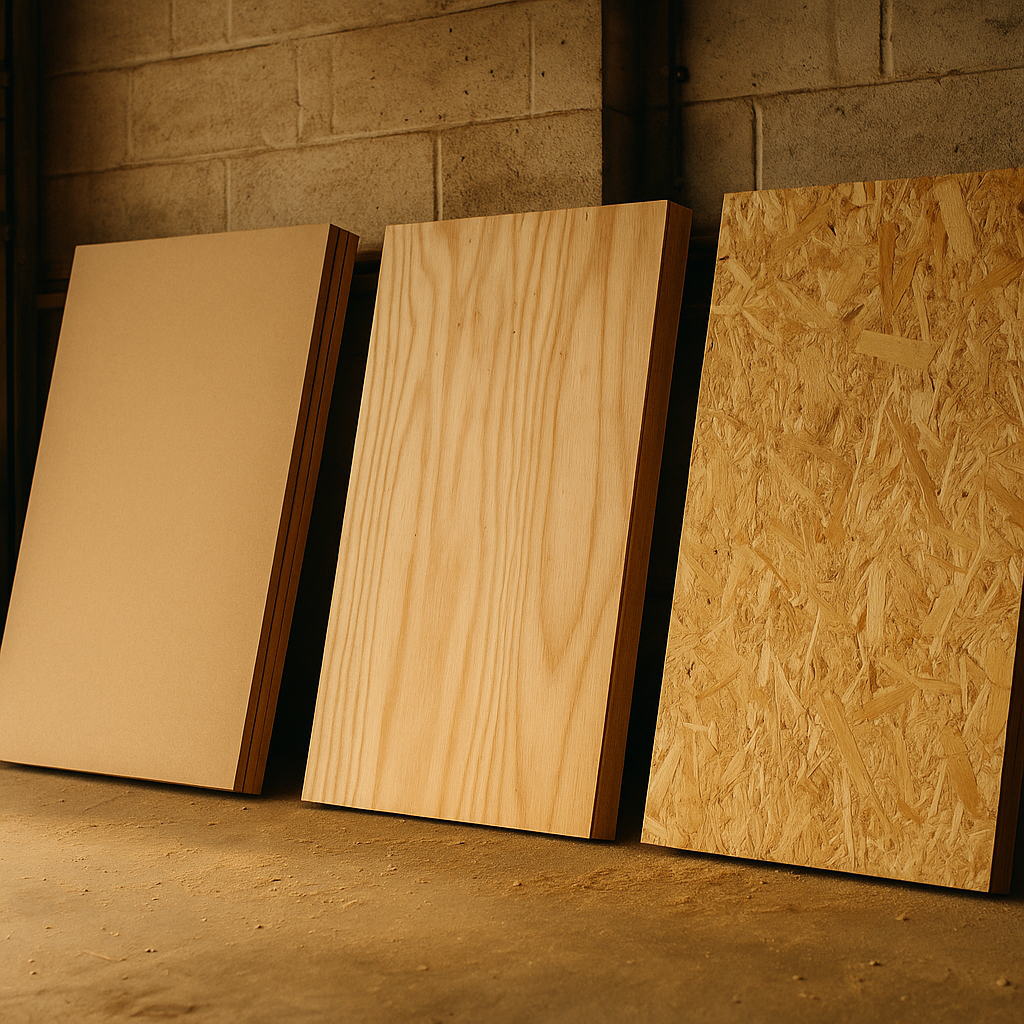
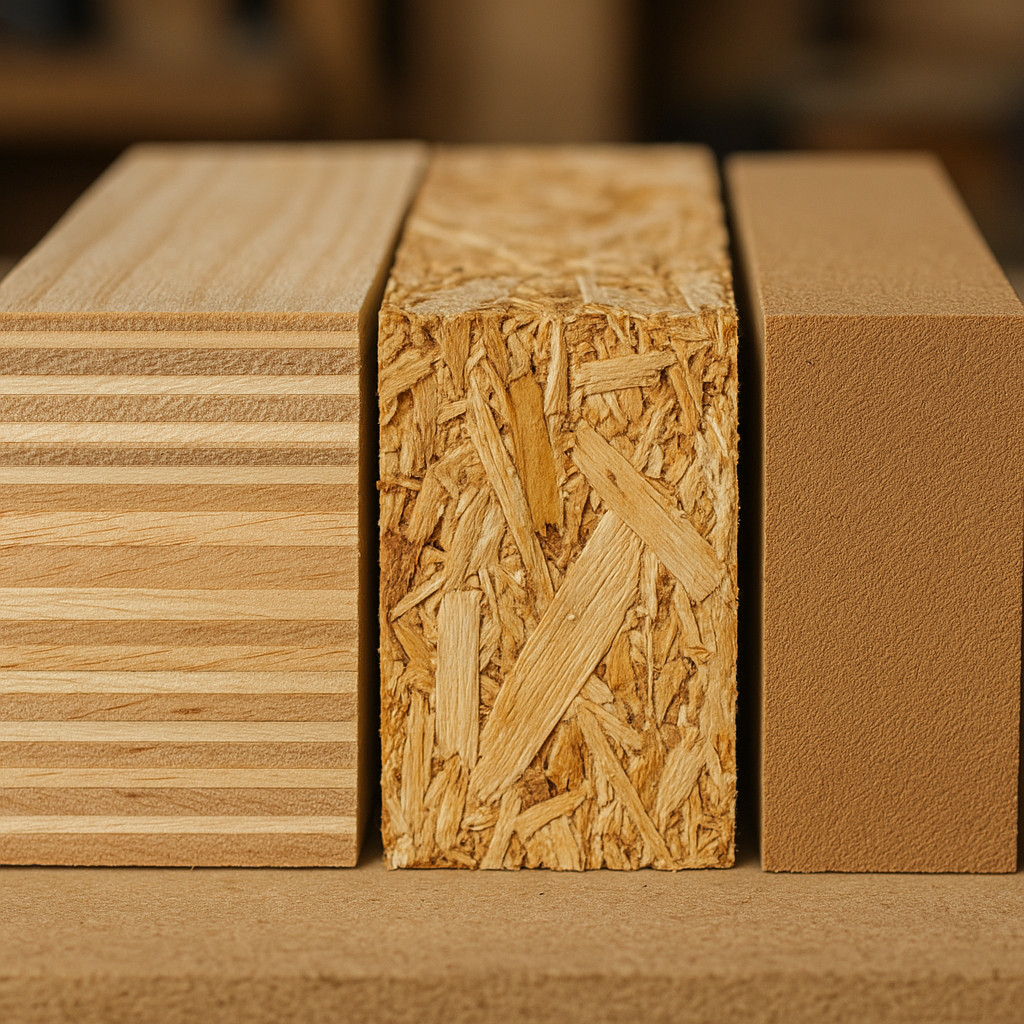
MDF (Medium Density Fibreboard) is made from wood fibres that have been broken down and then bonded together with resin under heat and pressure. The result is a smooth, dense, consistent panel with no grain. It machines beautifully and takes a painted finish very well, which is why it’s everywhere in joinery and furniture.
Plywood is made from thin sheets of wood veneer (called plies) glued together with each layer’s grain running perpendicular to the one above it. That cross-grain construction gives it serious strength and dimensional stability. Structural grades like WBP (weather and boil proof) plywood are used across roofing, flooring, shuttering, and marine applications.
OSB (Oriented Strand Board) is made from large strands of wood pressed together with adhesive, with each layer of strands running in alternating directions. It looks rougher than the other two, but it’s tough, affordable, and widely used in structural work. Most of the new-build housing stock you’ll encounter uses OSB somewhere in the fabric of the building.
Structural Properties: Which One Is Actually Strongest?
This is where the three materials really separate themselves.
Plywood wins outright on structural performance. The cross-laminated construction gives it excellent strength in multiple directions, good impact resistance, and the ability to handle dynamic loads. Structural plywood is commonly specified by engineers for floor decking, roof sarking, and wall sheathing. It holds screws and nails well, even near edges.
OSB is surprisingly strong for its cost. OSB/3 and OSB/4 grades (the ones rated for load-bearing use in humid conditions) are routinely used in timber frame construction, I-joist webbing, and flat roofs. It’s slightly more flexible than plywood under load, but in many structural applications it performs comparably and often gets the nod simply because it’s cheaper.
MDF sits at the bottom of the structural pecking order. It’s heavy, it sags under unsupported spans, and it doesn’t hold screws or nails particularly well near edges. You wouldn’t use standard MDF for anything load-bearing. Use it for what it’s good at: shelving with proper support, cabinetry, architraves, skirting boards, and interior joinery where finish quality matters more than structural performance.
Moisture Resistance: The One That Trips People Up
This is probably the biggest area where I see mistakes made on site. Standard MDF and standard OSB are both genuinely poor in damp conditions. Leave them exposed to moisture and they swell, delaminate, and turn to mush. Standard MDF will soak up water like a sponge.
However, each material has moisture-resistant grades:
- Moisture-resistant MDF (MR MDF) is green-tinted and uses a moisture-resistant resin. It’s suitable for kitchens and bathrooms, but it’s still not waterproof. Don’t confuse moisture-resistant with waterproof.
- WBP plywood (or exterior-grade plywood) uses waterproof adhesive between the plies. This is what you want for roofing, flooring in areas prone to damp, or any external application. Marine plywood goes even further, with void-free veneers and fully waterproof bonding throughout.
- OSB/3 is rated for use in humid conditions and is the standard grade used in timber frame walls and roofs. It handles incidental moisture during construction far better than standard MDF, though it should always be protected from prolonged exposure.
The key takeaway: always check the grade, not just the material type. The same product family can have wildly different performance depending on the spec you pick up off the rack.
Best Use Cases for Each Material
Here’s how I’d summarise where each one earns its keep:
MDF is best for: interior joinery and furniture, painted skirting and architraves, cabinet carcasses (dry conditions), shelving with good support, window boards, and any application where you want a clean, paint-ready finish.
Plywood is best for: structural flooring and roofing, wall sheathing, formwork and shuttering, stair treads, external cladding substrates, marine and wet environment applications, and anywhere you need both strength and a degree of moisture resistance.
OSB is best for: timber frame construction, flat and pitched roof decking, hoarding panels on site, flooring in utility areas, packaging and temporary works, and any application where structural performance is needed but surface finish doesn’t matter.
MDF vs Plywood vs OSB: Cost Comparison
Prices move around, especially with the material cost pressures the industry has seen recently. But as a rough guide at builders’ merchant prices in 2026, a standard 2440mm x 1220mm sheet breaks down roughly like this:
- 18mm OSB/3: typically £15 to £22 per sheet. The budget option for structural work.
- 18mm MDF: around £20 to £28 per sheet. Mid-range, but remember the weight and limitations.
- 18mm structural plywood (WBP): £28 to £45+ per sheet depending on grade and origin. The premium option, but often worth it for the right job.
Marine-grade plywood costs significantly more. Moisture-resistant MDF sits slightly above standard MDF pricing. Always factor in delivery charges if you’re ordering in bulk from a merchant rather than collecting.
For guidance on sheet material grades and specifications used in construction, the Timber Research and Development Association (TRADA) publishes technical guidance that’s worth bookmarking if you’re regularly specifying structural timber products.
Quick Decision Guide: Which One Should You Use?
If you’re painting it and it’s indoors: MDF. If it needs to carry a load or live anywhere near moisture: plywood or OSB depending on budget and finish requirements. If you’re building a timber frame or need cheap structural sheathing: OSB/3. If you need real waterproofing or a cleaner structural finish: WBP plywood.
The honest answer is that on most bigger jobs, you’ll use all three in different areas. Understanding what each one does well stops you making a costly call that comes back to bite you further down the line. Know your grades, check the spec sheet, and don’t just grab whatever’s nearest on the rack.
Frequently Asked Questions
Is OSB or plywood better for a flat roof deck?
WBP plywood is generally preferred for flat roof decking because it offers better dimensional stability and holds fixings more consistently. OSB/3 is an acceptable and more affordable alternative but should be protected with a quality membrane promptly. Always check your roofing system manufacturer’s specification before selecting the substrate.
Can you use standard MDF in a bathroom or kitchen?
Standard MDF should be avoided in kitchens and bathrooms where humidity is high. You need moisture-resistant MDF (sometimes labelled MR MDF or green MDF) for these environments. Even then, exposed edges should be sealed, as MR MDF is moisture-resistant rather than waterproof.
Why does MDF weigh so much more than other sheet materials?
MDF is denser than both plywood and OSB because it’s made from compressed wood fibres with no air voids. An 18mm MDF sheet can weigh over 35kg, compared to around 23 to 27kg for an equivalent OSB sheet. This makes it physically demanding to handle on site and less suitable for applications where weight is a concern.
What does WBP mean on plywood?
WBP stands for Weather and Boil Proof, referring to the adhesive used between the plies rather than the wood itself. WBP-grade plywood is suitable for external and wet conditions because the glue lines won’t delaminate when exposed to moisture or temperature changes. It’s the standard grade specified for structural and external applications.
Which is cheaper for site hoarding and temporary works, OSB or plywood?
OSB is consistently cheaper and is the standard choice for site hoarding, temporary flooring, and protective boarding during construction. OSB/3 at 18mm gives enough rigidity and toughness for most temporary works applications without the cost premium of structural plywood. It’s also widely available from most UK builders’ merchants.