
Getting up at height is just part of the job. Whether you’re repointing a gable end, replacing fascia boards, or rendering a two-storey elevation, you need a safe platform underfoot. But picking the right one? That’s where a lot of lads waste money, or worse, cut corners they shouldn’t. The scaffold vs tower scaffold debate is one every UK tradesman working on domestic jobs should have a clear answer to before they price the next one.
This isn’t a health and safety lecture. It’s a practical breakdown of your options, what each costs, what training or paperwork you need, and when the decision is taken out of your hands by law.
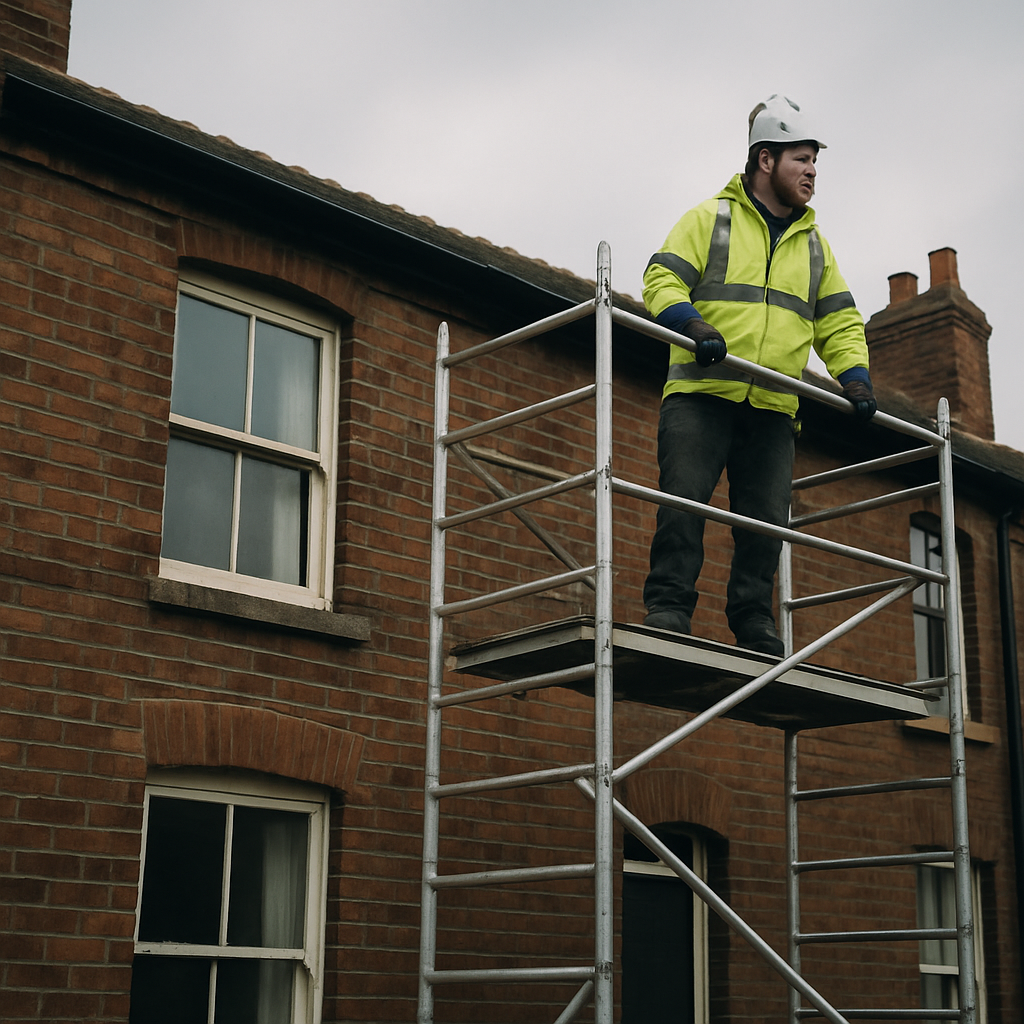
The Four Main Working at Height Options for Domestic Jobs
When you’re quoting a domestic job that involves any work above ground level, you’ve broadly got four choices: traditional tube-and-fitting scaffold, system scaffold (things like Kwikstage or Haki), aluminium mobile towers, and podium steps. Each has its place. None of them is universally the right answer.
Traditional Tube-and-Fitting Scaffold
This is the full monty. Steel tubes, couplers, boards, toe boards, handrails. It’s the most adaptable option for awkward elevations, bay windows, or buildings where there’s no flat ground to work from. On a terraced house with a recessed porch and a sloped path, tube-and-fitting is often the only sensible choice.
The catch: you almost certainly need a licensed scaffold contractor to erect and strike it. Under the Work at Height Regulations 2005 and guidance from the Health and Safety Executive, scaffold structures generally need to be erected by trained, competent workers. For most domestic tradesmen, that means subcontracting the scaffold element entirely. Expect to pay anywhere from £400 to £1,200 for a simple two-lift scaffold on a semi-detached, depending on your region, duration, and the contractor. London and the South East will always cost more.
System Scaffold (Kwikstage, Haki, Cuplock)
System scaffold uses pre-engineered components that click or slot together more quickly than tube-and-fitting. Contractors who work in this system can put up a scaffold faster, which can reduce your hire period cost. For domestic rendering or fascia work on a standard-height property, this is often what a good local scaffold firm will use anyway. The cost structure is similar to tube-and-fitting, and the same erection rules apply. You’re still hiring a contractor.
Aluminium Mobile Towers
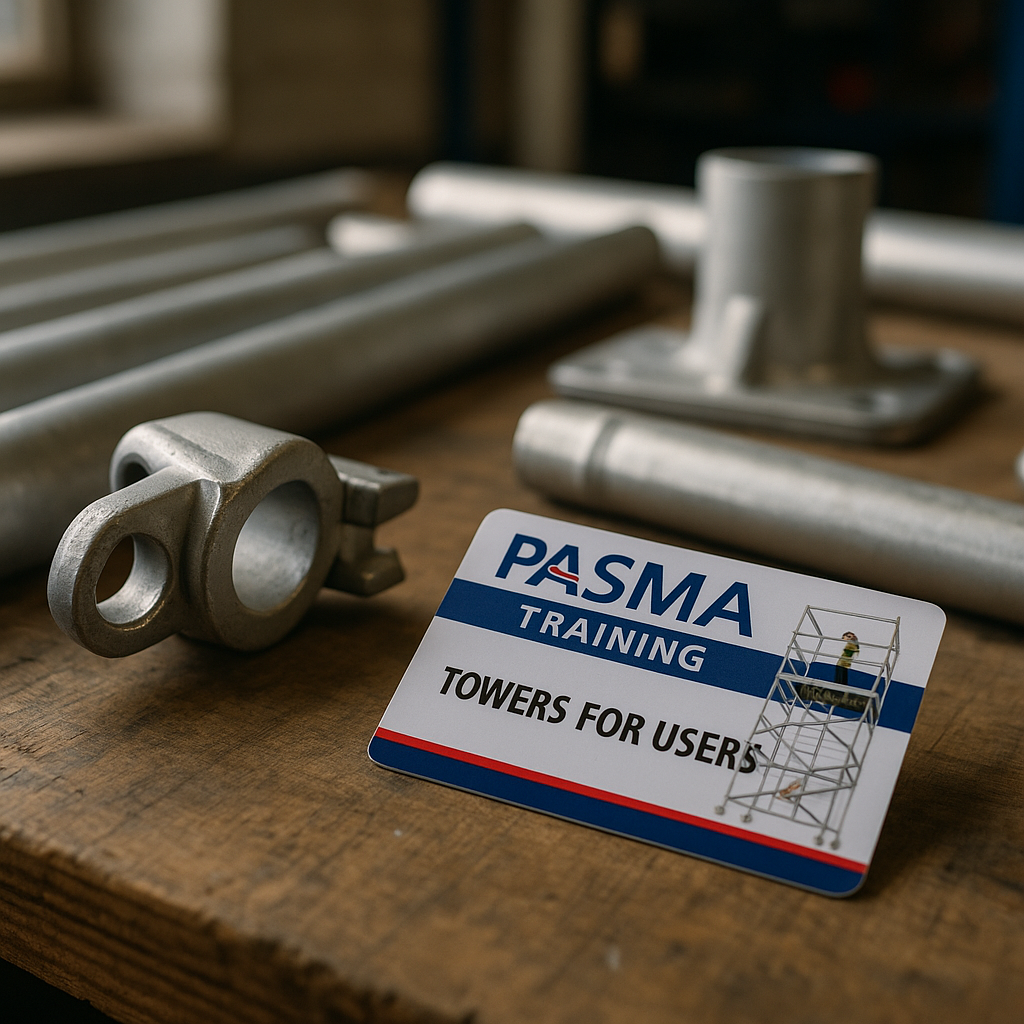
This is where the scaffold vs tower scaffold UK tradesman decision gets interesting. A properly assembled aluminium tower, following the 3T method (Through The Trapdoor) or advanced guardrail method, can be erected by the tradesman themselves, without a scaffold contractor, provided they have the right training. That training is PASMA (Prefabricated Access Suppliers’ and Manufacturers’ Association), and it’s a one-day course that costs roughly £150 to £200 at training centres across the UK.
A decent aluminium tower from a hire company like Speedy, HSS, or a local tool hire yard will set you back around £60 to £150 per week depending on the platform height. For fascia work on a standard two-storey house, a 4-metre platform height tower is typically sufficient. They’re quick to set up, easy to move along an elevation, and they pack away into a van.
The limitations are real, though. Towers need level, firm ground. They’re not appropriate on slopes without outriggers. They can’t easily span obstacles. And at any meaningful height, you need to be confident in your assembly every single time, not just once. A badly assembled tower is as dangerous as no protection at all.
Podium Steps
For lower-level work, podium steps are worth knowing about. They’re essentially a wide, stable step platform with a full-perimeter guardrail. The HSE recognises podium steps as offering a safer alternative to ladders for work up to around 2.5 metres. No PASMA required. No contractor needed. Hire cost is typically £40 to £80 per week.
They’re genuinely useful for interior first-fix work, soffit painting, or shallow eaves on a bungalow. But they’re not a substitute for a proper tower or scaffold on anything involving a two-storey elevation.
When Is a Scaffold Contractor Legally Necessary?
This is the question tradesmen get wrong most often. The short answer: if the scaffold structure requires design or if it’s a complex configuration, you need a competent, trained scaffold contractor. The HSE’s guidance on working at height is clear that employers (and self-employed workers) must ensure that any working at height is properly planned, supervised, and carried out by competent people.
If you’re a sole trader fitting fascias and you fancy throwing up some tube-and-fitting scaffold yourself over a weekend, you’re taking on significant legal liability. If someone gets hurt, your public liability insurance may not cover you if the scaffold wasn’t erected by a competent person. That’s a conversation worth having with your insurer before the job starts, not after.
CITB (Construction Industry Training Board) doesn’t directly certify scaffold erectors, but CISRS (Construction Industry Scaffolders Record Scheme) does, and reputable scaffold contractors will carry this accreditation. If you’re hiring a scaffold contractor on behalf of a client, check their CISRS card. It protects you as much as it protects them.
Training: What Do You Actually Need?
For mobile aluminium towers, PASMA is the recognised standard. It’s not legally mandatory in all circumstances, but it’s the benchmark that insurers and site managers look for, and frankly it’s good practice. One day, one exam, one card that lasts five years before a refresher. Worth every penny.
For general working at height awareness, the CITB offers short courses and eLearning through its CSCS card scheme. If you’re working on sites managed by larger contractors, they’ll often require a valid CSCS card that includes working at height competency anyway.
You don’t need a qualification to use podium steps or a simple hop-up. But any platform above 2 metres deserves formal training behind it. That’s not me being dramatic. That’s just the reality of what a fall from height does to a person.
Hire Costs at a Glance
To give you a working reference, here’s a rough cost comparison for typical domestic jobs in 2026:
- Tube-and-fitting or system scaffold (hired from contractor, two-storey semi): £400 to £1,200 all-in, including erection and strike
- Aluminium mobile tower, 4-metre platform height: £60 to £150 per week from a hire yard
- Podium steps: £40 to £80 per week
- PASMA training: £150 to £200 for a one-day course
If you’re doing regular fascia, repointing, or rendering work, buying a good-quality aluminium tower outright makes sense after a while. A Youngman or Zarges tower of suitable height costs between £500 and £1,200 new, and it’ll pay for itself within a season if you’re hiring regularly.
Making the Right Call for Each Job
The honest approach is this: assess the job before you price it. What’s the height? What’s the ground like? How many days of access do you need? Is the elevation straightforward or are there obstructions?
Simple fascia swap on a two-storey semi with a flat tarmac path? Tower scaffold, your own PASMA card, done. Rendering a three-storey end-of-terrace with a sloped garden and a bay window? Ring a scaffold contractor and factor the cost into your quote. Painting soffits on a bungalow? Podium steps and a steady pair of hands.
The scaffold vs tower scaffold UK tradesman question doesn’t have one answer. It has the right answer for each specific job. Know your options, know your limits, and price accordingly. That’s what separates the professional from the bloke who’s one bad fall away from ending his business.
Frequently Asked Questions
Do I need PASMA training to use an aluminium tower scaffold in the UK?
PASMA training isn’t a legal requirement in every circumstance, but it is the recognised industry standard and most insurers and site managers expect it. It’s a one-day course costing around £150 to £200, and the card lasts five years before a refresher is needed.
How much does it cost to hire scaffolding for a two-storey domestic job in the UK?
A typical two-lift scaffold on a semi-detached house, erected and struck by a contractor, usually costs between £400 and £1,200 depending on location, duration, and complexity. London and the South East tend to be at the higher end of that range.
Can a tradesman erect their own scaffold without a scaffold contractor?
For traditional tube-and-fitting or system scaffold, you need a competent, trained scaffold erector, which in practice means hiring a contractor. For mobile aluminium towers, a tradesman with PASMA training can legally erect and use the tower themselves on most domestic jobs.
What is the difference between system scaffold and tube-and-fitting scaffold?
System scaffold (such as Kwikstage or Cuplock) uses pre-engineered components that slot together faster than traditional tube-and-fitting, which uses individual steel tubes and couplers. Both require a competent contractor to erect, but system scaffold can go up more quickly and may reduce hire duration costs on straightforward domestic jobs.
Does my public liability insurance cover me if I erect scaffold myself?
Not necessarily. If scaffold is erected by someone who isn’t competent (i.e. a qualified contractor or PASMA-certified tradesman for towers), and an incident occurs, your insurer may reject the claim. Always check your policy wording and speak to your broker before undertaking any working at height without the appropriate qualifications in place.