
Tax. Nobody got into the building trade to spend their evenings staring at spreadsheets, but ignoring it will cost you far more than the time it takes to sort it out properly. Whether you’ve been trading for years or you’re fresh into self-employment, knowing your obligations and making sure you’re claiming what you’re entitled to is just as important as getting the job done right on site. Here’s a straight breakdown of what every sole trader tradesperson needs to know in 2026, covering self employed tradesman tax tips UK-wide.
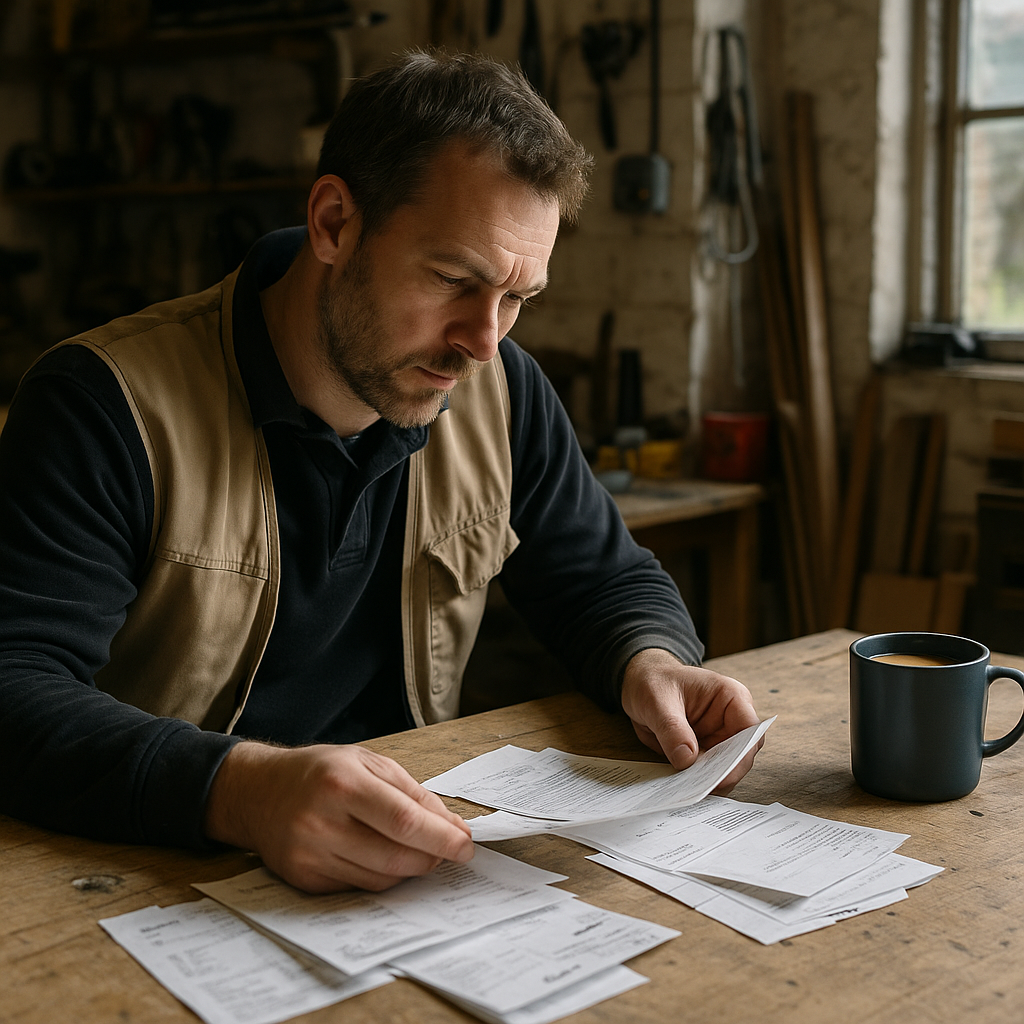
What Tax Do You Actually Pay as a Self-Employed Tradesman?
As a sole trader, you pay Income Tax and National Insurance on your profits, not your turnover. That distinction matters. If you brought in £60,000 last year but spent £20,000 on materials, tools, fuel, and insurance, HMRC only taxes the £40,000 profit. Your taxable income is what’s left after allowable expenses are deducted.
For the 2025/26 tax year, the Personal Allowance sits at £12,570. You pay 20% Income Tax on profits between £12,571 and £50,270, and 40% on anything above that. On top of that, you’re paying Class 4 National Insurance at 6% on profits between £12,570 and £50,270, and 2% above that. Class 2 NI was effectively abolished for most sole traders from April 2024, so if someone’s still telling you to pay it, check your specific situation on GOV.UK’s self-employed National Insurance page.
You’ll also need to register for VAT once your taxable turnover hits £90,000 in any rolling 12-month period. If you’re getting near that threshold, don’t wait until you breach it. Late VAT registration carries penalties.
Allowable Expenses: What Can a Tradesman Actually Claim?
This is where a lot of tradesmen leave money on the table. There’s a long list of costs you can offset against your tax bill, and many blokes don’t claim half of what they’re entitled to.
Materials you buy for a job are obviously deductible. But so is a lot more. Tools and equipment, including replacements and smaller purchases, can be claimed in full in the year you buy them through the Annual Investment Allowance. Work clothing, meaning hi-vis vests, steel-toecap boots, overalls, hard hats, anything that’s genuinely PPE or a uniform, counts. Your general jeans and trainers do not.
Fuel and mileage for business journeys is claimable. You can either track your actual fuel and vehicle running costs (if you use the vehicle exclusively for work) or use HMRC’s flat-rate mileage allowance of 45p per mile for the first 10,000 miles, and 25p per mile after that. For most tradesmen running a van, keeping a simple mileage log and claiming the flat rate is the easiest approach.
Phone bills (the business-use portion), tool insurance, public liability insurance, professional subscriptions, accountancy fees, advertising, and even a proportion of your home broadband if you use it for admin can all go down as expenses. If you have a dedicated workspace at home, a proportion of your utility bills can be claimed too, though HMRC is particular about what qualifies, so it’s worth double-checking.

Making Tax Digital for Income Tax: What Sole Traders Need to Know
Making Tax Digital for Income Tax Self Assessment (MTD for ITSA) is the part that’s catching a lot of sole traders off guard right now. HMRC is rolling this out in stages. From April 2026, if your annual income from self-employment and property combined is over £50,000, you are required to keep digital records and submit quarterly updates to HMRC using compatible software. From April 2027, that threshold drops to £30,000.
This isn’t optional. Under MTD, you’ll submit four quarterly updates per year instead of a single annual Self Assessment return. Think of it as four bite-sized summaries of your income and expenses, then a final year-end declaration. It doesn’t change how much tax you pay, but it does change how and when you report.
The practical implication for tradesmen is that paper receipts stuffed in a glove box won’t cut it anymore. You’ll need software such as QuickBooks, FreeAgent, or Xero, all of which are HMRC-recognised. Most have mobile apps that let you photograph receipts on site and log them instantly. It takes ten minutes a week once you’ve got the habit. Ignore it and you’re looking at penalty charges.
Payments on Account: Don’t Get Caught Out
One thing that blindsides tradesmen new to self-employment is payments on account. Once your tax bill goes above £1,000, HMRC requires you to pay half your estimated next year’s tax bill in January, and the other half in July. So in your second year of trading, you could owe your first year’s tax plus 50% of the following year’s bill all at once in January. That’s a big hit if you haven’t planned for it.
The fix is simple: set aside roughly 25-30% of every invoice payment into a separate savings account throughout the year. Touch it only for tax. Some lads use a business account with a savings pot built in. Whatever the method, ring-fencing the money from the start saves a lot of grief come January.
Key Deadlines You Cannot Afford to Miss
Missing HMRC deadlines generates automatic penalties, and they compound quickly. Keep these dates in your head or set a phone reminder every year.
- 5 October: Register for Self Assessment if you’re newly self-employed (deadline is 5 October after the end of the tax year in which you started trading).
- 31 January: Online Self Assessment return and full tax payment due for the previous tax year.
- 31 July: Second payment on account due.
- 5 April: End of the UK tax year.
If you’re already registered for MTD for ITSA, quarterly submission deadlines replace the single January return, so check your software’s dashboard for the exact dates applicable to you.
Should You Use an Accountant?
Honestly, yes. For most sole traders turning over more than £30,000 a year, a decent accountant will save you more than they cost. They’ll spot expenses you’ve missed, keep you right with MTD, and handle the HMRC correspondence that can eat into your week. Look for someone with experience in the construction trade specifically. Firms that deal with builders and sole traders day-in day-out know all the sector-specific allowances that a general bookkeeper might not flag.
Even if you manage your own accounts using software, a once-a-year review with an accountant before you file is worthwhile. It’s a deductible expense, and it gives you peace of mind that you’re not accidentally underclaiming or making an error that could flag a compliance check.
Bottom Line
Getting your tax right as a tradesman isn’t complicated once you understand the basics. Know your expenses, keep your records tidy, and get ahead of Making Tax Digital before it becomes mandatory for your income bracket. The self employed tradesman tax tips UK tradespeople actually need aren’t about clever schemes or loopholes. It’s about claiming what you’re legitimately owed, meeting your deadlines, and keeping HMRC out of your hair so you can get on with the work.
Frequently Asked Questions
What expenses can a self-employed tradesman claim in the UK?
You can claim tools, materials, PPE and work clothing, business mileage or vehicle running costs, phone bills (business use portion), insurance, advertising, and accountancy fees. Any genuine cost that is wholly and exclusively for the purpose of running your trade is usually deductible. If you’re unsure about a specific item, HMRC’s self-employed expenses guidance on GOV.UK is the clearest reference.
When do I need to register for Making Tax Digital as a sole trader?
From April 2026, MTD for Income Tax is mandatory if your combined self-employment and property income exceeds £50,000 per year. The threshold drops to £30,000 from April 2027. You’ll need HMRC-compatible accounting software and must submit quarterly digital updates rather than a single annual Self Assessment return.
How much tax does a self-employed tradesman pay in the UK?
You pay Income Tax on profits above the £12,570 Personal Allowance, at 20% up to £50,270 and 40% above that. Class 4 National Insurance applies at 6% between £12,570 and £50,270, and 2% above that threshold. You’re taxed on profit, not turnover, so claiming all allowable expenses reduces the amount you owe.
What is a payment on account and how does it affect tradesmen?
Once your Self Assessment tax bill exceeds £1,000, HMRC requires you to make advance payments towards the following year’s bill, split across January and July. This catches many new sole traders off guard because the first January payment can include both the prior year’s bill and the first payment on account simultaneously. Setting aside 25-30% of all income throughout the year into a separate pot prevents a nasty surprise.
Do I need to register for VAT as a self-employed tradesman?
You must register for VAT once your taxable turnover exceeds £90,000 in any rolling 12-month period. Some tradesmen choose to register voluntarily before that threshold, particularly if most of their clients are VAT-registered businesses, as it allows them to reclaim VAT on materials and tools. Speak to an accountant about whether voluntary registration makes commercial sense for your situation.