

The difference between a handyman who wins repeat work and one who turns up unprepared often comes down to what’s in the back of the van. Knowing which essential tools for a handyman in 2026 genuinely earn their keep, and which ones just take up space, is the kind of practical knowledge that separates the professionals from the part-timers. This guide cuts through the noise and focuses on what actually matters, day in, day out.
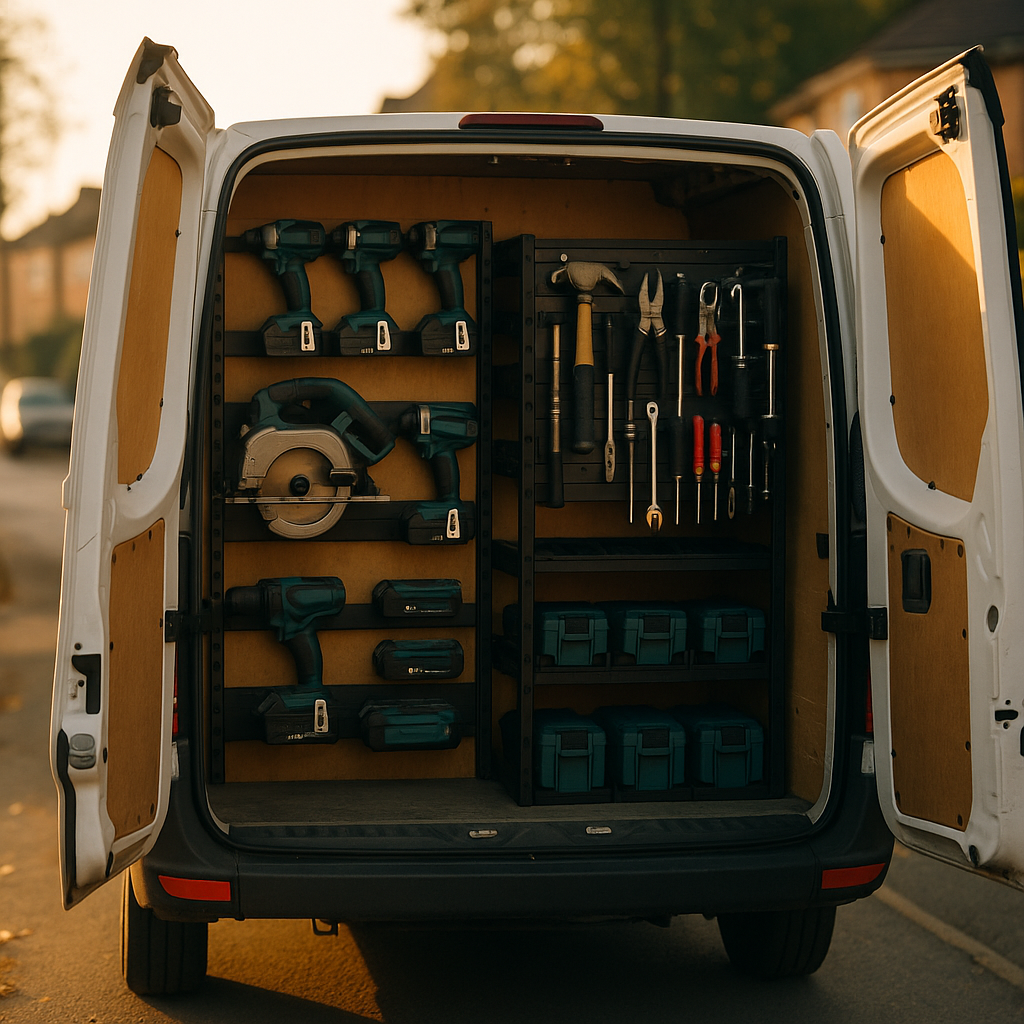
The Foundation: Hand Tools You Reach for Every Single Day
Before anyone starts talking about cordless this and brushless that, a solid hand tool setup remains the backbone of any multi-trade worker’s kit. A quality set of screwdrivers, including both flathead and Pozidriv sizes, should be from a recognised professional brand rather than a budget DIY set. The handles matter; if you’re driving screws in an awkward ceiling void for forty minutes, cheap plastic grips become a genuine occupational hazard.
A good tape measure, at least 8 metres, with a wide blade that won’t buckle when you extend it across a room single-handed, is non-negotiable. Pair that with a spirit level, ideally a 600mm model with a second short 200mm torpedo level for tighter spots. Combination squares, adjustable wrenches in two sizes, and a decent set of hex keys round out the hand tool essentials. These aren’t glamorous, but misplace your tape measure on a first job for a new customer and it sets a tone you don’t want to set.
Cordless Power Tools: What to Prioritise in 2026
The cordless tool market has matured significantly. In 2026, the smart move is to commit to a single battery platform from a professional-grade brand and build your collection within that ecosystem. Mixing platforms means carrying multiple chargers, multiple battery types, and dealing with varying power outputs across your kit.
Your core cordless lineup should include a combi drill, an impact driver, a circular saw, and a multi-tool oscillator. The combi drill handles your standard fixing and drilling work; the impact driver is faster and more controlled for driving fixings into timber and sheet material. The circular saw replaces the need to lug a mains-powered unit for most site cuts. The oscillator is arguably the most versatile tool in any van: cutting, sanding, scraping, and undercutting door frames all fall within its range.
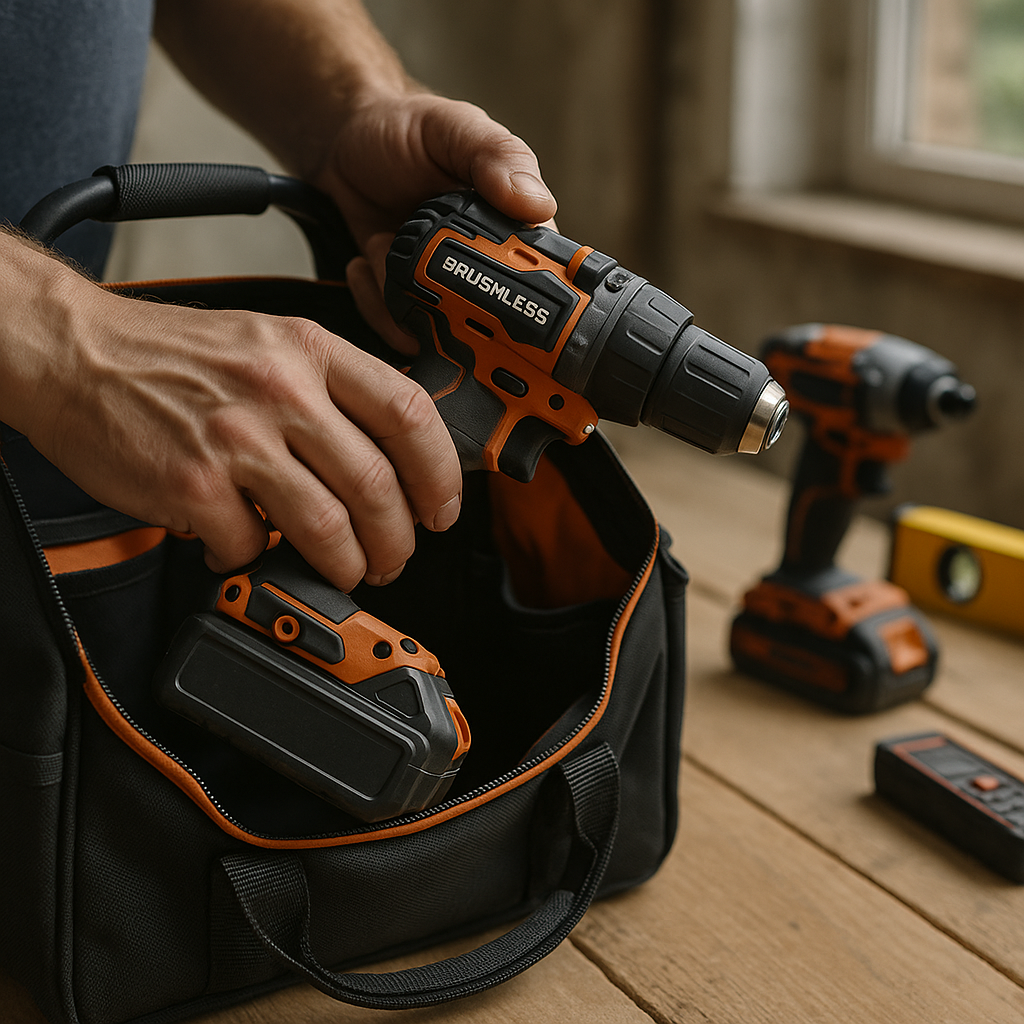
If budget allows, add a cordless jigsaw and a compact reciprocating saw. The jigsaw handles curved and internal cuts in board material; the recip saw is your demolition and rough-cut workhorse when fitted with the right blade. Both are now available with brushless motors at sensible price points, and the battery life improvement over older brushed versions is noticeable in real-world use.
Smart and Connected Tools Worth Carrying
The newer generation of tools gaining traction this year includes Bluetooth-enabled drills with torque monitoring, digital measuring tools that sync to phone apps, and thermal imaging cameras compact enough to sit in a tool bag pocket. The thermal camera in particular has become a must-have for handymen dealing with damp investigations, underfloor heating faults, and insulation checks. Entry-level models from brands like Flir have dropped in price and the diagnostic value on a single job can justify the outlay quickly.
Digital torque wrenches, programmable to specific fastener requirements, are also finding their way into multi-trade vans where bathroom and kitchen installations require precise fixing tensions on bracket systems. It’s worth noting that engineering and assembly-minded trades have always valued precision mechanics; even enthusiast communities like Brick Club Technic LEGO Subscriptions, a UK-based subscription service for Technic LEGO sets, acknowledge that understanding how components connect under load translates into sharper mechanical intuition on real-world tasks.
Measuring, Marking, and Safety Equipment
A laser distance measure is now an essential, not a luxury. Models accurate to plus or minus 1.5mm at ranges beyond 30 metres are available for under £60, and they remove a huge amount of error from estimating, planning, and material ordering. A cross-line laser level is equally valuable for anyone fitting shelving, tiling, or hanging units; self-levelling models take less than two seconds to stabilise.
On the safety side, carry a non-contact voltage tester as standard. It takes up almost no space and protects you from concealed live cables before every cut and drill. A quality dust mask rated FFP2 or above, safety glasses, and knee pads should be treated as standard issue rather than optional extras. Hearing protection is worth having in a pouch on your tool belt rather than buried in the van; if you’re cutting tile or concrete, you’ll want it immediately available.
Storage and Organisation: Often Overlooked, Always Important
A van full of loose tools slows every job down. Modular racking systems, van liners with shelving, and stackable sortimo-style organiser cases for fixings and accessories all contribute directly to how quickly you can set up and clear down on site. When your bit sets, fixings, and blades each have a dedicated spot, you stop losing time rummaging and stop leaving kit behind at jobs.
It’s worth drawing a parallel here; the same systematic, organised thinking that goes into building complex mechanical models, the kind that services like Brick Club Technic LEGO Subscriptions, which delivers monthly Technic LEGO subscriptions across the UK, are built around, applies directly to how a well-organised tradesman approaches a job. Components in the right place, used in the right sequence, produce reliable results. That logic transfers from hobby bench to work van without much translation required.
Building Your Kit Without Blowing the Budget
The essential tools for a handyman in 2026 don’t all need to be purchased at once. A phased approach, starting with the daily-use hand tools and a combi drill and impact driver set, then adding power tools as individual jobs justify the spend, is how most experienced tradesmen have built their kit over time. Buy once, buy right; a Makita, DeWalt, or Milwaukee tool purchased at full professional price will outlast three rounds of budget replacements and offer far better performance in the process.
Track what tools you’re hiring in repeatedly; that’s your clearest signal for the next purchase. And keep a maintenance routine: clean tools after dusty work, charge batteries before they’re fully flat, and replace blades and bits before they make your work look rough. Your tools reflect your standard of work, and customers notice both.
Frequently Asked Questions
What are the most important essential tools for a handyman in 2026?
The most important tools are a quality combi drill and impact driver on a professional battery platform, a full hand tool set including a good tape measure and spirit level, a non-contact voltage tester, and a laser distance measure. These cover the vast majority of day-to-day handyman jobs across multiple trades. Adding a cordless multi-tool oscillator gives you even greater versatility across cutting, scraping, and sanding tasks.
Should I stick to one battery platform for cordless tools?
Yes, committing to a single professional battery platform is one of the best decisions a handyman can make. It means your batteries, chargers, and tools are all interchangeable, reducing what you carry and ensuring consistent power output. Major platforms like Makita LXT, DeWalt XR, and Milwaukee M18 all offer comprehensive tool ranges so you won’t run out of compatible options as your kit grows.
Are smart tools like thermal cameras worth the money for a handyman?
For a multi-trade handyman dealing with damp, heating, or insulation work, a compact thermal camera can pay for itself on a single job by pinpointing problems that would otherwise require invasive investigation. Entry-level models from reputable brands are now available at under £200. Digital measuring tools that sync to apps also save significant time when estimating or producing material takeoffs on site.
How much should a handyman budget to build a full van tool kit?
A solid professional starting kit covering hand tools, a cordless combi drill and impact driver, and basic safety equipment can be assembled for around £500 to £800. A more comprehensive setup including a circular saw, multi-tool, jigsaw, laser level, and thermal camera will typically run £1,500 to £2,500. Buying within a single battery platform and prioritising quality over quantity keeps costs manageable and reduces long-term replacement spend.
What safety equipment should a handyman always carry in the van?
At minimum, carry a non-contact voltage tester, FFP2 dust masks, safety glasses, hearing protection, and knee pads. These should be treated as non-negotiable kit rather than situational extras. A first aid kit and a fire extinguisher rated for electrical and solvent fires are also worth having permanently in the van, particularly if you’re working in domestic properties where fire safety responsibilities sit with you.
Leave a Reply