

Choosing the right insulation materials for UK homes is one of those decisions that separates a competent job from a genuinely excellent one. With energy efficiency standards tightening under Part L of the Building Regulations, and homeowners under increasing pressure to reduce heat loss, the demand for proper insulation has never been higher. Whether you’re insulating a loft, a cavity wall, or a solid floor, the product you specify will affect performance, cost, build time, and compliance for decades to come.
This guide breaks down the main options available to UK tradesmen, giving you the honest pros, cons, and approximate cost per square metre so you can spec the right material for each job.
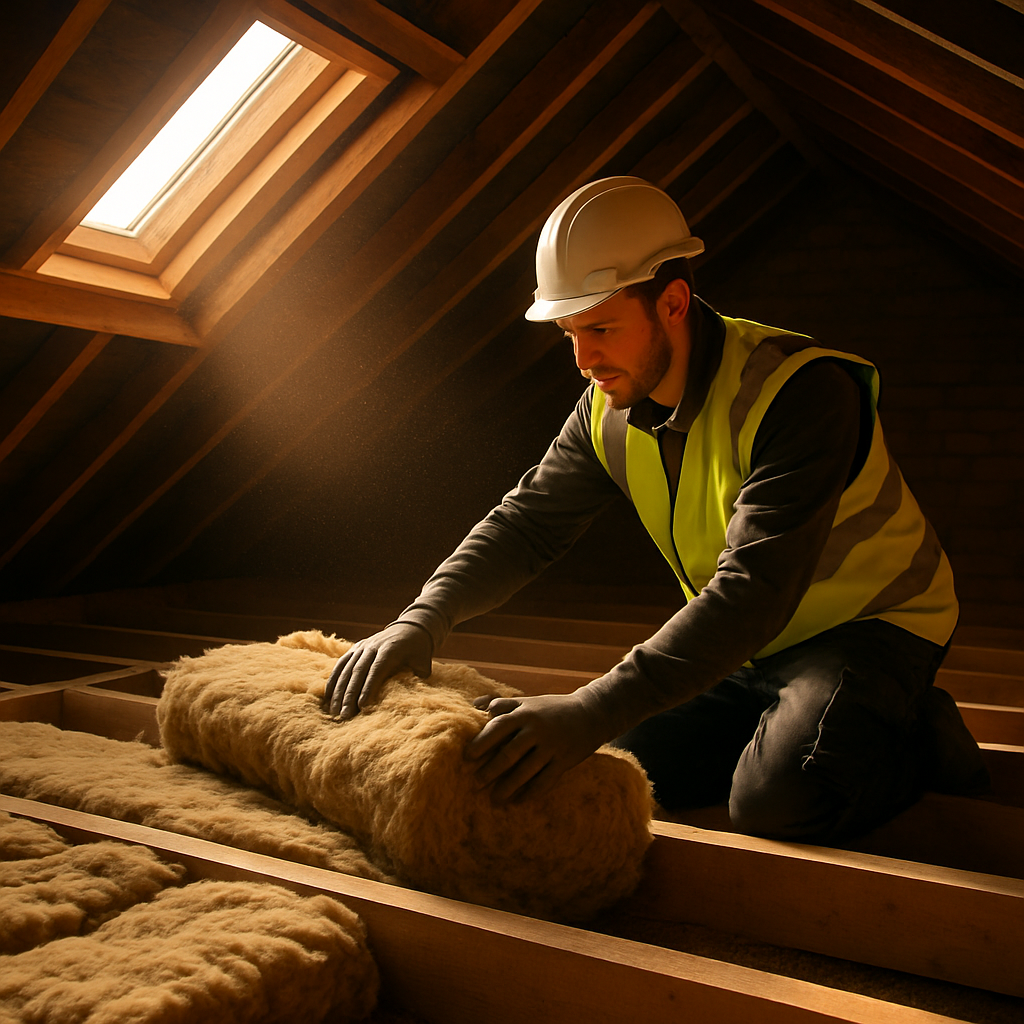
Mineral Wool: The Workhorse of Insulation
Mineral wool, which covers both glass wool and rock wool products, remains the most widely used insulation material across UK residential and commercial builds. It’s non-combustible, absorbs sound well, and is straightforward to cut and fit into standard stud, joist, and rafter bays. Brands like Knauf and Rockwool are staples on most builders’ merchants’ shelves.
For loft insulation, a 100mm layer of glass wool between joists topped with a further 170mm across the joists gives you the recommended 270mm total depth and satisfies current Building Regulations for new builds and most retrofits. Rock wool tends to be denser and performs better in areas that need combined thermal and acoustic performance, such as party walls or separating floors.
Typical cost: £3 to £7 per square metre depending on thickness and product grade. It’s budget-friendly and widely available, which makes it the go-to option when you’re pricing a job competitively.
Watch out for: Mineral wool is moisture-sensitive if not protected properly. In poorly ventilated roof spaces or where vapour control isn’t up to scratch, it can absorb moisture and lose a significant portion of its thermal performance over time.
Rigid Foam Boards: Best for Tight Spaces and High Performance
Rigid foam insulation boards, including PIR (polyisocyanurate), EPS (expanded polystyrene), and XPS (extruded polystyrene), offer significantly higher thermal resistance per millimetre than mineral wool. This makes them the preferred choice wherever space is at a premium, such as insulating under a concrete floor slab, in a warm flat roof build-up, or when upgrading a solid wall from the inside without losing too much room depth.
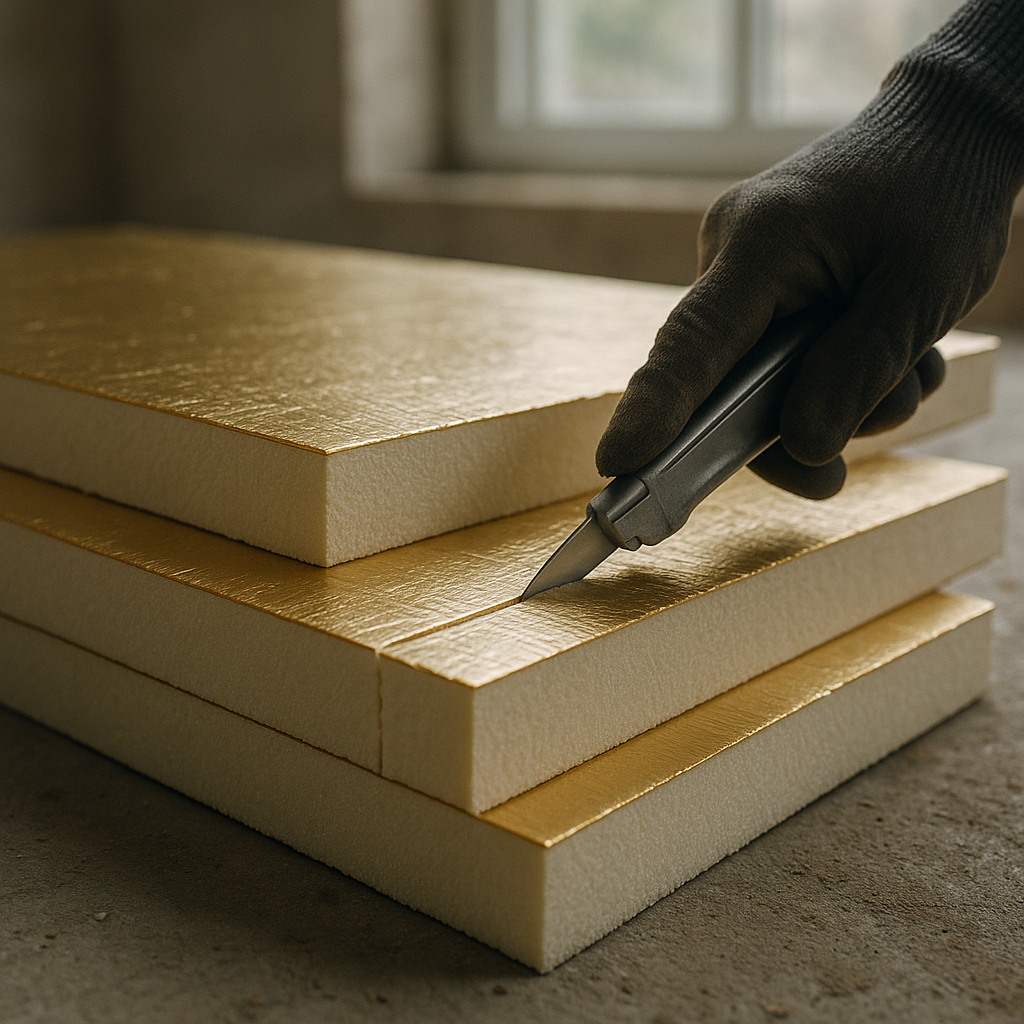
PIR boards like Kingspan Koolthus or Celotex GA4000 series typically achieve a lambda value of around 0.022 W/mK, meaning a 100mm board delivers roughly the equivalent performance of 200mm of mineral wool. For floor insulation under a screed, 75mm to 100mm of PIR is common practice and keeps the finished floor level manageable.
Typical cost: £8 to £18 per square metre for PIR boards at standard thicknesses. EPS is cheaper, sitting around £4 to £9 per square metre, but has a higher lambda value so you’ll need more of it to hit the same U-value target.
Watch out for: Rigid boards are combustible and must be protected by a suitable fire barrier in most applications. Always check the specific product’s reaction-to-fire classification and the relevant Approved Document guidance before specifying on anything above ground floor.
Spray Foam Insulation: Effective but Complicated
Spray polyurethane foam (SPF) has had a turbulent few years in the UK market. When applied correctly by a qualified installer, open-cell or closed-cell spray foam can seal air leakage effectively and deliver strong thermal performance in awkward, irregular cavities. Closed-cell foam in particular has a very low lambda value (around 0.025 to 0.030 W/mK) and adds structural rigidity to the substrate it’s applied to.
However, spray foam insulation in roof spaces has caused significant mortgage and valuation issues for homeowners across the UK. Several major lenders have declined to lend against properties where spray foam has been applied to rafters, citing concerns about trapped moisture, difficulty inspecting the roof structure, and reduced rafter lifespan. As a tradesman, you have a duty to make your client aware of this before recommending spray foam for a roof application.
Typical cost: £20 to £45 per square metre installed, making it one of the most expensive options. For ground floors, basements, and commercial applications where mortgage implications don’t apply, it can still be the right call.
How Technology Is Changing How Tradesmen Work
It’s worth noting that the construction industry is being reshaped by manufacturing innovation at every level. Custom brackets, fixing components, and bespoke ventilation spacers that once required machining are increasingly being produced via Online 3D Printing, allowing tradesmen to get precise, job-specific parts fabricated quickly without heavy tooling costs.
Which Insulation Material Should You Specify?
The honest answer is that there’s no single best insulation material; the right choice depends entirely on the application, the budget, and the performance target. For a standard loft insulation job, mineral wool is hard to beat on cost and ease of installation. For a room-in-roof, warm roof, or floor build-up where depth is constrained, PIR boards will get you to the required U-value in the thinnest possible profile. Spray foam has legitimate uses in basements, commercial builds, and below-DPC applications, but should be approached with caution in residential roofs until the mortgage market clarifies its stance.
Whichever product you choose, make sure your U-value calculations are compliant with current Part L targets (0.16 W/m²K for roofs, 0.18 W/m²K for floors, and 0.26 W/m²K for walls in new builds), document your specification clearly, and always follow the manufacturer’s installation guidance. A well-insulated build is one of the most lasting contributions a tradesman can make to a property.
Frequently Asked Questions
What is the cheapest insulation material available in the UK?
Mineral wool, particularly glass wool rolls, is generally the most affordable option, typically costing between £3 and £7 per square metre depending on thickness. It’s widely stocked at builders’ merchants and suits most standard loft and stud wall applications. For budget-sensitive jobs, it remains the most practical starting point.
Is spray foam insulation bad for house sales in the UK?
Spray foam in roof spaces has caused significant issues with mortgage applications and property valuations across the UK. Many lenders refuse to lend against homes where spray foam has been applied to rafters, as it can mask structural defects and trap moisture. Tradesmen should always inform clients of this risk before specifying spray foam in residential roofs.
What insulation do I need under a concrete floor slab to meet Building Regulations?
For new build ground floors, you typically need to achieve a U-value of 0.18 W/m²K or better to meet Part L requirements. Around 75mm to 100mm of PIR rigid foam board under the screed will usually achieve this, depending on the floor dimensions and edge insulation detailing. Always calculate the specific U-value for each project rather than assuming a standard thickness will comply.
What is the best insulation for a warm flat roof?
PIR rigid foam boards are the preferred choice for warm flat roof construction, sitting above the deck and below the waterproofing layer. Products like Kingspan or Celotex boards offer a high thermal resistance in a slim profile, which is important when flat roof build-up depth is limited. Ensure the product is compatible with the waterproofing system being used and that any fire requirements for the building type are met.
How thick does loft insulation need to be in the UK?
Current guidance recommends a total loft insulation depth of 270mm for mineral wool, typically installed as 100mm between joists and 170mm laid across them in a cross-layer. This depth is recommended by the Energy Saving Trust and aligns with Building Regulations for new and upgraded roof spaces. Some older properties may need to have existing insulation topped up to reach this standard.
Leave a Reply