

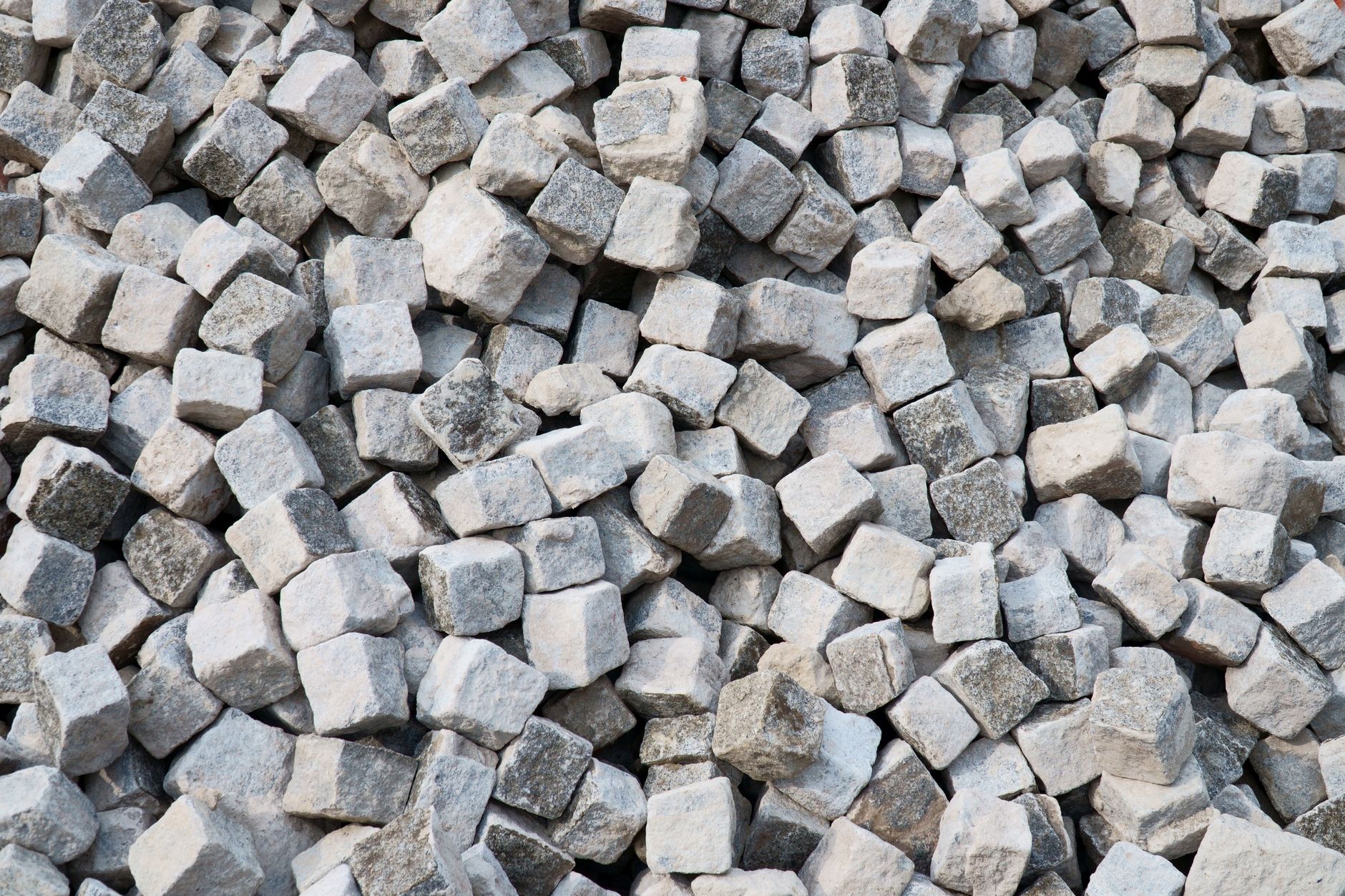
Get the sub-base wrong and it doesn’t matter how good your slab or block paving looks on day one. Twelve months later the client’s ringing you about sunken edges and cracked joints. I’ve seen it happen more times than I care to count, usually because someone grabbed whatever was cheapest on the day without thinking about what the ground underneath actually needs. So let’s go through the main options properly: hardcore, MOT Type 1 and crushed concrete, what each one does well, where it falls short, and roughly what you’re paying per tonne from a UK merchant right now.
What sub-base material actually does
Before getting into the specifics, it’s worth being clear about what you’re asking a sub-base to do. It has to spread load from the surface above across a wider area of subgrade beneath. It has to resist settlement under repeated loading. And depending on the job, it may also need to allow water to pass through it rather than pond at the surface or behind a wall. Different aggregates handle those three demands in very different ways, which is why specifying on autopilot will catch you out.
The depth you need varies too. For a domestic patio with foot traffic only, 100mm of well-compacted material is often enough. For a driveway taking a loaded van or regular HGV deliveries, you’re looking at 150mm minimum, sometimes 200mm if the subgrade is soft clay. Anything structural or commercial falls under Building Regulations and you’d be involving an engineer anyway, but for the bread-and-butter jobs that make up most groundwork diaries, these three materials cover most of what you’ll encounter.
MOT Type 1 sub-base UK groundworks: the go-to choice
MOT Type 1 is crushed limestone or granite graded to a specification originally set by the Ministry of Transport, which is where the name comes from. The grading runs from 63mm down to dust, and that mix of particle sizes is exactly what makes it perform well. When you compact it properly, the angular particles lock together, the fine dust fills the voids, and you end up with a dense, stable layer that spreads load reliably.
For driveways, patios, shed bases and most domestic groundwork, MOT Type 1 is my default recommendation. It compacts tightly with a plate compactor, it doesn’t shift once it’s down, and building inspectors know it. If a job goes through building control, there’s no argument about whether the material is suitable. Current merchant pricing across most of England sits between £28 and £42 per tonne, depending on your region and whether you’re collecting or having it delivered. Scotland and parts of Wales can run a bit higher because of haulage.
The downside is drainage. MOT Type 1 compacts so well that it becomes largely impermeable. If you’re working on a site where surface water needs to drain through the sub-base rather than run off, you’ll want to look at MOT Type 3 instead, which is a single-size open-graded material designed specifically for permeable construction. For standard work, though, Type 1 is hard to beat.
Hardcore: cheap, variable and context-dependent
Hardcore is a broad term that covers broken brick, concrete rubble, mixed demolition arisings and similar inert waste. It’s often what gets quoted when a client wants to keep costs down, and at £8 to £18 per tonne it’s significantly cheaper than Type 1. On the right job, it’s a perfectly sensible choice. On the wrong one, it’ll cause you grief.
The issue with hardcore is consistency. A grab lorry load of clean, uniform broken concrete from a demolition is very different from a mixed load containing soft brick, plaster, timber fragments and general debris. Soft brick compresses under load. Timber rots and creates voids. Mixed material doesn’t compact uniformly, which means differential settlement is a real risk once you’ve laid your slab or paving on top.
If you’re using hardcore, I’d only specify it where you can see what you’re getting, ideally clean crushed concrete or hard engineering brick with no fines, no organics and no plasterboard in the mix. It also benefits from a blinding layer of sharp sand or fine Type 1 on top to create a level bed before your slab or membrane goes down. Used carefully on low-traffic areas, it’s fine. Under a driveway that sees daily loading, it’s a gamble.
One thing worth knowing: the Environment Agency’s guidance on construction waste is clear that hardcore derived from demolition needs to be properly classified as waste or exempt material before it can be reused on site. Don’t assume a skip company’s word is enough, keep a paper trail if you’re reusing demolition rubble on a different plot.
Crushed concrete: the middle ground
Crushed concrete is essentially hardcore that’s been processed to a consistent grading, usually 75mm down to dust or 40mm down, crushed from reinforced or unreinforced concrete slabs and foundations. Recycled aggregate merchants across the UK sell it in consistent loads, and it typically costs £14 to £24 per tonne, sitting neatly between raw hardcore and Type 1.
Performance-wise, crushed concrete behaves more predictably than mixed hardcore because you’re getting a known material. It compacts reasonably well, though not quite to the same standard as Type 1 limestone because the particles tend to be less angular after crushing. For a patio base or garden path, it’s a solid choice. For a driveway, I’d still prefer Type 1, but crushed concrete is a credible alternative if the budget is tight and you’re confident in the source material.
Bear in mind that crushed concrete can contain small amounts of sulphates depending on where it came from. This isn’t usually a problem for sub-base use, but if you’re laying a concrete slab directly on top with no membrane, it’s worth using a sulphate-resistant cement mix. I always run a quick check on the supplier’s material data sheet before specifying it on anything that’ll have in-situ concrete above it. Most decent recycled aggregate merchants will have one ready to hand.
Ground conditions and drainage: what changes the spec
The aggregate you choose also depends on what’s below it. Clay subgrades are the most common problem on UK domestic sites. Clay holds water, swells when wet, shrinks when dry, and will cause any poorly compacted sub-base to move. On heavy clay, I’d increase sub-base depth and strongly favour Type 1 over anything else. It’s also worth laying a geotextile membrane directly on the clay before your aggregate goes down. It separates the subgrade from the sub-base, stops the clay migrating up into the aggregate over time, and costs very little relative to the hassle of relaying a sunken patio in three years.
Sandy or gravelly subgrades are more forgiving. The subgrade itself is already doing a decent job of spreading load, so you have a bit more flexibility on material choice. Even here, though, skimping on compaction is the mistake that bites. A plate compactor isn’t optional, it’s standard equipment on any groundwork job worth doing. Two passes in opposite directions minimum, three if the material depth is over 150mm.
If the job involves significant loading and you’re specifying the right concrete mix above the sub-base, the combination of properly graded aggregate underneath and the right concrete strength on top is what keeps a driveway or yard slab looking decent for a decade or more. One without the other and you’re halfway to a callback.
Cost per tonne and merchant availability
To give you a rough working guide for 2026, here’s what I’d expect to pay at common UK builders’ merchants and aggregate suppliers:
MOT Type 1 limestone: £28 to £42 per tonne delivered. Widely available at Jewson, Travis Perkins and most independent builders’ merchants. Usually in stock or available within 48 hours. Crushed granite Type 1 is slightly more expensive and typically available from specialist aggregate suppliers or larger Hanson/Breedon depots.
Crushed concrete (recycled aggregate): £14 to £24 per tonne. Available from recycled aggregate merchants and some larger builders’ merchants. Check availability locally, as not every depot stocks it. Quality varies by supplier, so it’s worth asking for a data sheet the first time you use a new source.
Hardcore (mixed demolition): £8 to £18 per tonne or sometimes quoted by the grab load (typically 8-10 tonnes). Variable quality. Best sourced from a merchant who can tell you exactly what’s in it, not from a skip company shifting whatever came off a demolition that week.
For any job where the surface finish matters and the client expects it to last, I’d add the cost difference between cheap hardcore and proper Type 1 to the quote without apology. It’s a small number relative to the total job cost and it’s the difference between a clean finish and a problem job. Clients rarely argue when you explain it plainly.
If you’re working on a job where the surface above the sub-base includes block paving, a concrete slab or even structural elements bearing down from above, getting the sub-base specification right is non-negotiable. Similarly, if the groundworks sit close to a building’s foundation, check whether the wall construction above has any bearing on drainage management around the base.
Specify what the ground actually needs, compact it properly, and the rest of the job builds on a solid foundation. That’s really all there is to it.
Frequently Asked Questions
What is MOT Type 1 and why is it used as a sub-base in UK groundworks?
MOT Type 1 is a crushed stone aggregate graded from 63mm down to dust, originally specified by the Ministry of Transport for road construction. Its mix of particle sizes compacts into a dense, stable layer that spreads load effectively, making it the standard choice for driveways, patios and slabs in UK groundworks.
How deep should a sub-base be for a domestic driveway in the UK?
For a standard domestic driveway taking car traffic, 150mm of compacted MOT Type 1 is the typical minimum. If the subgrade is soft clay or the driveway will take heavier vehicles such as vans or lorries, increase this to 200mm. Always compact in layers no deeper than 100mm at a time.
Is crushed concrete a good alternative to MOT Type 1 for a patio base?
Yes, crushed concrete is a reasonable alternative for patios and low-traffic areas, typically costing £14 to £24 per tonne compared to £28 to £42 for Type 1. It compacts well but not quite as tightly as Type 1 limestone. If laying a concrete slab on top, check the supplier’s data sheet for sulphate content and use a DPM or sulphate-resistant mix if needed.
Leave a Reply